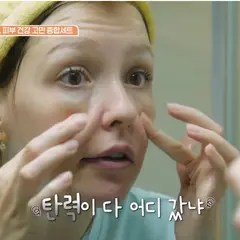

Actor Jang Dong-gun recently shared his go-to pre-filming self-care routine: facial gua sha massage.
Appearing alongside his wife, Ko So-young, on her YouTube channel, Jang addressed online speculation regarding suspected cosmetic procedures. When a staff member praised his live appearance and questioned previous online rumors, Ko laughed and revealed that her husband had put extensive effort into prepping before the shoot, combining a salon visit with a gua sha session. Jang candidly admitted, "I did gua sha last night," humorously adding that online plastic surgery rumors motivated him to look his best. He clarified that the earlier controversy stemmed merely from an aggressive camera retouching filter.

How Gua Sha Helps Reduce Facial Puffiness
Gua sha, a traditional East Asian therapy involving the gentle gliding of a smooth tool across the skin, has long been used to promote microcirculation in small blood vessels and alleviate mild facial edema.
Research supports its measurable physical effects. A 2025 study published in the Journal of Cosmetic Dermatology evaluated 34 women aged 20 to 50, dividing them into a gua sha group and a facial-roller group. Participants massaged their faces for 10 minutes per session, five times a week, over eight weeks. Facial measurements decreased by 2.23 to 2.40 mm in the gua sha group and 2.75 to 3.26 mm in the roller group. While facial rollers improved skin elasticity, gua sha specifically reduced facial muscle tension.
The primary mechanism behind facial de-puffing is fluid displacement and muscle relaxation. Overnight, interstitial fluid frequently pools in facial tissues during sleep, resulting in morning swelling. Gua sha helps shift this stagnant fluid toward lymphatic drainage pathways while relieving muscle stiffness.
Gentle Technique Is Key to Preventing Skin Damage
To perform facial gua sha safely, experts recommend applying a moisturizer or facial serum first to eliminate friction. The tool should be glided slowly outward from the center of the face in a single direction, rather than rubbed back and forth. Gentle pressure sufficient to move the skin slightly is effective; pressing hard enough to cause discomfort or bruising is counterproductive. To facilitate drainage, light downward sweeps from behind the ears down the neck help guide fluid toward the chest.
Dermatologists warn that excessive force can rupture delicate facial capillaries, causing red spots, bruising, or muscle soreness. Gua sha should be avoided over broken skin, active rashes, sunburns, or skin conditions such as eczema and psoriasis. Individuals taking blood-thinning medications should also exercise caution.
Furthermore, sudden, asymmetric facial swelling accompanied by pain or redness should not be treated with massage. Such symptoms may indicate an underlying medical issue—such as an allergic reaction, dental abscess, or salivary gland disorder—demanding prompt professional care.
Simple Home Alternatives for De-Puffing
For those without specialized tools, gentle manual massage offers similar benefits. Using the fingertips to sweep lightly from the center of the face outward, and then down the neck, encourages natural fluid movement without damaging the skin.
Cold compresses provide another rapid option. Placing a towel soaked in cold water over the face or eye area for a few minutes constricts surface blood vessels and reduces swelling. Experts caution, however, against applying raw ice directly to the skin, which can trigger cold-induced tissue damage.