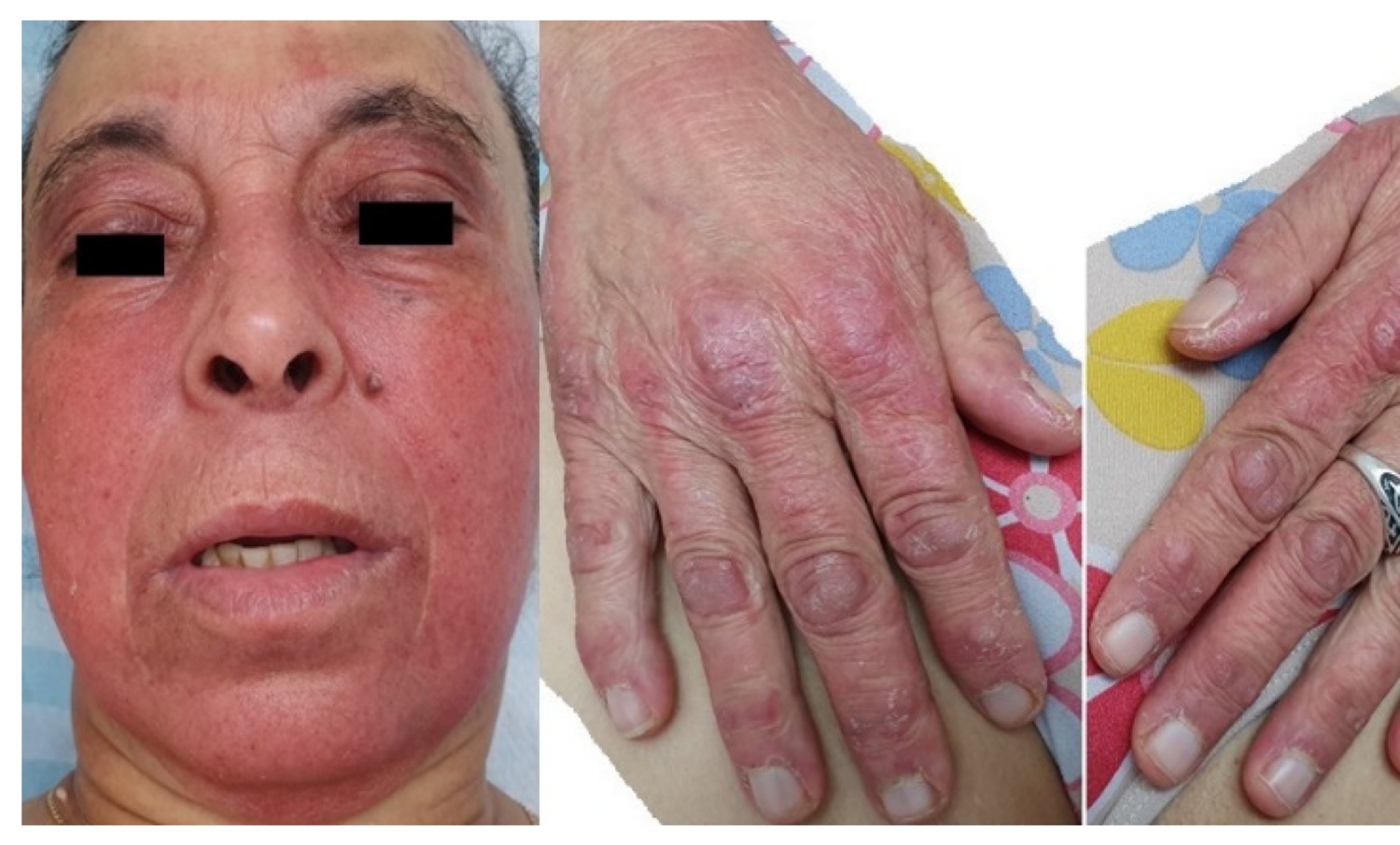
A purple rash around the eyelids accompanied by muscle weakness severe enough to make climbing stairs or lifting the arms difficult should raise suspicion of dermatomyositis. In this rare autoimmune disease, the immune system attacks the body’s own skin and muscles. Early diagnosis is critical because potentially serious lung damage or an underlying cancer may also be present.
On Nov. 16, Soonchunhyang University Bucheon Hospital outlined the key symptoms, complications, treatment and management of dermatomyositis with guidance from Jung Sung Soo, a professor of rheumatology.
Red Bumps Over Finger Joints and Weakness in Shoulders and Thighs
Dermatomyositis can develop at any age, though it occurs most commonly in children ages 5 to 15 and adults ages 40 to 60. According to a 2019 study published in the Journal of Korean Medical Science, women accounted for 72.8% of the 1,101 patients diagnosed with dermatomyositis in South Korea in 2015.
According to Jung, the hallmark signs of dermatomyositis are a purple "heliotrope rash" around the eyelids and "Gottron’s papules"—reddish-purple bumps that form over the finger joints, elbows and knees. Rashes can also appear on the face, chest and shoulders.
Muscle weakness primarily affects both shoulders, the hips and the thighs. Progressing over weeks to months, it makes everyday tasks such as climbing stairs, rising from a chair or raising the arms overhead difficult. Some patients experience trouble swallowing or choke frequently while eating, while others develop characteristic skin symptoms without noticeable muscle weakness.
Diagnosis combines an evaluation of the rash and muscle weakness with blood tests to measure muscle damage, electromyography, magnetic resonance imaging (MRI) and autoantibody testing. Certain autoantibodies are especially useful for assessing a patient’s risk of lung complications or accompanying cancer.
Interstitial Lung Disease Affects 21.8% of Patients; Cancer Screening Is Crucial
One complication requiring close attention is interstitial lung disease, which causes inflammation and scarring in the lungs. Its primary symptoms are a persistent dry cough and shortness of breath, and in severe cases it can progress to fatal respiratory failure.
An analysis of national health insurance data covering 1,101 South Korean dermatomyositis patients in 2015 found interstitial lung disease in 240 patients, or 21.8%. Patients who test positive for anti-MDA5 autoantibodies warrant heightened vigilance, as lung damage can advance rapidly even when muscle weakness is mild or absent.
Inflammation in the muscles of the throat or esophagus can also impair swallowing and allow food to enter the airway, triggering aspiration pneumonia. In rare instances, inflammation involves the heart muscle, leading to arrhythmias or heart failure.

Jung noted that adults diagnosed with dermatomyositis should also be screened for accompanying cancers. In the same South Korean study, 11.8% of patients had records of solid tumors without confirmed metastasis, and 1.2% had records of lymphoma. Those figures reflect coexisting diagnoses rather than newly developed cancers.
Under guidelines issued in 2023 by the International Myositis Assessment and Clinical Studies Group, adults with inflammatory myopathies face an elevated risk of cancer from three years before disease onset through three years afterward. Patients should therefore undergo targeted cancer screening based on their age, autoantibody profile and symptoms.
First Oral Treatment Approved in U.S., With Warnings Over Serious Infection Risk
Standard treatment relies on corticosteroids and immunosuppressants such as methotrexate and azathioprine to curb inflammation, restore muscle strength and prevent organ damage. Intravenous immunoglobulin or other immunomodulators may be added if patients respond poorly to initial therapy or have accompanying lung involvement.
A new therapeutic option has also recently arrived. On Aug. 27, the U.S. Food and Drug Administration (FDA) approved brepocitinib, marketed under the brand name Lisraya, for adults with dermatomyositis. As the first oral medication formally approved for the condition, the drug works by inhibiting JAK1 and TYK2, enzymes that transmit inflammatory signals within the immune system.
In a Phase 3 clinical trial involving 241 adults, the average Total Improvement Score at week 52 reached 46.5 in the brepocitinib 30 mg group compared with 31.2 in the placebo group. The composite score evaluates muscle strength, skin disease activity and physical function, with higher scores indicating greater clinical improvement.
However, serious infections occurred in eight of the 81 patients (10%) receiving the 30 mg dose, versus one of the 79 patients (1%) on placebo. The FDA required a boxed warning highlighting the risks of serious infections, death, malignancies, major adverse cardiovascular events and thrombosis. The trial results were published in the New England Journal of Medicine.
Seek Prompt Care for Shortness of Breath or Difficulty Swallowing
Because ultraviolet radiation can aggravate skin symptoms, patients with dermatomyositis are advised to limit sun exposure and apply sunscreen consistently. Those taking immunosuppressants should also take precautions against infection, while supervised rehabilitation exercises can help rebuild muscle strength.
Patients should seek prompt medical care if shortness of breath or a dry cough persists, swallowing becomes difficult or muscle strength declines suddenly.
"Dermatomyositis requires long-term management, but early diagnosis and appropriate treatment can ease symptoms and offer the prospect of regaining everyday function," Jung said. "If a characteristic skin rash and muscle weakness develop, it is important to consult a rheumatologist promptly."