For patients diagnosed with idiopathic pulmonary fibrosis (IPF)—a chronic disease in which lung tissue inexplicably becomes scarred, stiffened, and hardened—contracting lung cancer presents a formidable medical challenge. Because baseline pulmonary function is already severely compromised, standard cancer treatments can place a heavy burden on the body and leave clinicians with narrow therapeutic options.
High Risk for Scarred Lungs and the Proton Alternative
Idiopathic pulmonary fibrosis causes progressive lung scarring without a known cause, continually diminishing the organ's ability to deliver oxygen to the body and worsening shortness of breath. When non-small cell lung cancer develops on top of fibrosis, administering chest radiation therapy carries high stakes. Conventional X-ray radiation passes through the tumor and delivers a dose of radiation to healthy lung tissue surrounding it. In patients with preexisting fibrosis, this extra exposure can trigger severe radiation pneumonitis or precipitate a fatal flare-up of their underlying disease.
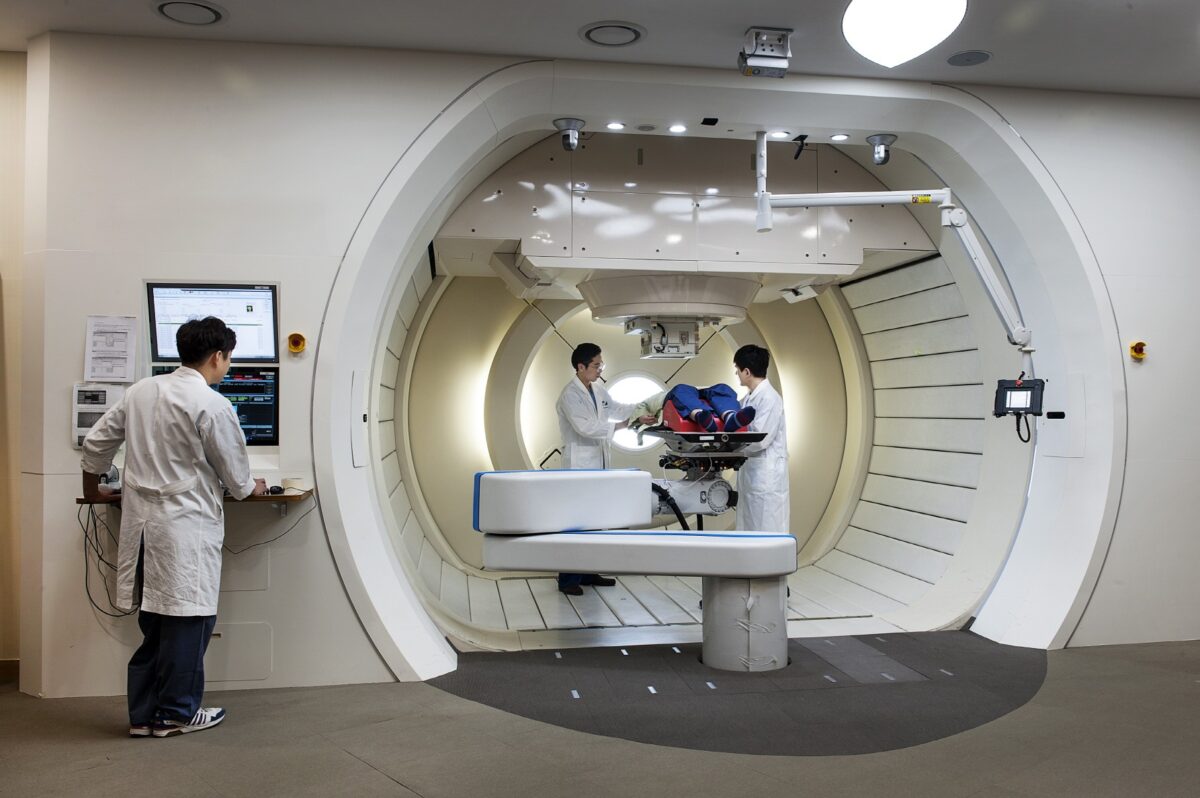
Proton therapy has emerged as an alternative due to its unique physical characteristics. Unlike traditional X-rays, protons concentrate their therapeutic energy at a specific depth inside the tumor and drop off sharply, delivering almost no radiation exposure to normal tissues behind the lesion. While an earlier Samsung Medical Center trial established that IPF patients generally face higher baseline risks and lower survival following radiation, this new study evaluated whether treatment outcomes varied significantly based on cancer stage.

Clinical Results: Dramatic Divergence by Stage
The multidisciplinary research team enrolled 55 patients diagnosed with both idiopathic pulmonary fibrosis and non-small cell lung cancer between June 2020 and August 2023. Ultimately, 41 patients who met all inclusion criteria were included in the final analysis and tracked over a median follow-up period of 21.6 months. By cancer stage, 56% had Stage I, 22% had Stage II, and 22% had Stage III disease.
Following curative-intent proton therapy, 7 out of the 41 total patients (17.1%) experienced severe lung complications of Grade 3 or higher, with 4 patients (9.8%) suffering Grade 4 or higher toxicities. However, analyzing the data by cancer stage revealed a striking divergence:
Stage I–II: Among 32 patients, only 3 (9.4%) developed Grade 3 or higher lung side effects.
Stage III: Among 9 patients, 4 (44.4%) experienced Grade 3 or higher complications.
The difference between the two groups was statistically significant, demonstrating that the 9.4% figure cannot be generalized across all patients.
Therapeutic Efficacy and Clinical Takeaways
The study also demonstrated solid therapeutic efficacy. Across all participants, the 1-year overall survival rate was 67.6%, while the 1-year local-regional control rate—the share of patients whose cancer did not regrow in the treated lung area or nearby lymph nodes—reached 93.2%. While key lung function metrics, including forced vital capacity (FVC), forced expiratory volume in 1 second (FEV1), and diffusing capacity of the lung for carbon monoxide (DLCO), showed a general decline over time, researchers noted that it remains difficult to separate the impact of radiation therapy from the natural progression of IPF.
Published in the medical journal Radiotherapy and Oncology, the study was led by Professors Shin Hyun-joo, Yang Kyung-mi, Noh Jae-myung, and Pyo Hong-ryul from the Department of Radiation Oncology, alongside Professors Yoo Hong-seok, Park Hye-yoon, and Shin Sun-hye from the Division of Pulmonology. The findings support considering proton therapy as a treatment option for early non-small cell lung cancer accompanied by IPF, while reinforcing that Stage III cases demand much more cautious risk evaluation.