[Summary]
Robotic joint replacement surgery can reduce alignment error to less than 1 mm—a margin thinner than a standard credit card.
The robot does not replace the surgeon; the medical team formulates the surgical plan while the robot executes it with high precision and halts immediately if any deviation occurs.
The benefits of robotic surgery are particularly pronounced in complex cases involving severe joint deformities or revision procedures.
Because the procedure is not covered by national health insurance, it costs over 1 million won more than conventional surgery. Busan Bon Hospital is the sole designated joint specialty hospital serving the Seo-gu, Saha-gu, and Gangseo-gu districts of Busan.

When Kim, a 68-year-old resident of Saha-gu, Busan, was preparing for knee replacement surgery, his doctor posed a question: "Would you like to perform the procedure using a surgical robot?" When Kim asked how much more precise robotic surgery would be, the answer was immediate: "Less than one millimeter."
That margin is roughly equivalent to the thickness of a standard credit card (0.76 mm). But when a single millimeter can dictate whether an artificial joint lasts 10 years or 20 years, that tiny distance takes on immense clinical significance.
Dr. Han Hyun-min, director of Busan Bon Hospital and an orthopedic surgeon, offers insight into what robotic joint replacement genuinely changes for patients.
How One Millimeter Decides an Implant's Lifetime
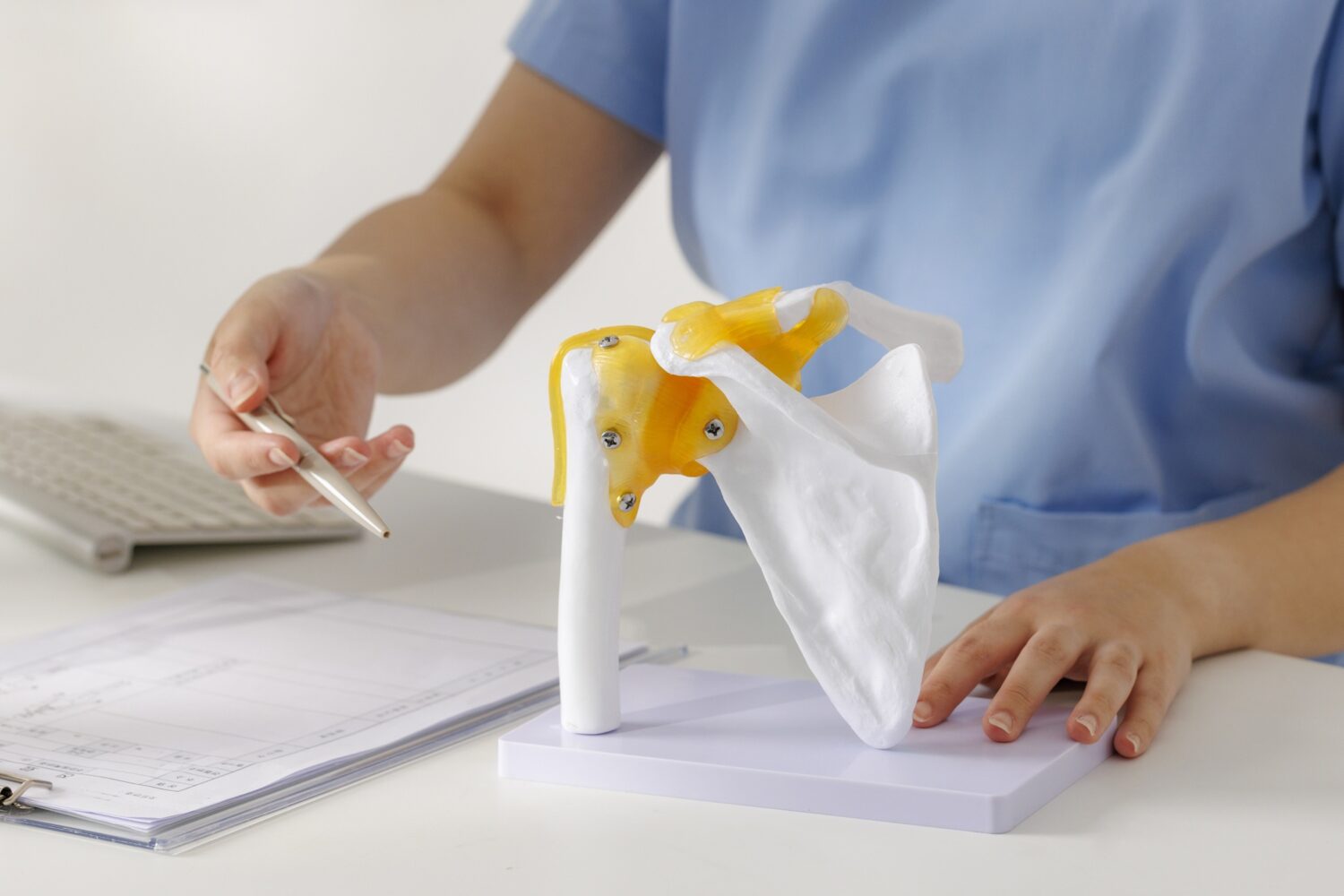
The success of joint replacement surgery hinges on how accurately surgeons align the mechanical axis—the line running from the center of the hip, through the knee, to the center of the ankle. If this axis deviates even slightly, body weight shifts disproportionately to one side.
With every step, mechanical stress concentrates on a single surface of the artificial joint, causing it to wear out prematurely. Patients may experience persistent pain, and in severe cases, require complex revision surgery within just a few years.
In traditional manual surgery, alignment relies heavily on a surgeon’s subjective experience and tactile sense. Robotic systems, by contrast, use preoperative 3D CT scans to construct a precise model of the patient’s bone anatomy, create an optimized surgical plan, and execute bone cuts with high fidelity.
"By integrating robotic technology, we can reduce the alignment error margin to less than one millimeter," Han said, emphasizing that such consistent precision is virtually impossible to achieve by human touch alone.
A Built-In Safety Reflex
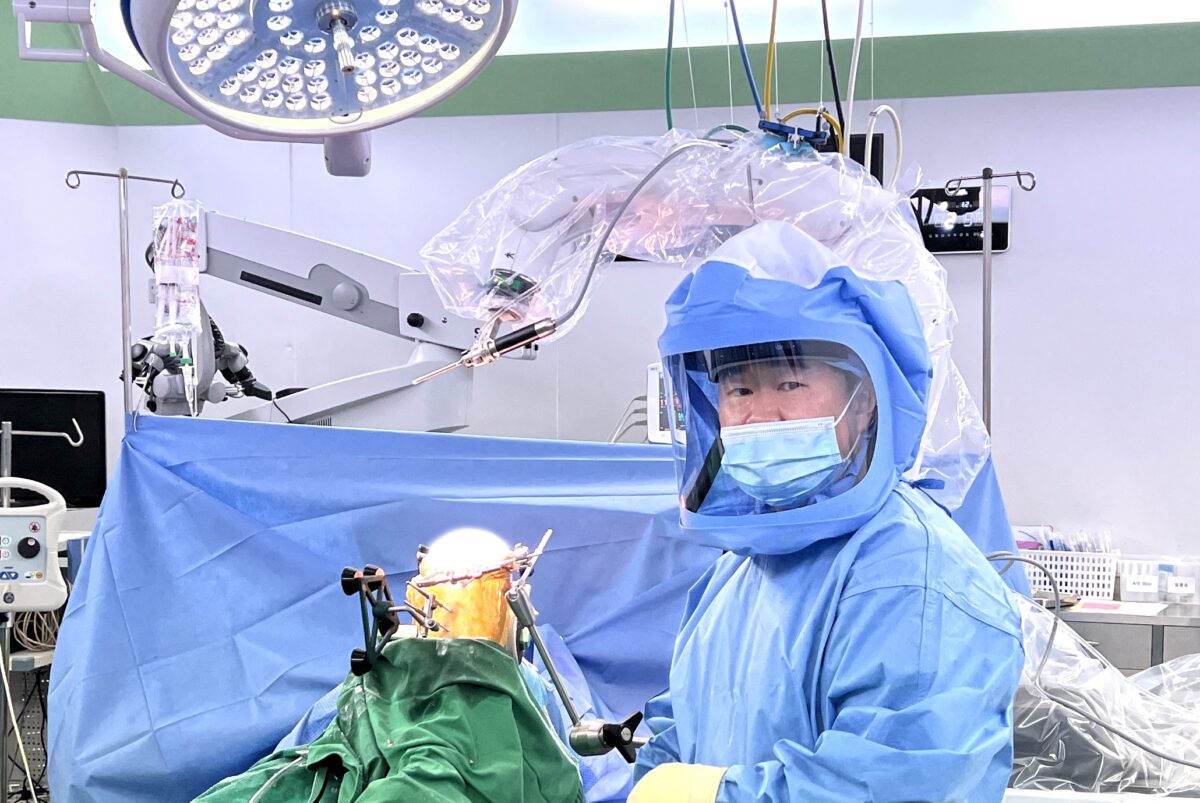
A common misconception is that surgical robots operate autonomously. In reality, the medical team retains full control. Evaluating the patient's condition, determining implant placement, and setting the surgical plan remain strictly human tasks. The robot acts as an ultra-precise instrument carrying out the surgeon's design.
Furthermore, the technology incorporates a real-time safety mechanism. If the robotic arm detects unexpected patient movement or strays beyond the planned cutting boundary during surgery, it halts instantly on the spot.
While a human hand can experience momentary tremors or fatigue, a surgical robot stops the microsecond it departs from the blueprint. Combining human clinical judgment with automated safety reflexes creates a double layer of surgical protection.
Maximizing Benefits for Complex Cases and Aging Patients
Han noted that the advantages of robotic precision are most pronounced in patients with severe joint deformities or those requiring revision surgery, where prior scar tissue obscures natural anatomical landmarks. The more distorted the joint anatomy, the more robotic planning and precision cutting matter.
In South Korea, knee arthroplasty is now performed over 116,000 times annually. Notably, the proportion of patients aged 80 and older—a demographic historically turned away due to surgical risks—rose from 11.9% in 2021 to 13.1% in 2025.
Advanced age is no longer an automatic bar to surgery. Driving this shift is the widespread adoption of robotic systems, which help offset risk factors such as advanced age and osteoporosis through sub-millimeter precision.
Busan Bon Hospital utilizes the "CUVIS Joint" system, a surgical robot developed by medical device company Curexo Co. Ltd. Originally designed for total knee replacement, its clinical applications have expanded to include total hip arthroplasty (THA).
Busan Bon Hospital is a designated "Joint Specialty Hospital" by the Ministry of Health and Welfare, having met strict operational and clinical benchmarks. It remains the sole specialty facility serving the western Busan area encompassing Seo-gu, Saha-gu, and Gangseo-gu. First designated in 2015, the hospital has maintained its specialty status for 12 consecutive years, performing more than 400 surgeries monthly and ranking among the top tier of joint and spine centers in the Busan region.
Ultimately, one millimeter is nearly imperceptible to the naked eye, yet it can decide whether a patient ends up back on the operating table a decade down the road. While the robot provides the tools to capture that millimeter, navigating the technology remains the surgeon's responsibility. What saves the knee is not the machine itself, but an experienced surgeon wielding it with skill.
[Frequently Asked Questions]
Does robotic surgery accelerate recovery and reduce pain? Robotic systems minimize soft-tissue damage and intraoperative bleeding, creating favorable conditions for faster rehabilitation and lowering complication risks. However, individual recovery speed varies based on age, underlying medical conditions, and adherence to physical therapy.
Can elderly patients or those with chronic conditions undergo the procedure? Yes. The precision of robotic surgery offers distinct advantages for older patients or those with severe joint deformities who require exact alignment to ensure surgical safety.
What is the cost, and is it covered by health insurance? Robotic joint replacement is not covered by national health insurance. At Busan Bon Hospital, conventional knee replacement costs between 6.2 million and 6.5 million won per knee, whereas robotic surgery ranges from 7.5 million to 9.0 million won. Patients should weigh the additional expense of over 1 million won against gains in surgical accuracy and long-term durability.
Is a patient at a disadvantage by choosing conventional surgery? Not necessarily. Robotic assistance is one of several surgical options. The critical factor is not whether a robot is used, but choosing an experienced surgical team capable of developing a customized treatment plan tailored to the patient's specific joint condition.
Expert Profile: Han Hyun-min, Director of Busan Bon Hospital (Orthopedic Surgery) Dr. Han Hyun-min graduated from Hallym University College of Medicine and completed his orthopedic residency training at Hangang Sacred Heart Hospital. Board-certified in orthopedic surgery with subspecialty certification in hand and wrist surgery, he specializes in arthroscopic joint procedures, robotic joint replacement, and complex microsurgical reconstructions, including digit reattachment.