As extreme heat waves pushing near 40 degrees Celsius continue to grip South Korea, the Korea Meteorological Administration forecasted that heat in the Seoul metropolitan area will peak on August 7, with midday temperatures reaching 39 degrees.
Speaking at a senior secretaries meeting on August 6, President Lee Jae-myung emphasized the severity of the weather. "This heat wave is effectively a national disaster," President Lee said. "To protect the lives and safety of the public, we must raise the level, scope, and speed of our policy response to the maximum."
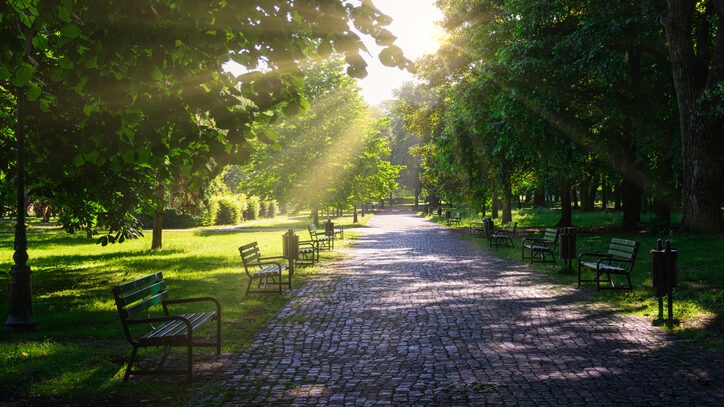
Against this backdrop, international and domestic research points to a critical tool in mitigating urban heat stress: tree shade. Recent studies suggest that expanding urban tree canopy can significantly lower summer mortality rates and cool city neighborhoods.
How Tree Shade Reduces Summer Mortality
A research team at Northwestern University’s medical school tracked urban changes in Chicago, Illinois, from 2011 to 2021, examining relationships between tree canopy coverage, peak summer temperatures, and mortality data.
The study found a strong correlation between increased shaded area and declining mortality. A 1% increase in annual tree canopy coverage was associated with a 9.8% drop in overall mortality. By cause of death, cardiovascular disease mortality fell by 9.2%, respiratory disease mortality dropped by 11.3%, and mental health disorder mortality saw the largest decline at 16.4%.
In a simulation conducted by the researchers, planting 14,000 additional trees annually in Chicago increased canopy coverage by 0.03%, which was associated with preventing approximately 105 deaths per year. Conversely, the hottest urban areas with declining tree cover experienced sharp spikes in mortality.
While the researchers noted that an observational study cannot definitively prove direct causality, they highlighted the tangible health benefits of urban greenery. Tree shade significantly reduces local temperatures, lowers exposure to heat stress and air pollution, and encourages physical activity—ultimately helping relieve stress and improve mental well-being.
Seoul Data Confirms Cooling Effect of Urban Forests
The cooling effect of urban trees is equally evident in South Korea. The National Institute of Forest Science, an agency under the Korea Forest Service, recently analyzed the relationship between urban forest coverage and summer land-surface temperatures across Seoul’s 25 autonomous districts.
The analysis revealed that districts where trees cover at least 30% of total land area maintained noticeably lower average temperatures than less green districts, with the temperature gap widening as tree coverage increased.
However, urban forest distribution across Seoul remains highly unequal. Top-ranked districts boast extensive green coverage, led by Gangbuk-gu (62.3%), Jongno-gu (61.1%), Gwanak-gu (57.4%), Eunpyeong-gu (52.2%), and Dobong-gu (51.3%)—all having more than half their area covered by trees. In contrast, Yeongdeungpo-gu recorded the lowest urban forest share at just 5.8%, while Gangseo-gu (10.2%) and Seongdong-gu (10.8%) barely exceeded 10%.
Trees cool their surroundings through transpiration—absorbing water through their roots and releasing it through leaf pores as water vapor. Because evaporation absorbs environmental heat, transpiration helps mitigate the urban heat island effect, while leafy canopies physically block solar radiation.
"Not only large-scale urban forests, but even a single tree or a small patch of greenery can play a meaningful role in mitigating heat wave impacts," said Dr. Je Seon-mi of the National Institute of Forest Science’s Urban Forest Research Center for Living Areas.