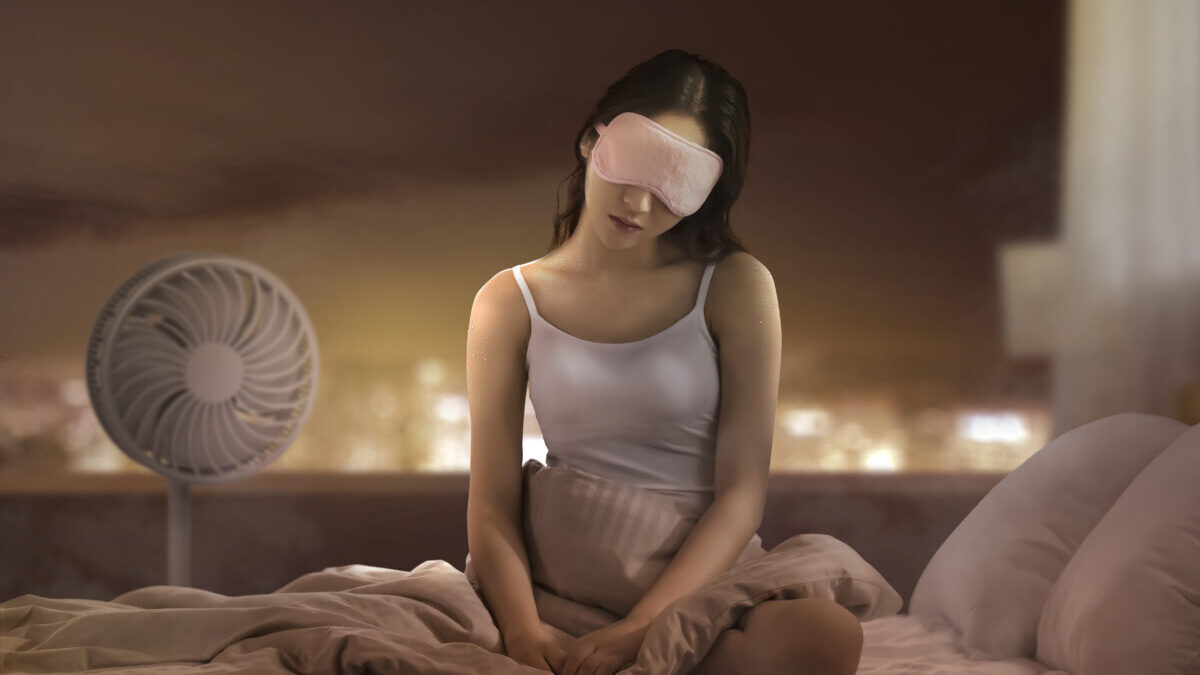
As scorching heat grips the nation, continuing "tropical nights"—when overnight temperatures remain above 25°C—are leaving many struggling to get a restful night's sleep.
For the body to achieve deep, restorative sleep, its core temperature (the internal temperature of organs) must drop slightly below its daytime baseline. Under normal conditions, as evening approaches, the brain increases secretion of melatonin—a hormone that promotes sleep—while blood vessels in the hands and feet dilate. As heat escapes through the skin, core body temperature naturally falls by about 0.5 to 1°C.
On tropical nights, however, this natural cooling mechanism breaks down.
"In hot and humid conditions, sweat does not evaporate well, preventing the core body temperature from dropping," said Park Chan-soon, president of the Korean Society of Sleep Medicine and professor of otolaryngology at St. Vincent’s Hospital, The Catholic University of Korea, in an interview with Kormedi.com. "Without that temperature drop, the physiological signal that signals sleep fails to turn on. Because the body has to work continuously to cool itself, getting into deep sleep becomes extremely difficult."
To sleep soundly, both temperature and humidity in the bedroom must be controlled. Sleep specialists recommend maintaining an indoor temperature of 18 to 22°C and humidity levels between 40 and 60%. Below are common questions and expert answers regarding summer sleep disruption.

Should you leave the air conditioner on all night?
Turning on the air conditioner about an hour before bedtime lowers the room temperature and creates an optimal environment for sleep onset. In extreme heat, setting the thermostat around 24°C is sufficient to help the skin release heat without chilling the room excessively.
If using a timer, it is better to set the air conditioner to turn off toward dawn rather than running continuously overnight. Core body temperature drops during early sleep stages and begins rising naturally toward morning as the body prepares to wake. Prolonged exposure to cold air overnight can cause you to wake up feeling chilled at dawn. Alternatively, raise the thermostat by 1 to 2°C overnight, or switch to a fan aimed away from the body to promote air circulation rather than direct cooling.
Does intense evening exercise help you sleep better from fatigue?
While light stretching before bed is beneficial, high-intensity workouts—such as heavy weightlifting—should be completed at least three hours before bedtime. Pushing the body too hard right before sleep raises core temperature and stimulates the sympathetic nervous system.
Sleep requires the parasympathetic nervous system to predominate. Activating the sympathetic nervous system right before bed delays sleep onset. Similarly, while late-night running may feel more comfortable than daytime exercise, workouts should be scheduled early enough to allow the body to cool down before sleep.
Does drinking alcohol help you fall asleep faster?
Alcohol may induce drowsiness initially and help you fall asleep faster, but its metabolic byproducts severely disrupt sleep architecture later in the night. As the body processes alcohol, it causes frequent micro-awakenings throughout the night, degrading overall sleep quality and leaving you unrested.
Will a cold shower before bed help you sleep soundly?
Cold water causes peripheral blood vessels to constrict, which paradoxically interferes with the body's ability to release internal heat. Cold exposure also increases alertness and activates the sympathetic nervous system. A warm shower is far more effective because it dilates blood vessels in the skin, facilitating heat loss once you step out.
Why do you feel groggy after a tropical night despite sleeping enough hours?
Oppressive heat disrupts two critical stages of sleep: slow-wave sleep and REM sleep. Healthy sleep involves cycling through stages 1 to 3 of non-REM (NREM) sleep and REM sleep about four to five times per night.
Stage 3, or slow-wave sleep, is the deepest phase responsible for physical recovery, memory consolidation, and flushing metabolic waste from the brain. REM sleep handles emotional processing, stress recovery, and cognitive function. When tropical nights repeatedly fragment these cycles, sleep quality plummets, leaving you feeling exhausted and foggy regardless of the total hours spent in bed.