
Concerns are mounting among households using ice water purifiers as consumer complaints continue to surface online reporting mold-like substances inside machines—even those receiving regular professional maintenance.
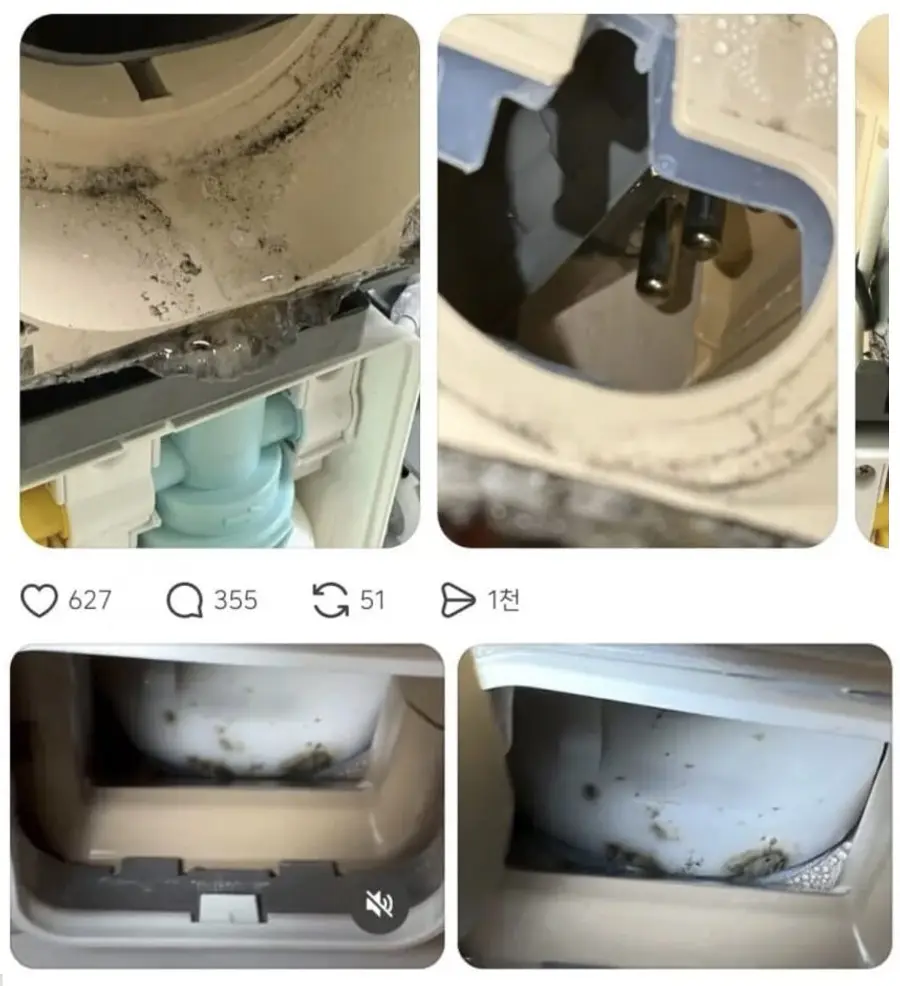
Recently, posts across social media platforms such as X (formerly Twitter) and Threads have featured photos showing the interior of ice water purifiers, often captioned with phrases like "I opened Pandora’s box." Users who disassembled their units reported finding black stains and foreign materials suspected to be mold, despite having manufacturer sterilization and maintenance services performed every three to six months.
However, social media photos alone make it difficult to definitively confirm whether the substance is actual mold or whether the contamination reached surfaces that contact ice or drinking water. Experts emphasize the importance of distinguishing between internal machine contamination and the safety of the drinking water itself.
The Condensation Dilemma Behind Ice-Making Functionality
Because ice water purifiers combine cooling and ice-making functions, they demand significantly tighter condensation and moisture management than standard water purifiers.
To freeze water, the ice-making mechanism and cooling components must be maintained at temperatures far lower than the surrounding ambient air. When these cold surfaces meet warm, humid air, condensation forms. If this moisture lingers, it creates an ideal environment for mold growth. The U.S. Environmental Protection Agency (EPA) highlights moisture control as the single most critical factor in mold prevention, identifying condensation on cold surfaces as a primary target.
Although manufacturers apply insulation around cooling units to block external heat, repeated condensation and inadequate drying can leave machines vulnerable to contamination over time. The Korea Consumer Agency previously conducted joint inspections with manufacturers and distributors after mold and organic growth were discovered on the external insulation of direct-pipe purifiers equipped with cold-water features.
Recently, manufacturers have introduced models featuring stainless steel components for ice-contact areas, alongside ultraviolet (UV) sterilization and automated self-cleaning systems. While stainless steel offers a smooth surface that facilitates cleaning, these features alone cannot eliminate all internal condensation or trapped moisture. Ultimately, consumers must evaluate how effectively a product's overall design manages the ice-making assembly and storage bin.
Professional Sterilization Does Not Guarantee Complete Protection
During visits to home appliance retail locations in Seoul and Gyeonggi Province, sales staff appeared hesitant to actively recommend ice water purifiers. One store employee noted, "While no official directive has come down from corporate headquarters, we receive customer inquiries and complaints so frequently that we currently advise buyers seeking ice models to purchase directly from the manufacturer rather than through retail outlets."
Industry insiders share similar assessments. Even with scheduled maintenance, contamination can recur if specific internal zones fall outside the service scope or if the home environment fosters severe condensation.
"Many consumers subscribe to rental care plans that include professional sterilization every few months," an industry source explained. "However, in high-humidity environments with severe condensation, internal contamination can still recur, making daily management critical." The source added that individuals who are particularly sensitive to hygiene and do not strictly require ice might consider standard direct-pipe water purifiers instead.
Hygiene disputes surrounding ice water purifiers are not new. In 2021, media reports highlighted a case where a consumer discovered foreign material in their ice tray just two months after receiving professional in-home maintenance. Experts at the time similarly pointed to internal temperature differentials that cause condensation and elevate moisture levels around the ice-making mechanism.
Nevertheless, experts caution against generalizing these isolated cases to assume every ice water purifier will experience identical issues or that professional sterilization is ineffective. Performance varies based on structural design, installation environment, ambient humidity, and the thoroughness of the maintenance protocol. Crucially, consumers should refrain from disassembling deep internal components themselves, as this can cause mechanical damage or safety hazards; suspected internal contamination should always be handled via an official service inspection.
Understanding Health Risks and Evaluating Alternatives
Ice-making components and storage bins require strict hygiene because unmaintained units can harbor microorganisms. The U.S. Centers for Disease Control and Prevention (CDC) recommends regularly cleaning and sanitizing ice makers and storage bins in accordance with manufacturer guidelines.
That said, discovering a mold-like substance inside a machine does not automatically indicate an immediate risk of food poisoning or gastroenteritis. A precise evaluation requires testing the specific microorganism present and verifying whether the affected area directly contacts drinking water or ice.
While no direct causal link has been established between the cases reported on social media and specific medical conditions, mold exposure can trigger allergic reactions—such as nasal congestion, coughing, and eye or skin irritation—and exacerbate symptoms in individuals with asthma. Extra caution is advised for individuals with chronic lung conditions or compromised immune systems. If visible contamination is detected on water- or ice-contact surfaces, users should suspend use and request a professional inspection.
For consumers who use ice infrequently or find maintaining an ice maker burdensome, direct-pipe water purifiers without ice-making modules offer a practical alternative. Without a large storage reservoir, direct-pipe models feature a simpler internal structure.
However, direct-pipe systems are not entirely free from bacterial or scale concerns. A survey by the Korea Consumer Agency revealed that spout hygiene—where water is dispensed—remains critical. In one self-managed direct-pipe model tested, total coliform bacteria were detected at the spout but were completely eliminated following spout sterilization. Consumers should also note that direct-pipe models may dispense water at lower flow rates depending on household water pressure and plumbing conditions.
Key Considerations for Purchasing and Maintenance
Opting for models designed for easy user maintenance presents another viable approach. Recent designs allow consumers to directly detach, wash, or replace specific components, such as dispensing spouts and internal water lines.
Even among self-managed models, the extent of user-accessible parts varies by manufacturer. Consumers must strictly adhere to recommended replacement cycles for filters and components, and thoroughly dry any washed detachable parts before reassembly.
Ultimately, buyers should look beyond marketing catchphrases such as "automatic sterilization" or "regular home maintenance." Prior to purchasing or renting a unit, consumers should inspect whether the ice-making module and storage bin are detachable for washing, clarify the exact scope of disassembly during professional servicing, verify how condensation drainage is handled, and confirm which parts can be cleaned or replaced independently.
For current owners, routinely inspect the ice storage bin and dispensing outlets for scale, discoloration, or unpleasant odors. If significant contamination is observed or internal conditions cannot be verified, it is safest to disable the ice-making function and request a manufacturer inspection rather than attempting unauthorized disassembly.