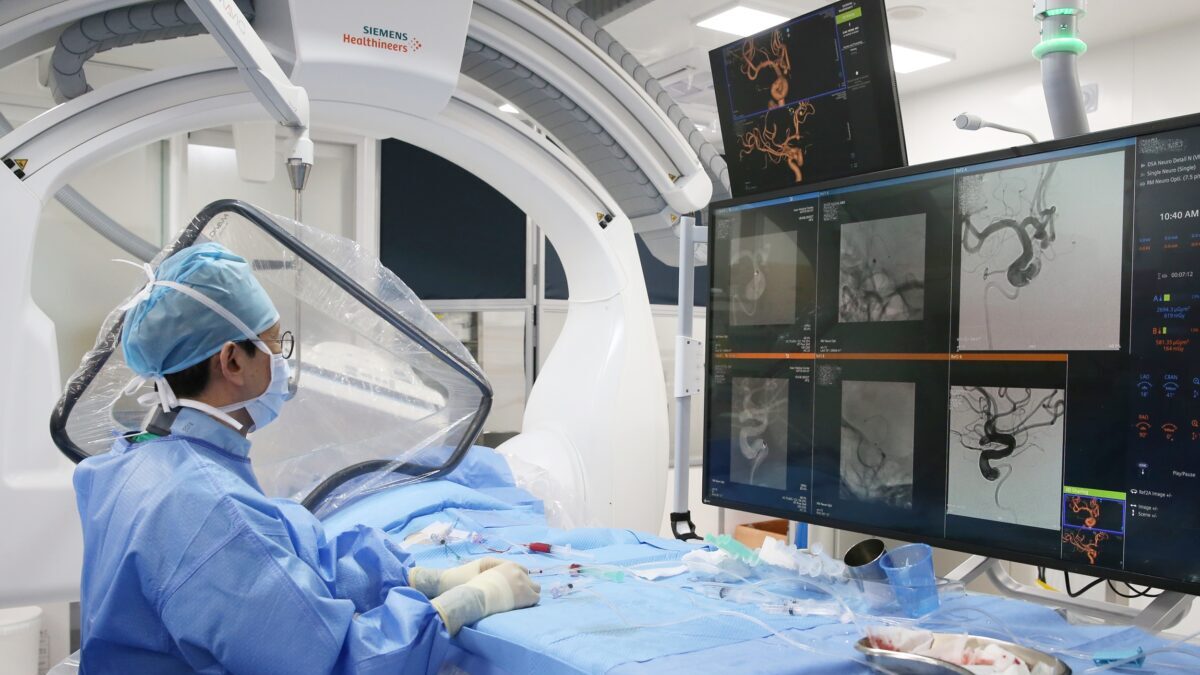
Treating a brain aneurysm presents steep clinical challenges when the lesion features a wide neck or develops at a complex vascular junction where major arteries branch. In such cases, neurosurgeons must prevent embolic coils from protruding into the primary blood vessel while ensuring uninterrupted blood flow to surrounding brain tissue.
A brain aneurysm is a localized weakness in an arterial wall that bulges outward like a small pouch. If the aneurysm ruptures, it causes a catastrophic subarachnoid hemorrhage—bleeding into the space surrounding the brain—which can trigger sudden, severe headaches, vomiting, loss of consciousness, permanent neurological damage, or death.
Asan Medical Center announced on July 28 that it has successfully performed South Korea’s first procedures using Artisse™, a next-generation brain aneurysm treatment device designed for complex cases that are difficult to manage with conventional techniques.
The hospital’s cerebrovascular team, led by neurosurgery professor Park Jung-chul, performed the Artisse procedure on five patients on July 20. All five presented with wide-necked aneurysms situated at critical arterial branching points—cases traditionally considered high-risk for standard endovascular intervention.
Expanding Mesh Device Promotes Natural Clotting and Closure
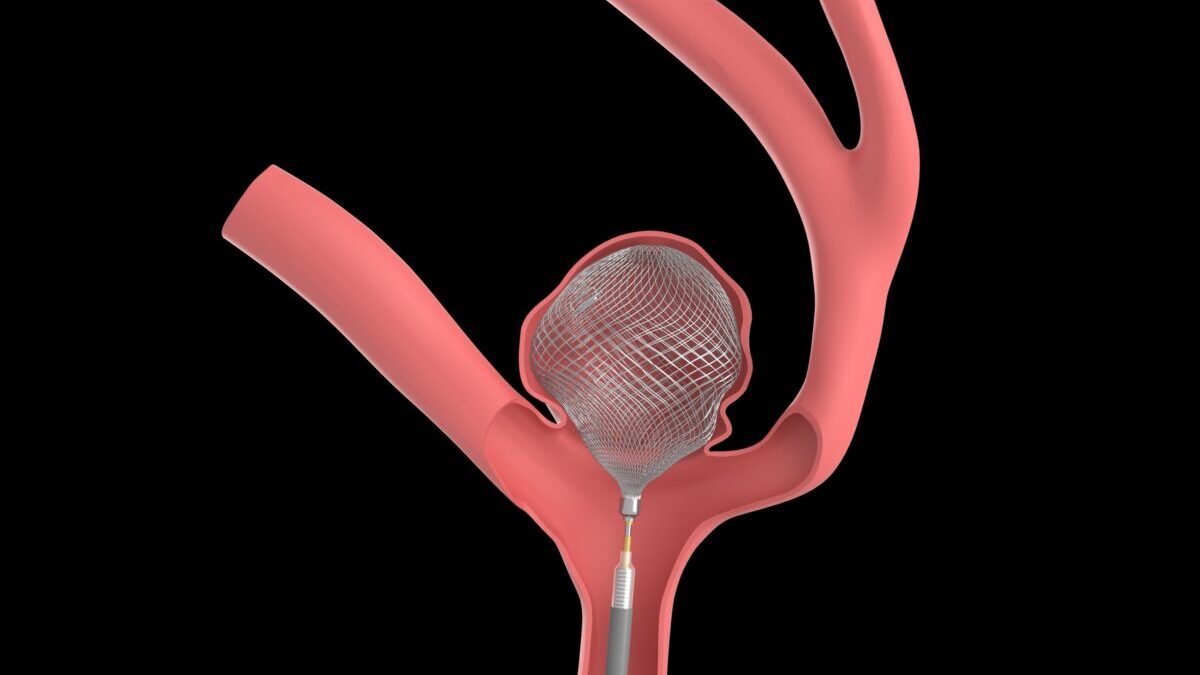
Artisse is deployed by navigating a microcatheter into the bulging aneurysm and expanding a fine metallic mesh inside the pouch. The device conforms precisely to the internal contours of the aneurysm, immediately disrupting and reducing intra-aneurysmal blood flow.
By stanching the flow of blood into the pouch, the device promotes the formation of a localized thrombus (blood clot) within the aneurysm. This natural physiological process gradually seals off the lesion from the circulatory system, preventing further expansion or rupture.
Tailored Alternative to Coils, Stents, and Craniotomy
Conventional treatment selection depends heavily on the aneurysm's geometry and anatomical location. Standard coil embolization fills the pouch with micro-thin platinum coils. When an aneurysm has a wide neck, surgeons often must deploy a stent within the main vessel to anchor the coils in place. Alternatively, surgical clipping requires open craniotomy to place a physical clamp across the aneurysm's base.
The medical team at Asan Medical Center evaluated whether standard coil embolization, stent-assisted coiling, or open surgical clipping was appropriate for these five complex cases. After assessing aneurysm dimensions, vascular architecture, and overall patient health, the team selected Artisse as the safest, most effective approach.
While Artisse does not replace all existing modalities, it provides a vital new treatment pathway for patients whose vascular anatomy makes traditional coiling or stenting impractical or unsafe.
Precision Sizing and Reduced Medication Burden
Artisse is available in 20 distinct dimensional configurations, allowing clinicians to select a device tailored precisely to the width, height, and location of a patient's aneurysm. It is particularly effective for wide-necked lesions and complex branch-point aneurysms.
Additionally, because Artisse remains contained entirely inside the aneurysm pouch, it may reduce or eliminate the need for long-term dual antiplatelet therapy—a medication regimen typically required to prevent blood clots when intravascular stents are placed in main arteries.
"Artisse offers an essential new option for brain aneurysm patients who cannot be treated effectively with coiling alone, or for elderly and high-risk patients for whom open craniotomy poses significant medical burdens," said Professor Park Jung-chul.
Since establishing its cerebrovascular surgery program in 1989, Asan Medical Center has recently surpassed a cumulative milestone of 20,000 treated brain aneurysm cases.
Developed by global medical device manufacturer Medtronic and produced by its Irvine, California-based affiliate Micro Therapeutics, Artisse represents an advanced iteration of intrasaccular technology first introduced in Europe in the early 2010s. The refined system was officially launched in Europe in 2024 and received regulatory approval from South Korea’s Ministry of Food and Drug Safety on June 1.