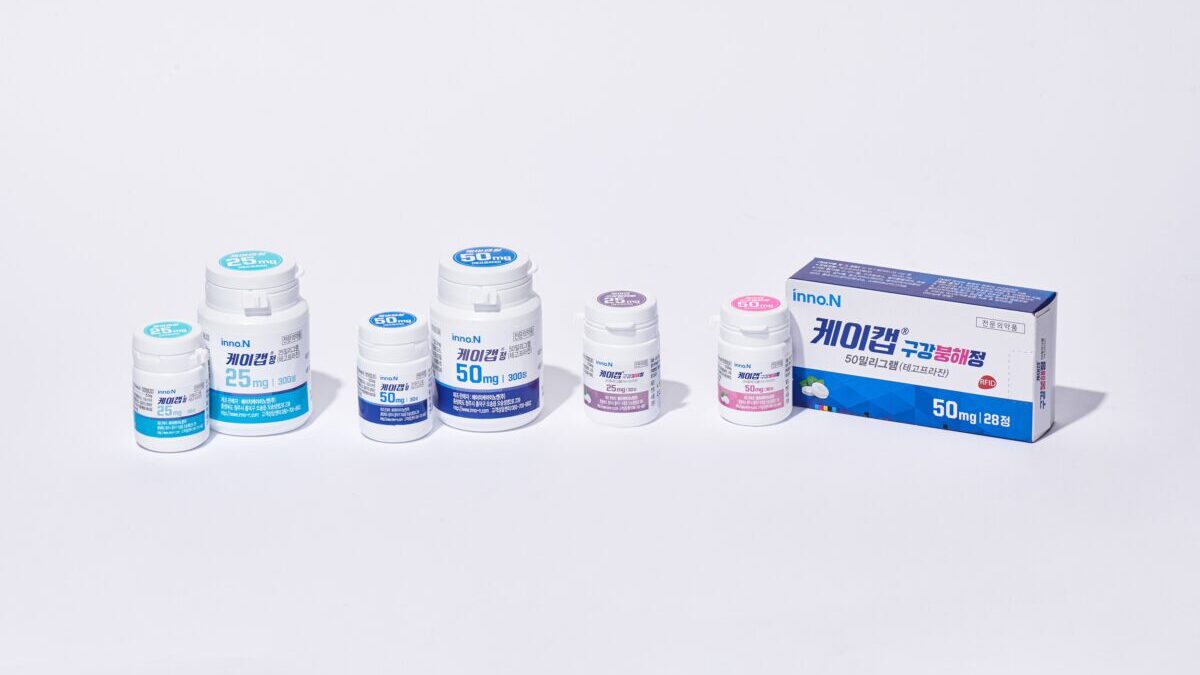
HK inno.N’s gastroesophageal reflux disease drug K-CAB has expanded its approved uses to include the prevention of gastric and duodenal ulcers associated with long-term nonsteroidal anti-inflammatory drug (NSAID) therapy. The regulatory approval marks the drug’s sixth clinical indication in South Korea.
HK inno.N announced on July 27 that K-CAB (active ingredient: tegoprazan) received official approval for the "prevention of peptic ulcers associated with administration of nonsteroidal anti-inflammatory drugs (NSAIDs)."
With this addition, K-CAB now holds six indications in South Korea: treatment of erosive gastroesophageal reflux disease (GERD), treatment of non-erosive GERD, treatment of gastric ulcers, combination antibiotic therapy for Helicobacter pylori eradication, maintenance therapy following erosive GERD treatment, and prevention of NSAID-associated peptic ulcers.
K-CAB currently holds the highest number of indications among potassium-competitive acid blockers (P-CABs) in South Korea—a class of therapeutics engineered to rapidly suppress gastric acid secretion. As population aging drives a steady rise in chronic pain patients who rely on long-term NSAID therapy, HK inno.N expects K-CAB to serve as a vital new safeguard against treatment-related gastrointestinal complications.
Phase 3 Trial Confirms Efficacy and Superior Heartburn Relief
The Phase 3 trial supporting the new indication evaluated the ulcer-preventive efficacy and safety of K-CAB 25 mg tablets against lansoprazole 15 mg, a standard proton pump inhibitor (PPI). The randomized, double-blind, active-controlled study enrolled 392 long-term NSAID users across 33 clinical sites nationwide.
After 24 weeks, the primary efficacy endpoint measuring the cumulative incidence of gastric and duodenal ulcers demonstrated that K-CAB was noninferior to lansoprazole. Notably, at week 12, the proportion of participants reporting complete resolution of heartburn symptoms was statistically significantly higher in the K-CAB group than in the lansoprazole group.
The trial evaluated K-CAB co-administration across a broad range of pain medications, including eight nonselective NSAIDs—such as pelubiprofen, naproxen, and meloxicam—and three COX-2 selective inhibitors, including celecoxib. The results confirmed consistent ulcer-prevention efficacy and a favorable safety profile across diverse NSAID regimens.
"Managing gastrointestinal adverse effects caused by long-term anti-inflammatory painkiller use remains a significant unmet medical need worldwide," said Kwak Dal-won, CEO of HK inno.N. "The robust clinical data supporting this new indication will serve as a key growth driver as K-CAB expands its global footprint as a blockbuster drug."