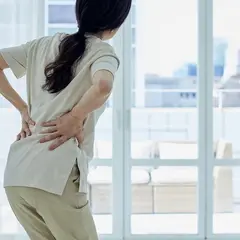
The hip joint connects the pelvis to the femur (thighbone) and serves as the body’s central weight-bearing axis. Supporting the mass of the upper body, it plays an essential role in almost all everyday movements, including walking, running, climbing stairs, and squatting. Consequently, joint damage in this area can severely impair mobility and make basic daily tasks painful.
In many cases, hip strain occurs without extreme overexertion. Pain can strike during a casual outdoor jog or a routine treadmill run. In particular, a sharp, stabbing ache in the groin or front of the hip—often paired with a sensation that something inside the joint is catching or pinching—frequently points to hip impingement syndrome.
Bone Collisions and the Rise in Younger Patients
Hip impingement syndrome occurs when subtle anatomical variations cause the pelvic bone or the head of the femur to protrude more than normal. As the hip rotates, these bony prominences repeatedly collide. Over time, this chronic contact triggers localized inflammation and damages protective joint tissues, such as the labrum and cartilage.
Although joint issues are often associated with aging, hip impingement frequently affects younger, physically active individuals. An analysis of Health Insurance Review and Assessment Service claims data, published in 2025 in the Journal of Korean Medical Science, found that while patients treated for the condition were most commonly in their 50s across both sexes, a significant secondary peak occurred among men in their early 20s.
Avoiding Aggravating Positions and High-Impact Movements
For those who suspect hip impingement, orthopedists strongly advise against "running through the pain" or continuing heavy lower-body training. Instead, the immediate priority is cutting back on movements that trigger discomfort. Motions that require deep hip flexion or inward rotation—such as deep squats, sitting cross-legged, or sitting on low chairs for prolonged periods—can significantly aggravate symptoms.
Daily training habits also play a major role in protecting joint health. Repetitive high-impact stress or sudden spikes in exercise volume raise the risk of hip impingement alongside other soft-tissue injuries.
"Repetitive impact or excessive stretching can cause bursitis or stress fractures around the hip, which typically present as persistent groin pain," explained Professor Jung Sang-jin of the Department of Orthopedic Surgery at Myongji Hospital. "It is essential to stretch adequately before exercise to relax the joint capsule and surrounding muscles, and to escalate training volume gradually."
Conservative Treatment and Rehabilitation
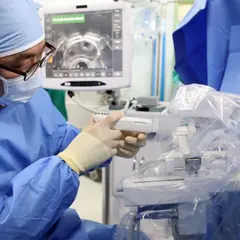
A diagnosis of hip impingement syndrome does not automatically mean surgery. Treatment almost always begins conservatively by modifying pain-inducing activities and starting targeted physical therapy and rehabilitation. If discomfort persists, clinicians may consider oral anti-inflammatory medications or targeted injection therapy. Surgery is generally reserved for severe cases that fail to improve after structured non-surgical care.