
For many, breakfast is as simple as a slice of toast, a bagel, or a croissant. It is quick to prepare, convenient, and satisfying. However, constant warnings about the health risks of refined carbohydrates often bring a side of guilt. Fortunately, you do not have to eliminate bread from your diet entirely. If bread is a staple in your routine, adopting one straightforward rule can transform your meal.
The strategy is simple: whenever you eat a piece of bread, add one protein or one vegetable. For instance, swap jam for unsweetened peanut butter and pair it with a hard-boiled egg, or enjoy a small side salad before eating a bagel. If you choose a croissant, pair it with a cup of Greek yogurt. This approach significantly improves nutritional balance and keeps you full for longer. Here are practical, nutrient-dense pairings to help fill common dietary gaps.
One Egg per Slice: The Perfect Protein Counterbalance
While bread contains some protein, it is predominantly a source of carbohydrates. Two slices of standard white bread offer about 6 to 7 grams of protein; adding a single hard-boiled egg boosts that by another 6 grams. Incorporating eggs effectively compensates for the macronutrients that bread lacks.
Protein plays a vital role in maintaining muscle mass and promoting satiety. Carbohydrate-heavy meals digest rapidly, which can cause blood sugar spikes followed by a quick return of hunger. Combining protein with carbohydrates slows digestion, keeping food in the stomach longer and delaying subsequent cravings.
A single hard-boiled egg contains only 70 to 80 calories, making it a low-calorie, nutrient-dense addition. It is also an excellent source of vitamin B12, which supports nerve function and red blood cell formation, and choline, an essential nutrient involved in brain health and cellular structural integrity.
Instead of slathering toast with butter, try mashing a hard-boiled egg to use as a sandwich filling. Mixing it with a pinch of black pepper and plain yogurt maintains a creamy texture while cutting back on high-calorie mayonnaise. Adding a slice of cheese can further boost your protein and calcium intake.

Vegetables First: How Meal Sequencing Alters Digestion
When consuming bread, the order of consumption matters just as much as the pairing itself. Eating bread on an empty stomach can lead to rapid overeating. Instead, begin your meal with vegetables rich in water and dietary fiber—such as lettuce, cucumber, bell peppers, cherry tomatoes, or baby greens—before moving on to the bread. This sequence naturally moderates your eating pace and prevents the temptation to reach for an extra slice.
Simply placing a lone tomato slice on a sandwich provides negligible dietary fiber. The key is to consume a dedicated plate of vegetables beforehand. To save time, prepare ready-to-eat vegetables in advance, such as washing a handful of cherry tomatoes, half a cucumber, or sliced bell peppers.
Prioritizing vegetables also helps meet daily dietary fiber recommendations, which support gut health and regular bowel movements. While adults are advised to consume 25 to 30 grams of fiber daily, most fall short. Establishing a routine of eating a small plate of vegetables before bread is an easy way to close this gap.
Swap Butter and Jam for Unsweetened Peanut Butter
Traditional toppings like butter and jam add substantial calories, sugar, and saturated fat to your meal. Adding butter to an already rich pastry, like a croissant, only compounds the caloric load.
Opting for unsweetened peanut butter instead introduces beneficial proteins and unsaturated fats. Healthy fats are essential for sustained satiety. However, because peanut butter is calorie-dense—containing roughly 90 to 100 calories per tablespoon—it should be spread thinly to manage total calorie intake.
Product selection is also crucial. Many commercial peanut butters contain added sugars and palm oil. When reviewing ingredient lists, select products that list peanuts as the primary ingredient and minimize or exclude added sugars, corn syrup, and hydrogenated oils.
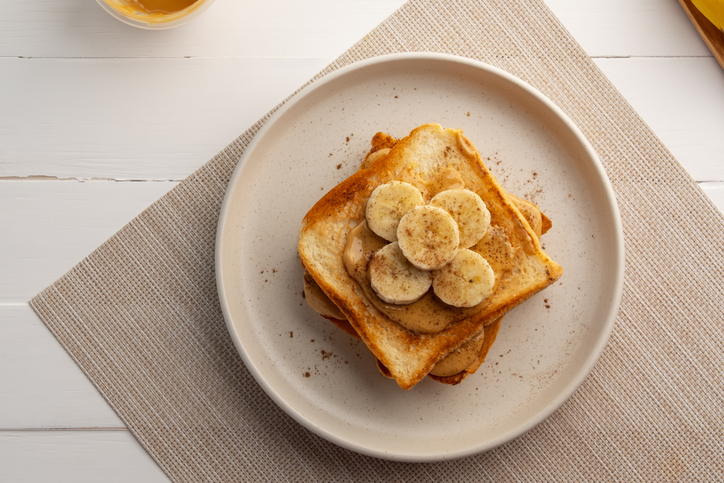
To add natural sweetness and nutrients, top your peanut butter toast with half a sliced banana, which provides potassium and additional fiber. A light dusting of cinnamon powder can further enhance the flavor profile without adding refined sugar.
Pair Coffee with Greek Yogurt as a Cream Cheese Alternative
While a morning coffee pairs wonderfully with bread, the combination offers minimal nutritional value. Adding a cup of unsweetened Greek yogurt introduces vital protein, calcium, and probiotics to the meal.
Depending on the brand, Greek yogurt typically provides 9 to 11 grams of protein per 100-gram serving. It supports digestive health through beneficial bacteria, and adding antioxidant-rich fruits like blueberries or strawberries supplies extra fiber.
Greek yogurt can also serve as a direct substitute for cream cheese. Mixing Greek yogurt with a pinch of pepper, a drizzle of olive oil, and a splash of lemon juice creates a savory, tangy spread perfect for open-faced sandwiches. This alternative cuts down on sugars and saturated fats while offering a light, refreshing flavor.