
“Mom, my mouth hurts so I can’t eat.”
When a child suddenly puts down their spoon, a quick check inside the mouth often reveals small blisters on the inside of the tongue. A subsequent look at their hands and feet frequently confirms the culprit: hand, foot, and mouth disease. Every year in June, this highly contagious infection spreads rapidly through daycares and kindergartens, but this year's outbreak is moving at an alarming pace. By the second week of June, the number of cases among infants and toddlers aged 0 to 6 climbed to 12.8 per 1,000 outpatients—marking a stark 5.6-fold jump within a single month.
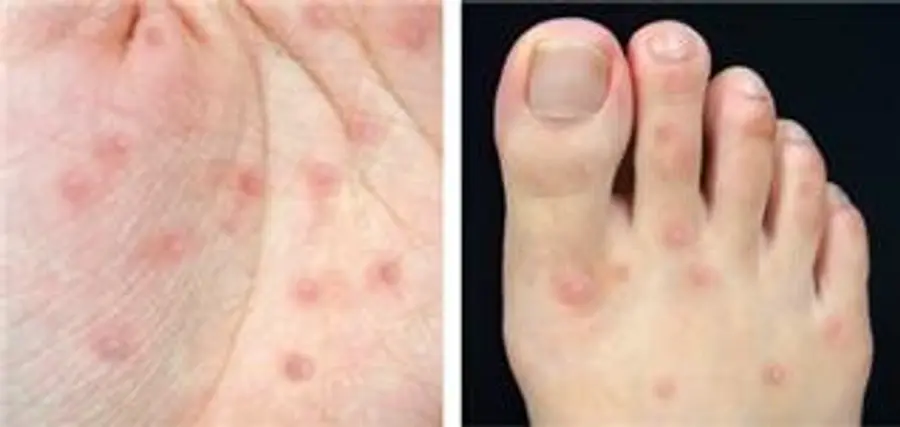
Spotting the Signs: Hand, Foot, and Mouth Disease vs. Chickenpox
True to its name, the disease primarily manifests across the hands, feet, and mouth. Following an incubation period of three to five days, a mild fever and sore throat typically develop first. This is followed by the appearance of painful blisters and ulcers on the lining of the mouth, alongside a red rash on the backs of the hands, the soles of the feet, and the buttocks. In severe cases, the intense oral pain leaves children unable to swallow their own saliva, causing them to drool repeatedly.
Parents often confuse these symptoms with chickenpox, but the two illnesses progress differently. A chickenpox rash generally starts on the face and torso before spreading across the entire body, triggering intense itching. Conversely, a hand, foot, and mouth disease rash remains tightly concentrated on the hands and feet, with acute pain being far more prominent than itching.
Managing Recovery and Recognizing Emergency Red Flags
According to medical guidance from Seoul National University Hospital, the vast majority of children recover naturally within three to seven days. Most patients struggle through the first two days of the illness before their condition begins to improve on its own.
Because there is no specific vaccine or targeted antiviral treatment, care relies entirely on symptom management. A primary concern is preventing dehydration when oral pain causes a child to refuse food and liquids. Parents should strictly avoid serving spicy or sour foods that can irritate the sores. Instead, offer small, frequent portions of soft, cool alternatives such as chilled rice gruel, porridge, milk, or yogurt.
However, parents must monitor their children closely for severe complications. If a child has not urinated for more than eight hours, or fails to produce tears when crying, these are critical signs of dehydration that require an immediate hospital visit. Furthermore, if a high fever persists, or if the child experiences repeated vomiting, seizures, or a sudden decrease in consciousness, they must be taken to the emergency room immediately, as the infection can occasionally progress to dangerous conditions like meningitis, encephalitis, or myocarditis.
The Return to Daycare and the Hidden Risk of Viral Shedding
When a child begins to feel better, parents face the practical challenge of deciding when it is safe to send them back to group environments. The primary hurdle in controlling outbreaks is that the resolution of symptoms does not mean the virus is gone.
Dozens of different enteroviruses can cause hand, foot, and mouth disease. Because a child only develops immunity to the specific strain they contracted, they can easily be infected again by a different type later in the season. This multi-strain reality makes targeting the disease with a single vaccine exceedingly difficult. Furthermore, because most individual cases resolve naturally within a week, pharmaceutical companies have little commercial incentive to develop specialized antiviral medications.

Yoon Gi-wook, a professor of pediatrics at Seoul National University Hospital, advises careful isolation during the acute phase: “If hand, foot, and mouth disease is suspected or diagnosed, the most effective way to prevent the spread of infection is to stop group activities such as daycare or kindergarten until contagiousness weakens.”
The critical challenge for households and schools is that even after a child appears fully recovered and visible symptoms disappear, the virus continues to be shed in their stool for more than eight weeks. Consequently, contaminated hands that have changed a diaper or used the restroom can easily transfer the virus to shared toys, quickly reaching another child. To break this cycle of transmission, rigorous prevention must extend long after a child returns to daycare, requiring continuous, thorough handwashing with soap and running water after using the restroom, before meals, and after diaper changes, alongside the regular disinfection of toys and doorknobs.