Even when patients undergo CT or MRI scans at provincial facilities, too few specialists are available to interpret the images. In the end, patients head to large hospitals in the capital region.
That pattern is not unique to South Korea. Vietnam’s concentration of patients at a handful of major hospitals—and its regional health care disparities—closely resemble South Korea’s.
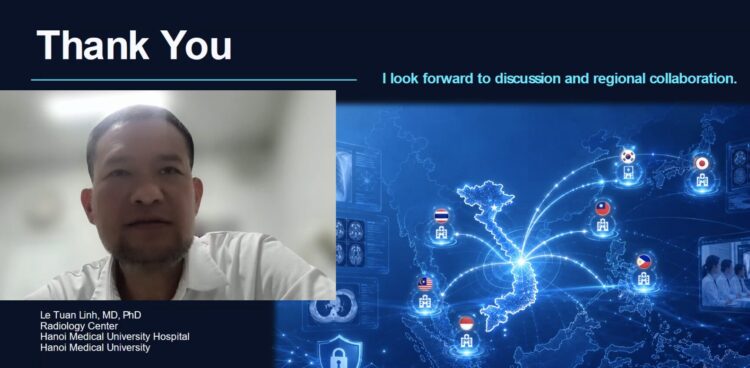
Hanoi Medical University Hospital (HMUH), Vietnam’s largest medical institution, is trying to address those gaps by building a large-scale telemedicine system. By creating a collaborative network with multiple institutions, regional medical centers can draw on the expertise of a major hospital, and patients can avoid unnecessary long-distance travel.
Le Tuan Linh, head of the Radiology Center at Hanoi Medical University Hospital and the leader of the effort, described the hospital’s experience running a teleradiology program at an Asian Telemedicine Association webinar on the 23rd.
Hospitals come to patients, not the other way around
Provincial hospitals struggle to keep experienced radiologists on staff. Specialists in highly technical subspecialties—such as oncology, cardiovascular disease and brain disorders—are even harder to find. The problem affects both South Korea and Vietnam.
To respond, the hospital has built a large cooperative health care system with Hanoi Medical University Hospital as the “central hub.” The hospital’s Radiology Center has about 230 staff members, including 79 radiologists and 59 radiologic technologists.
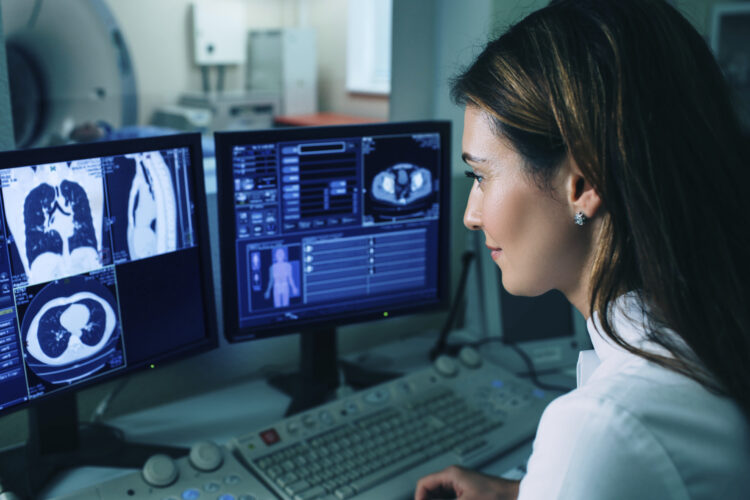
When a patient is tested at a hospital near home, the imaging data are transmitted to Hanoi Medical University Hospital, hundreds of kilometers away. After radiologists at the Radiology Center interpret the images, the results are sent back, allowing local clinicians to continue care based on those findings.
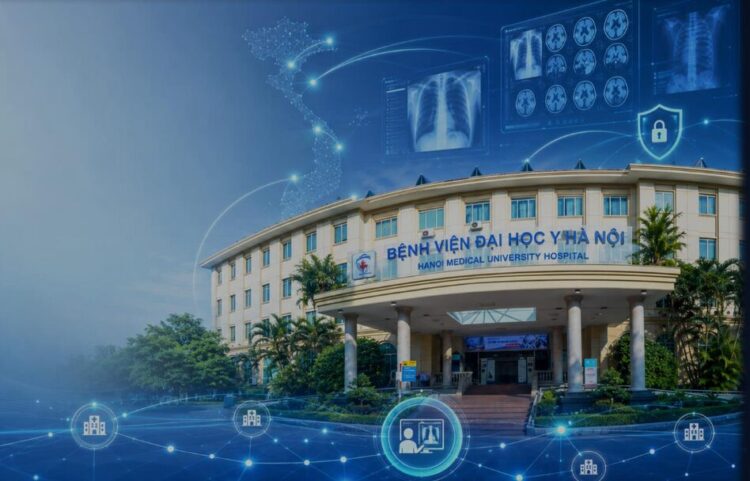
For patients, it can feel as if a top-tier general hospital has come right to their doorstep.
Under this structure, regional hospitals can use the medical infrastructure of higher-level hospitals, and patients can trust the diagnosis while starting treatment quickly near where they live. From the university hospital’s perspective, it can also accumulate data from many patients across a range of institutions, which it expects will improve the quality of care over the long term.
“We are currently collaborating with 136 medical institutions and performing more than 2,500 teleradiology reads each month,” Linh said.
Technology is essential; institutional gaps such as legal liability remain unresolved
For such a system to run smoothly, it needs a solid technical foundation.
“For remote interpretation to provide the same level of reliability as on-site reading, you need an environment that can quickly transmit and receive large-volume imaging studies,” Linh said.
To faithfully reproduce exam results, facilities need computer systems that provide 3D visualization and rendering tools, as well as functions to zoom, pan, and rotate images. Teleradiology is not simply about writing a report on test results; it is a process in which experts from multiple institutions discuss cases, exchange feedback, and reach shared clinical decisions.
Concerns about personal data also remain. Most hospitals’ medical record systems are closed to protect patient information. To exchange imaging results despite those constraints, medical record systems must be interoperable across institutions while still maintaining strict security standards to protect data.
Linh stressed that “at present, legal responsibility in the remote reading process is not clearly defined. The reimbursement system is also not properly established, so appropriate compensation is not paid. In this structure, long-term operation is difficult in reality.”
South Korea also hits limits amid chronic staffing shortages and inadequate pay
South Korea has faced similar constraints. The National Medical Center, commissioned by the Ministry of Health and Welfare, operates the “Emergency Imaging Interpretation Support Project for Underserved Areas.” As of 2024, 37 medical institutions participate, and the annual number of reads exceeds 13,000.
The program has been described as a major help for care in areas with limited access to medical services, and it has been credited with significantly reducing the time it takes emergency patients to reach definitive treatment.
Still, securing staff or expanding the number of image-interpretation providers remains difficult. Problems include on-call specialists having to complete close to 40 reads over 12 hours on nights and holidays, while allowances are set at the same level regardless. Critics say compensation is inadequate given the heavy workload.
Linh stressed that “it is necessary to establish formal rules and review fees and compensation systems to clarify an appropriate payment model and regulatory measures. Only then can a sustainable virtuous-cycle model be built.”
The Asian Telemedicine Association supports academic exchange among experts across Asian countries through symposiums and webinars. Kang Dae-hee, a professor at Seoul National University College of Medicine, serves as the association’s inaugural president and is leading its operations and the development of its collaborative network.
An association official said, “Gaps in specialist medical staffing between regions are a common problem in many Asian countries,” adding, “Through various academic exchanges, experts from each country aim to explore directions for regional health care innovation and international cooperation together.”