“Emergency care and treatment for high-risk mothers and newborns are not profitable. But they are areas someone must take responsibility for. That is why university hospitals exist, and it is the path Dongsan Medical Center must take.”
In Daegu and North Gyeongsang Province, the medical community’s primary focus is building a "regionally self-sufficient essential care system." As patient concentration in the Seoul metropolitan area intensifies, critically ill emergency patients and high-risk mothers have repeatedly faced dangerous delays in obtaining appropriate treatment within their own regions. This challenging phenomenon, widely known as the "ER merry-go-round," has long been a pressing social issue.
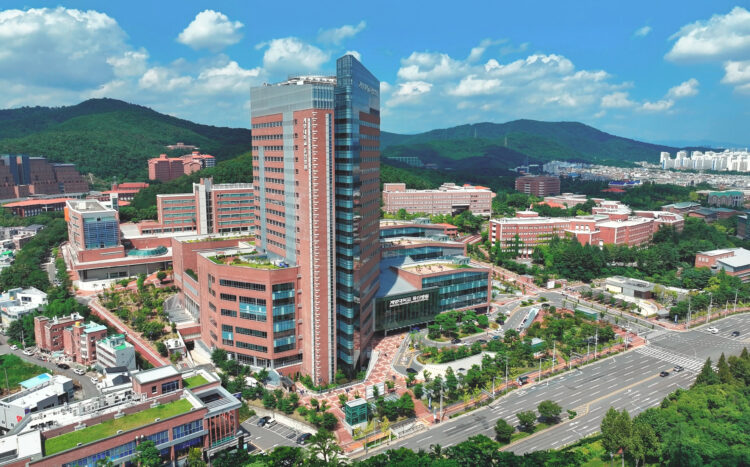
Against this backdrop, Keimyung University Dongsan Hospital is laying out a blueprint to build a new pillar of regional essential care by pursuing official designations as both a regional emergency medical center and a severe maternal care center.
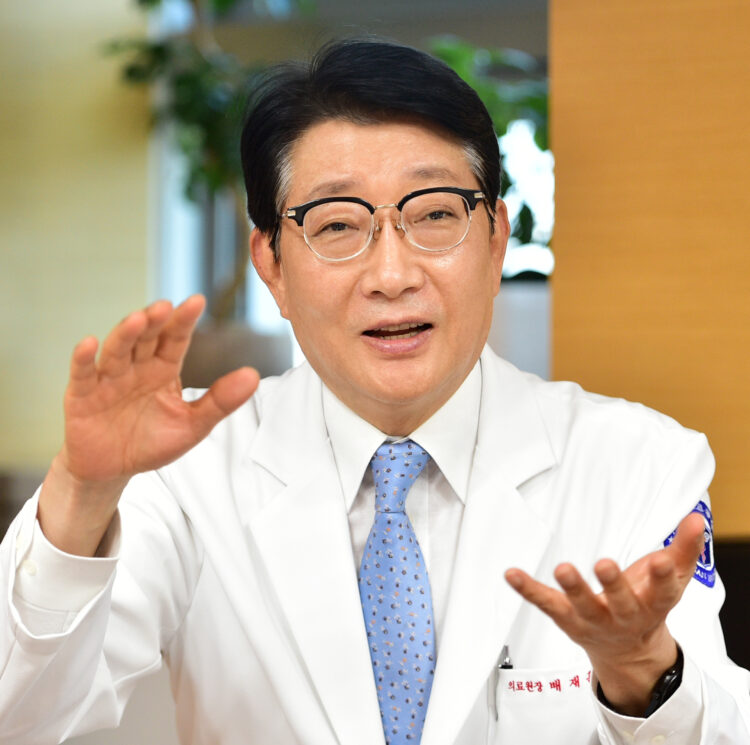
At the center of this ambitious initiative is Bae Jae-hoon, director of Keimyung University Dongsan Medical Center. A basic medical scientist and former professor of physiology, Bae is an all-around leader possessing broad experience across hospital planning, management, and external cooperation. Though he assumed office less than half a year ago, he has been mapping the future of regional healthcare at the unique intersection of a scholar’s perspective—one who has studied the core principles of life—and a chief executive's pragmatic outlook.
Throughout a recent interview, Bae repeatedly stressed that “patient safety must be proven by systems, not slogans,” noting that this very philosophy drives the hospital's proactive investments in emergency and maternal care.
“Our mission is to create an environment where local residents can receive top-level care without having to travel to Seoul,” he said.
An 'Operating System' Driven by Patient Safety
Bae compares a regionally self-sufficient essential care system to a massive living organism. Drawing on his background as a physiologist, he highlights the concept of “homeostasis”—the capacity of living systems to survive and maintain stability even under extreme stress and crisis.
“A regional emergency medical center serves as the hub of the autonomic nervous and cardiovascular systems, intervening immediately during a crisis to save lives,” Bae explained. “Meanwhile, a severe maternal care center represents the very source of life support, safely preserving the lives of the next generation.”
He emphasized, however, that the significance of these two centers extends far beyond strengthening specific clinical fields.
“To provide flawless, 24-hour treatment for severe emergency patients and high-risk mothers, the entire hospital—including obstetrics and gynecology, pediatrics, anesthesiology, pain medicine, and radiology—must operate organically at the highest level. Ultimately, these two centers will serve as the ‘core operating system (OS)’ that elevates the capabilities of Dongsan Medical Center as a whole.”
Overcoming the 'ER Merry-Go-Round' Through Definitive Treatment Capacity
Regardless of the official designation timeline, Dongsan Hospital has already begun expanding its emergency intensive care unit (EICU) and proactively increasing its neonatal intensive care unit (NICU) beds and specialized medical staff. For a university hospital, this entails no small financial burden. Yet, Bae remains resolute: “It is an investment we obviously have to make.”
The profound lessons of the COVID-19 pandemic remain vivid in his mind.
“We previously dedicated the entire Daegu Dongsan Hospital as a specialized infectious disease facility,” Bae recalled. “At that time, I keenly realized that the true value of a medical institution is proven by how many critical patients it can safely accommodate and treat.”
Driven by this mission, Dongsan Hospital is expanding its EICU capacity to 20 beds and scaling its NICU from 38 to 51 beds. It has also established a seamless, 24-hour operating system for its cardiovascular and cerebrovascular care teams alongside a dedicated ECMO (extracorporeal membrane oxygenation) team.
“This is not simply an investment in facilities,” Bae noted. “It is a future-oriented commitment to protecting the lives of local residents, embodying the 127-year-old 'Medical Frontier' spirit of Dongsan Medical Center.”
According to Bae, regional imbalance remains the structural flaw in Daegu's current emergency care framework. Currently, no regional emergency medical center exists to serve Dalseo-gu and Dalseong-gun, areas home to roughly 770,000 residents. Conversely, Seongseo Dongsan Hospital sits at a strategic geographic crossroads, positioning it to cover not only southwestern Daegu but also medically underserved areas across North Gyeongsang Province (including Goryeong, Seongju, and Chilgok) and South Gyeongsang Province (such as Changnyeong and Hapcheon). Today, a significant portion of the hospital’s patients hail from these communities.
“By securing designation as a regional emergency medical center, we can balance the emergency care infrastructure currently concentrated in central Daegu and establish a vital new axis as a southwestern regional medical hub,” Bae said.
He also offered a sharp diagnosis of the persistent "ER merry-go-round" crisis. “The core problem is not a simple shortage of ER beds. The fundamental issue is a lack of backup ICU beds and specialized faculty capable of delivering definitive, final treatment for critically ill patients.”
The solution championed by Dongsan Hospital is a “one-stop definitive treatment completion system.” This framework connects a patient seamlessly from the exact moment of arrival at the ER directly to the ICU, operating room, and inpatient wards—ensuring complete, life-saving surgical intervention occurs well within the critical golden hour.
A Comprehensive Safety Net Enhanced by Smart Technology and Legacy
Care for high-risk mothers and newborns remains one of the most heavily avoided sectors of essential medicine due to low medical reimbursement rates and high workloads, making specialized recruitment incredibly difficult nationwide. Nevertheless, Bae advocates for a severe maternal care center more passionately than anyone.
“The key is building a bulletproof safety net where critical care never halts, no matter the circumstances,” he said.
High-risk pregnancies require a highly coordinated, single-track approach spanning prenatal diagnosis, delivery, neonatal intensive care, and pediatric surgery.
“If any link in that chain breaks, the mother is forced to search from hospital to hospital while the newborn remains vulnerable in an ambulance,” Bae warned. “The anxiety and despair families experience in those moments are beyond words.”
To solve this, Dongsan Hospital’s model integrates obstetrics, neonatology, pediatric surgery, anesthesiology, and radiology into a unified, single team operating 24 hours a day. The ultimate goal is to give regional expectant mothers total peace of mind that the hospital will take absolute responsibility until the very end.
Concurrently, Dongsan Medical Center is pioneering an AI- and robot-based smart hospital infrastructure that ranks among the most advanced in South Korea. However, Bae cautions that technology must never become an end in itself. He points to the hospital's "AI-driven stroke and cardiovascular/cerebrovascular imaging analysis solution" as a prime example of purposeful innovation.
“This system analyzes CT and MRI scans of hyperacute stroke patients in real-time, delivering lesion insights at a specialist level,” Bae explained. “It dramatically slashes the time required to authorize critical thrombolytic administration or emergency procedures.”
Beyond accelerating diagnoses, the technology mitigates the cognitive burden and physical fatigue of medical staff during overnight shifts. Ultimately, smart systems serve as reliable clinical assistants designed to maximize patient survival rates.
As the interview drew to a close, Bae detailed his vision for expanding into the global medical market.
“While much of South Korea’s medical tourism remains heavily centered on plastic surgery and cosmetic procedures, Dongsan Medical Center is taking a fundamentally different path,” he asserted. “The foundational spirit of respect for life and Christian love that began at Jejungwon 127 years ago remains deeply embedded in our DNA.”
The future Bae envisions is a premier global medical hub boasting world-class competitiveness in high-difficulty, complex procedures, including advanced cancer surgeries, complex cardiovascular interventions, and organ transplantations.
“We want multicultural families, foreign workers, and severely ill patients worldwide to know with absolute certainty that Keimyung University Dongsan Hospital is a place where they can safely entrust their lives. That is the true value we strive for.”
Ultimately, Bae’s leadership philosophy distills down to a core conviction: choosing lives over profits, and accountability over competition.
“Someone must step up to protect essential healthcare,” Bae concluded. “Dongsan Medical Center will gladly shoulder that responsibility.”