“A lot of people call drug addiction an ‘express train to hell,’ right? It is a remarkably accurate metaphor. In addiction, there is no middle ground. You either find a way to stop, or you plummet off a cliff and hit absolute rock bottom. It is strictly one or the other.”
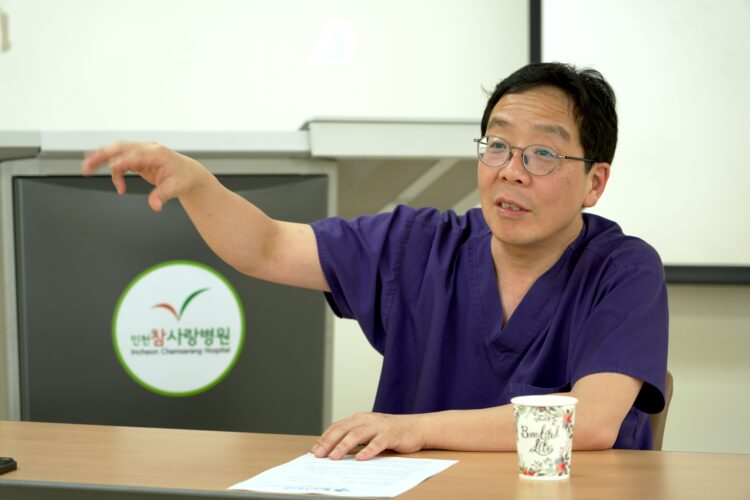
The day before this interview with Cheon Young-hoon, director of Incheon Chamsarang Hospital, a woman in her 30s was discovered collapsed in Seoul’s affluent Gangnam district. Beside her were shopping bags packed with propofol vials and used syringes. For Cheon, such shocking scenes are no longer anomalies; they are the daily reality of his examination room. Unlike in previous decades, young people trapped in the cycle of substance abuse have become devastatingly common.
In clinical terms, addiction is defined as an excessive, uncontrollable dependence on a specific behavior or substance. The definitive benchmark for diagnosis is functionality. For instance, if an individual drinks only half a bottle of soju a day but that consumption actively disrupts their occupational or social life, it qualifies medically as an alcohol addiction. Conversely, someone who drinks heavily but maintains their social and daily responsibilities might not strictly meet the clinical criteria for addiction.
Illicit drugs, however, operate on an entirely different plane. They cannot be casually monitored over time like nicotine, alcohol, or gaming to see when they begin to impair daily function.
"Drugs are substances that completely dismantle the natural ceiling of pleasure the human brain is wired to experience," Cheon explains. "They provide an artificial high that can never be replicated through any natural means. Patients do not slide into addiction because they are ignorant of the dangers. They reach for the substance again because an ordinary, sober life without it begins to feel agonizingly painful and exhausting."
We asked Cheon, who has pulled countless patients out of the swamp of addiction and helped them build new lives, what he is seeing now on the front lines of drug addiction treatment.
Reports indicate a dramatic rise in younger addiction patients. What does that demographic shift look like on the ground?
"We have reached a point where middle and high school students represent our most frequent patient profile. It has evolved past a simple increase in numbers. Among the younger generation, the crucial psychological barrier—the deep-seated emotional aversion that drugs are a boundary line you must never cross—has completely collapsed."
Cheon notes that securing illicit substances has also become remarkably trivial. Digital spaces have enabled the distribution of "drug recipe guides"—instructional blueprints detailing how to combine readily available prescription medications to mimic the intense effects of illicit street drugs, marking a dangerous peak in drug misuse and abuse.
What stands out as the biggest hurdle in the addiction treatment process?
"A lot of people misunderstand this, but drug addiction treatment doesn’t work by force. You can’t solve it by dragging in a patient who doesn’t think they need treatment and making them sit there. You can’t forcibly treat someone who thinks, ‘I’m just going to keep using drugs.’ Treatment begins only when the patient feels they need it. The problem is that the process of getting to that point is truly grueling."
Do patient tendencies and behaviors vary significantly depending on the specific substance they abuse?
"Drugs are broadly divided into stimulants, depressants, and hallucinogens. It’s not absolute, but depending on the type, patients’ tendencies do tend to be somewhat similar."
Stimulants force the brain into a state of hyper-arousal. Common examples include philopon (methamphetamine), ecstasy (MDMA), cocaine, and phentermine. Addicts bound to stimulants frequently display intense impulsivity—reacting with extreme volatility to minor stressors. Notably, this patient group carries the highest risk of suicide.
Depressants, by contrast, suppress the central nervous system to numb anxiety and panic. This category includes benzodiazepine-class drugs, zolpidem, and propofol. Those dependent on depressants often become highly irritable and sensitive, instigating conflicts over trivial matters. Cheon describes it by saying, “It feels like a person becomes sticky.” Meanwhile, hallucinogen users are characterized by severe sensory distortions and a profound detachment from objective reality.
While total avoidance is the ideal, what should someone do if they happen to come into contact with drugs?
"Getting counseling immediately is the most important thing. We don’t recommend hospitalization for every patient. We advise admission when there is a high risk of self-harm or harm to others and when acute intoxication symptoms are present. For patients who come to the hospital because they want to quit, we do follow-up monitoring with urine tests once a week. As with other conditions, the best response to drug addiction is to catch it early."
Cheon adds that the colloquial warning that "drugs melt your brain" is an accurate clinical diagnosis rather than a hyperbolic metaphor. Prolonged use of philopon, which dominates South Korea's illicit drug market, causes irreversible structural damage to the brain. Once the pathology progresses to this advanced stage, permanent institutional isolation often becomes the only remaining option.
Ultimately, the patient's internal motivation remains paramount. If a family member or acquaintance is discovered using drugs, loved ones must offer a pathway to clinical intervention rather than defaulting to alienation, intense pressure, or blame.
Given that legal punishment and medical rehabilitation must coexist, how should medical staff and the justice system navigate this tension?
"The first thing I want to say is that drugs are clearly a serious crime. It’s right to punish them strictly and strongly. But we have to think about whether harsh punishment alone can resolve the situation."
Cheon believes the optimal window to initiate addiction treatment is the exact moment an individual is apprehended by law enforcement. While the state must enforce strict legal penalties, treatment mechanisms should be mandatorily integrated into the judicial process.
He draws a parallel to global public health strategies implemented during the COVID-19 pandemic. Governments worldwide deployed strict mandatory quarantines and high-intensity social distancing mandates. Yet, isolation alone was insufficient; nations that failed to swiftly deploy medical therapeutics or distribute vaccines saw their public health systems falter.
"The mechanics of the drug crisis are identical. Incarcerating individuals while dismissively labeling them as degenerates blinded by pleasure yields very little societal benefit. Retributive punishment only holds systemic value when it is executed in direct parallel with medical treatment."
What is your message to young people who might be curious about drugs or have already experimented with them?
"There’s something I say often. I ask, ‘Do you really have to taste it to find out whether it’s feces or soybean paste—and only quit after you get an upset stomach and sepsis?’ Drugs are not something to try out of curiosity. There are absolutely no exceptions to this rule."
"Even the KTX high-speed train departs the station slowly, rolling at 20 or 30 kilometers per hour. In those initial moments, it feels as though you could easily step off whenever you choose. But by the time you actually decide to disembark, the train is rocketing at a velocity that makes jumping fatal. And the final destination is invariably a place you never intended to go. Drugs operate exactly like that high-speed train."
Cheon notes that he is especially heartbroken by the reality that adolescent drug addiction patients are surging.
"Looking at these kids today, I feel immense pity. Our current societal environment actively pushes them toward these vulnerabilities while making illicit substances readily accessible. Rather than simply repeating terrifying, apocalyptic warnings, adults must take responsibility for engineering a supportive environment where young people can discover healthy, constructive avenues of fulfillment."