


As Dayoung, a 27-year-old member of the K-pop group WJSN, successfully maintained a 12 kg weight loss, public attention has turned to her disciplined dietary habits.
Standing 161 cm tall and consistently maintaining a lean weight of 43 kg, Dayoung credits a shift in her eating psychology and daily habits as the ultimate keys to her success. She firmly emphasized her philosophy: “As everyone knows, if you look at something and think, ‘If I eat this, I’ll gain weight and it won’t be good for my health,’ then you simply shouldn’t eat it.”
Dayoung’s daily routine was recently featured on the MBC variety show The Manager. In the episode, she was shown pulling "cherry radishes" from her refrigerator and eating them raw at 6 a.m. “I usually eat them raw like this,” she explained. “They are packed with antioxidants, so they help improve your body.”
Dayoung has shared her journey across several programs, noting, “I lost 1 kg a month for an entire year, totaling 12 kg,” offering a textbook example of gradual, healthy weight loss. Regarding her motivation, she stated, “My goal is to become a global pop star, and I wondered whether I could handle a two- to three-hour stage performance with my existing stamina. That is why I decided to make my body lighter. As a result, I feel much lighter when I dance now, and singing has become far more comfortable.”
After cementing her footing as a solo artist last year with her track "Body," Dayoung released her second solo single, "What’s a girl to do," in April 2026 and has continued her active promotions. Her success relies heavily on a low-calorie, high-moisture diet paired with an exceptionally high level of daily physical activity.

An Empty-Stomach Staple: Cherry Radishes for Low-Calorie Satiety
The cherry radishes Dayoung consumes on an empty stomach in the morning are a classic weight-loss food. Containing a mere 15 to 20 kcal per 100 g, they impose virtually no caloric burden on the body, while their high water and dietary fiber content quickly induces a feeling of fullness.
Furthermore, cherry radishes are rich in powerful antioxidant compounds such as glucosinolates and anthocyanins. These nutrients play a vital role in reducing systemic oxidative stress and easing inflammation. They also promote active digestion and improve regular bowel movements.
Because cherry radishes possess a sharp, slightly peppery flavor reminiscent of mustard, eating them raw is considered the most effective consumption method to minimize nutrient loss during cooking. However, individuals with sensitive digestive tracks should exercise caution, as raw radishes can occasionally irritate an empty stomach.

High-Volume, Low-Calorie Crunch: Vegetable Sticks paired with Gopchang-gim Snacks
In addition to radishes, Dayoung regularly enjoys raw vegetable sticks, including cucumber, celery, and bell peppers. Because these vegetables have a water content exceeding 90%, they are incredibly low in calories. They also require more time and effort to chew, which naturally triggers satiety signals in the brain. Cucumbers provide excellent hydration and reduce physical puffiness, celery is loaded with dietary fiber, and bell peppers offer a high concentration of vitamin C to aid in fatigue recovery and provide antioxidant support.
Interestingly, Dayoung pairs these fresh vegetables with Gopchang-gim (textured laver) seaweed snacks. This premium variety of seaweed adds a rich, savory depth that enhances flavor satisfaction without adding a heavy caloric load. It also supplies essential minerals, helping to round out her nutritional intake. This specific combination lowers overall calories while drastically improving the taste and long-term sustainability of her diet.
Nutritional Adjustments for Long-Term Health
While Dayoung’s current regimen is highly effective for short-term weight loss, clinical experts note that a few structural adjustments are necessary to sustain it over time. First, a heavily vegetable-centered diet can easily fall short on daily protein requirements, raising the risk of lean muscle loss. Second, even if total body weight drops, a decline in muscle mass will inevitably reduce the body's basal metabolic rate, making long-term maintenance more difficult. Finally, prolonged adherence to an extreme low-calorie diet can trigger chronic fatigue and reduced concentration.
To optimize energy balance and preserve muscle tissue, experts recommend integrating clean protein sources—such as chicken breast, eggs, tofu, or fish—alongside small portions of nutrient-dense complex carbohydrates like sweet potatoes or brown rice.
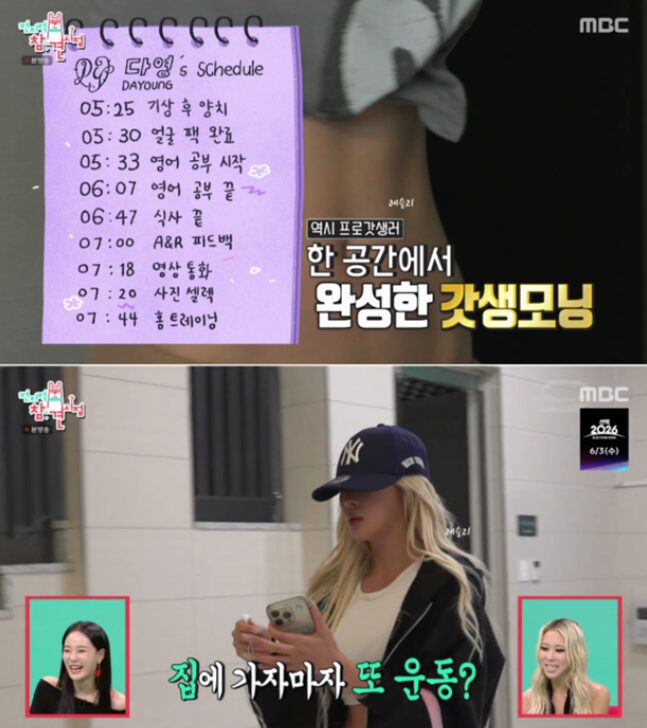
Boosting NEAT: The Power of an Active Lifestyle
In addition to her dietary choices, Dayoung's daily schedule serves as a major driver for her weight loss. Waking up consistently at 5 a.m., she powers through a packed routine that includes studying English, completing at-home workouts, and participating in broadcast filming.
This lifestyle significantly elevates her Non-Exercise Activity Thermogenesis (NEAT)—the energy expended through everyday movements outside of deliberate, formal exercise. Small, cumulative actions like walking, moving around, and maintaining proper posture throughout the day can burn a total volume of calories that rivals a structured workout.
Furthermore, maintaining a rigid wake-up time and high baseline activity stabilizes the body's natural circadian rhythms and enhances insulin sensitivity, which reduces the body's tendency to store fat. This structured lifestyle also balances appetite-regulating hormones, providing a powerful psychological defense against emotional overeating or binge eating.











