As knee osteoarthritis worsens, total knee replacement surgery becomes an unavoidable reality for millions of aging adults. However, because many patients hope to postpone major surgery for as long as possible, medical interest has intensified around non-surgical interventions capable of subduing pain and maintaining daily mobility.
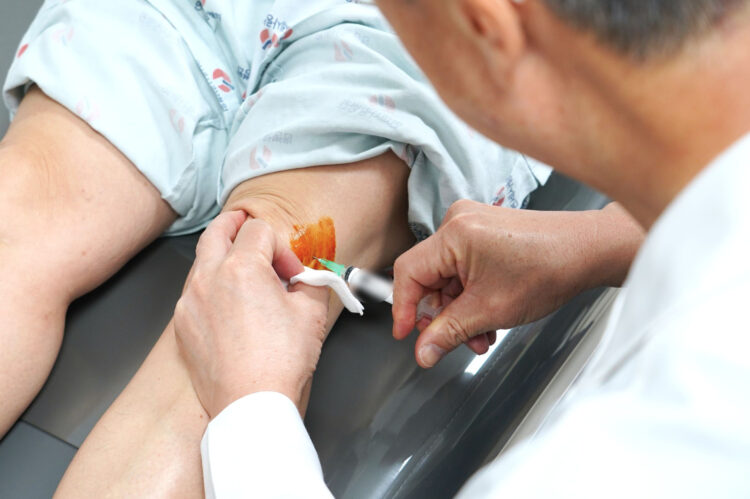
A South Korean medical team has published clinical data indicating that autologous adipose-derived stromal vascular fraction (SVF) therapy can provide rapid joint pain relief—often within just three weeks. Rather than framing SVF as a permanent substitute for joint replacement, the investigators position it as an effective pre-surgical bridge designed to alleviate severe symptoms and protect baseline joint mechanics.
Yonsei Sarang Hospital, a joint-specialty institution designated by South Korea’s Ministry of Health and Welfare, announced on the 11th that it has published two clinical papers in the international peer-reviewed journal Medicina validating the efficacy of this autologous cell therapy. SVF therapy utilizes a concentrated mixture of regenerative cellular components harvested directly from a patient’s own fat tissue to target localized joint inflammation.
Measurable Pain Relief Achieved Within Three Weeks
The first study, published in February, retrospectively evaluated 146 knee osteoarthritis patients (representing 217 knees) classified between Kellgren-Lawrence (KL) grades 2 and 4—a standard radiographic scoring system where higher numbers signify advanced joint degradation.
The clinical cohort demonstrated a substantial drop in their Visual Analog Scale (VAS) scores—a standard clinical pain index ranging from 0 to 10. Average pain scores plunged from a severe baseline of 6.5 down to a highly manageable 3.1 at the final clinical follow-up. Crucially, patients reported noticing a perceptible reduction in pain at an average of 18.9 days, or roughly three weeks post-injection.
The analysis also highlighted a clear dose-dependent relationship: higher delivered SVF cell counts strongly correlated with superior pain mitigation. The medical team noted that because this initial study was retrospective, additional long-term prospective tracking will be necessary to definitively confirm whether the therapy yields structural cartilage regeneration over time.
Weight and Joint Degradation Outweigh Patient Age
The second study, released in May, tracked 266 osteoarthritis patients (covering 357 knees) for a full 12 months to determine if advanced age limits the biological success of the treatment. Once again, average pain scores across the broader cohort dropped from 6.5 to 3.1.
Remarkably, chronological age showed no statistically significant link to treatment outcomes. Instead, the data revealed that a higher body mass index (BMI), advanced baseline joint degeneration, and a lower harvested cell count were the primary limiting factors for pain improvement.
"Older patients are often hesitant about the efficacy of cellular therapies due to their age, but our findings demonstrate that body mass index, the stage of arthritis progression, and total delivered cell count are far more predictive of a positive outcome," explained Ko Yong-gon, director of Yonsei Sarang Hospital. "Clinicians should look beyond a patient's birth year and instead comprehensively evaluate physical factors and the biological state of the joint."
Ultimately, the research team emphasizes that SVF therapy acts as an excellent clinical tool to safely delay joint replacement surgery by elevating functional mobility. Long-term follow-up studies remain underway to explicitly confirm the extent of the therapy's cartilage-preserving effects over extended periods.