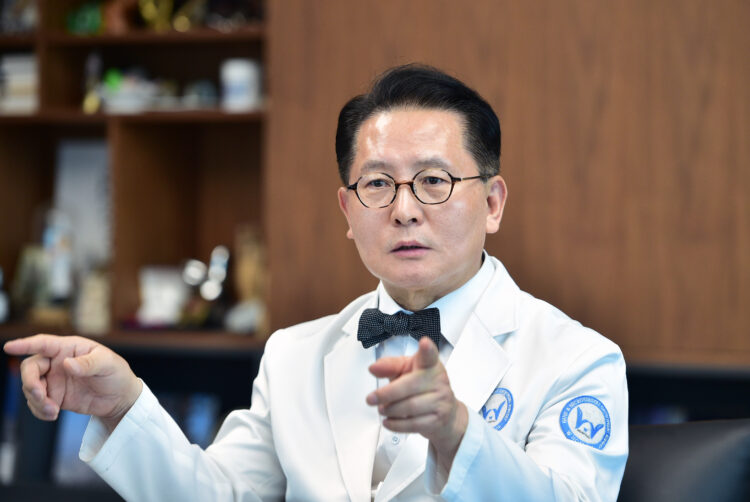
Every part of the human body serves a critical purpose, but the hand functions as an ever-present helper—much like the air we breathe—whose true value is rarely recognized until it is compromised. For Woo Sang-hyun, the director of W Hospital and a pioneering figure of hand surgery in South Korea’s orthopedic and joint-care landscape, patient care begins with a literal handshake. Many patients arrive at W Hospital as their second or third stop, seeking corrective care after initial surgeries or follow-up treatments at other clinics failed to heal their injuries properly. Dr. Woo begins by taking the patient’s hand, offering a comforting word: "You’ve been through a lot."
He describes the unique vulnerability of the hand: "Our hands are extraordinarily delicate and precious. While other major organs are shielded by thick layers of skin, bone, and fat, the hand features bones positioned at the very center, enveloped only by thin skin, sensitive nerves, and intricate blood vessels. This makes it incredibly difficult to protect." He summarizes his core philosophy simply: "Hands present a problem if you use them too much—and a problem if you use them too little."
For South Koreans, who spend an average of five hours a day on smartphones, hand health is a pressing concern. Holding a device larger than one's palm for extended periods compresses the nerves and blood vessels converging at the wrist, generating profound tension and fatigue across the entire hand. "After about 20 minutes of smartphone use, it is essential to pause and stretch your hands and wrists," Woo advises.
Q: What do you mean when you say using your hands too little can cause problems?
A: "It means that after a simple surgery for a finger injury, or after wearing a cast, overprotecting the hand by keeping it completely immobile can actually ruin it. Real recovery requires appropriate, measured use. If a patient focuses solely on shielding the finger and avoids moving it, the injured digit undergoes a 'dieting' effect, becoming visibly thinner than the others. This leads to a severe loss of strength, causing long-term inconvenience in daily life. Even if it feels uncomfortable initially, patients need to build the habit of using the healing finger naturally alongside the healthy ones."
Q: What specific symptoms can occur from prolonged immobility?
A: "A primary risk is Complex Regional Pain Syndrome (CRPS). This is a chronic condition where the brain misinterprets completely harmless stimuli—such as a shirt collar brushing the skin, a light breeze, or lukewarm water—as excruciating pain, akin to being cut by a knife. The specialized medical team at W Hospital is highly trained to distinguish whether these sensations are a standard part of the healing process or early warning signs of CRPS. Patients must actively engage in monitored hand use during recovery and rehabilitation to prevent this."
Q: Even without an injury, what steps should individuals take if their fingers feel stiff or painful for no apparent reason?
A: "For individuals in their 50s and older, finger pain can stem from a wide array of degenerative conditions. It is critical to see a specialist for an accurate evaluation immediately, followed by localized rehabilitation. Assuming it is a minor issue and relying solely on over-the-counter painkillers can cause patients to miss the 'golden window' for treatment. This allows the underlying condition to worsen and often results in unnecessary medical and financial burdens. A specialist consultation should always be the first step."
Q: If someone sustains a sudden finger or arm injury in an accident, what is the immediate protocol?
A: "Sudden trauma triggers panic, but that is precisely when choosing the right facility matters most. You should not simply rush to the nearest or most familiar clinic, but rather head straight to a dedicated specialty hospital. In hand reattachment and microsurgical reconstruction, the 'golden time' is vital, but the 'golden place'—where you go—is even more decisive. At W Hospital, if a patient arrives within 36 hours from anywhere in the country—including Jeju Island, Jeolla Province, or Gangwon Province—advanced surgery can successfully restore the hand to its pre-injury condition."
Q: Does an improper response from an initial hospital leave permanent damage?
A: "Absolutely. A woman in her mid-20s recently traveled to W Hospital from Busan. She had sustained a seemingly minor 1-centimeter glass cut to her palm, but after substandard first and second surgeries elsewhere, her tendon had adhered to the tissue, leaving a massive scar and restricted movement. What should have been a straightforward procedure turned into a highly complex operation where we even had to consider plastic reconstruction. It was a heartbreaking case that illustrates why specialized care is paramount.
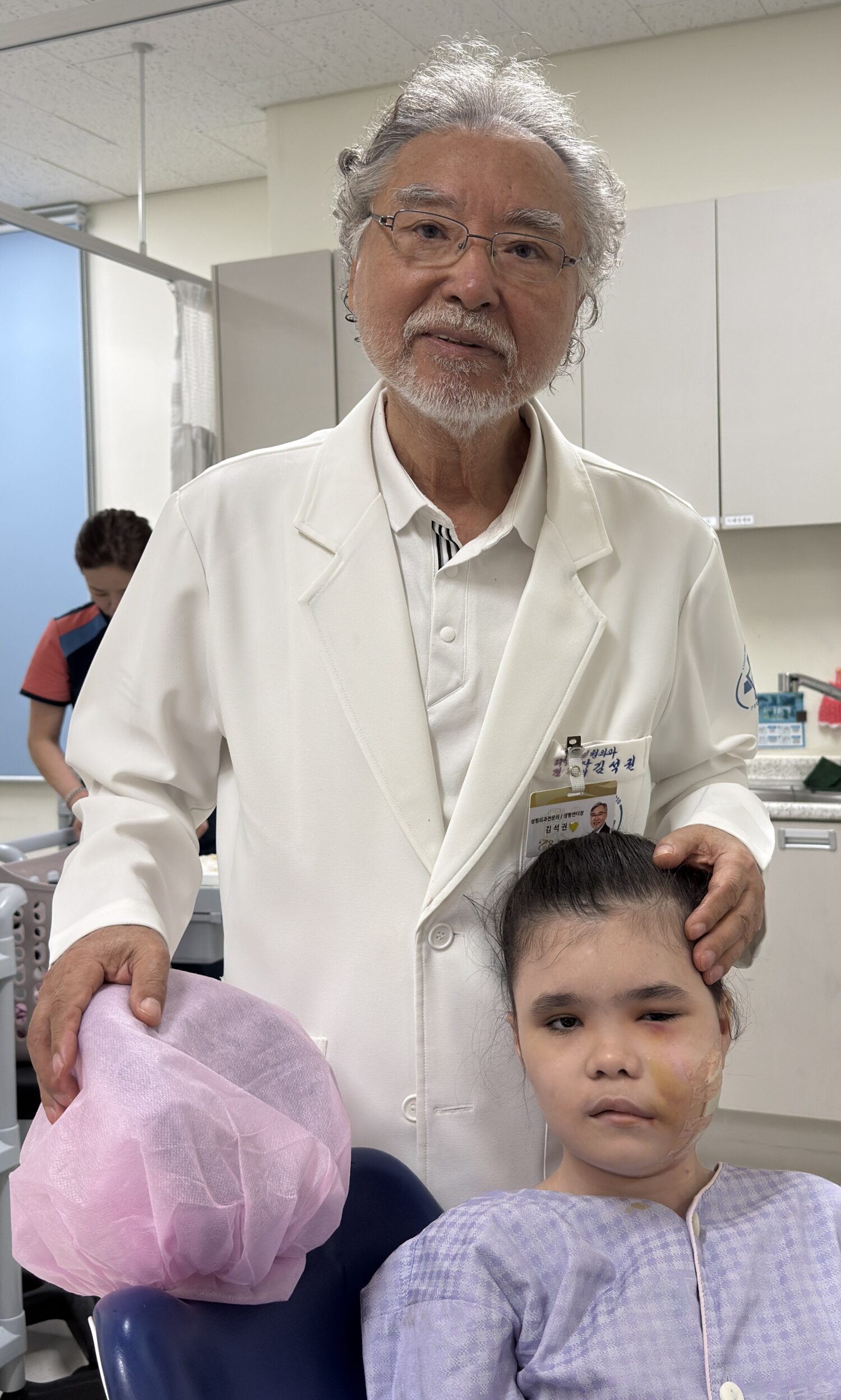
Around the same time, a child was referred to us after undergoing unsuccessful treatments and surgeries at a major medical center in the Seoul metropolitan area. The child's condition had deteriorated, and the mother deeply regretted not coming to W Hospital initially. Our plan for this young patient is to apply local anesthesia to the surgical site and perform the operation while the child is asleep, ensuring they can return to their parents' arms as quickly and comfortably as possible."
Q: How should surgeries for congenital conditions like polydactyly and syndactyly be approached?
A: "Surgery for polydactyly (extra digits) and syndactyly (webbed digits) is far more than a cosmetic fix. It is an intervention that targets a 'golden window of growth,' directly dictating a child's lifelong hand functionality. Precise reconstructive surgery must be executed at the optimal developmental stage to ensure children can grow up and enjoy daily life entirely free of physical limitations."
Q: You have recently been recognized for establishing new protocols for brachial plexus injuries. What makes this field so significant?
A: "The brachial plexus is a massive network of nerves originating from the cervical spine that traverses the shoulder and armpit to control all movement and sensation in the arm and hand. If a traumatic injury stretches, tears, or completely avulses these nerves from the spinal cord, a patient can lose the ability to lift their shoulder, bend their elbow, or move their fingers. Sensation can completely vanish, leaving the arm hanging limply, often accompanied by severe, debilitating neuropathic pain.
This specialized area suffers from a severe lack of public information; patients rarely know where to turn, leading some to compare a brachial plexus injury to 'cancer' due to its devastating impact and the historical lack of dedicated treatment facilities. There is still no other hospital in South Korea that treats this condition professionally on a systemic level. That is exactly why it is a medical frontier I am fully determined to conquer."