At the entrance of the pediatric orthopedic surgery department on the sixth floor of Daegu W Hospital, a large, vibrant painting immediately catches the eye. Filled with whimsical characters alongside words like smile, love, and Happy, the artwork holds a profound backstory. It was donated by the grateful grandparents of a young boy from Seoul who was born with nine toes on one foot due to a rare congenital condition. Multiple major medical centers in the capital had deemed his complex condition inoperable, with one university hospital even telling the family to simply "live as he was born." Refusing to give up, they found W Hospital, where surgeons successfully performed the intricate polydactyly surgery. When the hospital politely declined a substantial monetary donation, the family gifted the painting instead.
A few floors away, the sense of renewal is equally palpable. A man in his 20s, identified as J, recently celebrated a milestone that once felt impossible. A year after a devastating traffic accident left him with a completely paralyzed, sensationless arm, he posted a triumphant message on an online community for brachial plexus injury patients: "I'm so happy my arm has recovered this much." Once overwhelmed by despair during a grueling rehabilitation process, J now actively shares his journey to serve as a beacon of hope for others facing the same diagnosis.
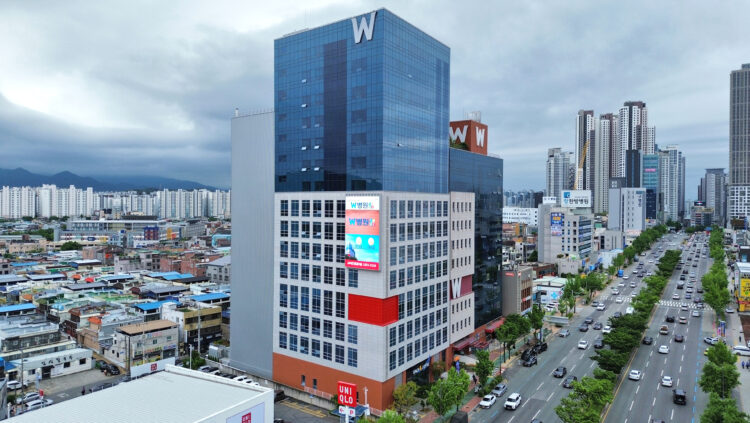
On South Korea’s medical map, regional healthcare is frequently associated with infrastructure shortages or a mass exodus of patients to the Seoul metropolitan area. However, W Hospital in Dalseo-gu, Daegu, has completely inverted this narrative. Today, it is routine for medical staff at top-tier Seoul institutions to transfer emergency cases with a simple directive: "For finger reattachment, go to W Hospital in Daegu."
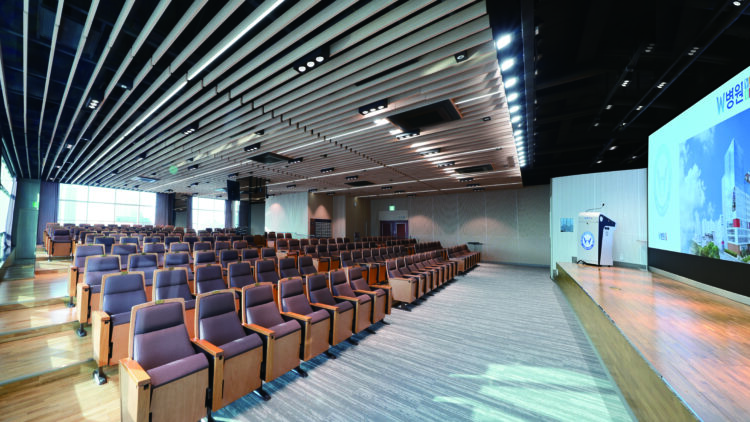
A National Mecca Rooted in the Philosophy of 'Ichigo Ichie'
Patients converge on the hospital from every corner of the country—including Seoul, Busan, Gwangju, and Jeju Island—for congenital deformity corrections, emergency orthopedic operations, microsurgical reconstructions, and hand reattachment procedures. The operational backbone of this care is the hospital's intensive daily morning conferences, where specialists map out treatment plans to reconnect microscopic blood vessels measuring less than 1 millimeter in diameter.
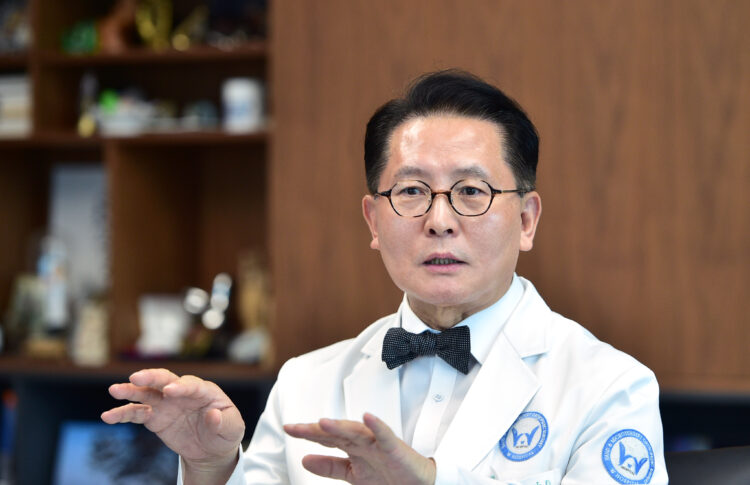
Behind these world-class achievements is Director Woo Sang-hyun, whose medical philosophy centers on extreme humility and meticulous execution. "Out of 35,000 medical institutions and 120,000 doctors nationwide, a patient choosing to come to me is not just an opportunity for them to heal—it is a profound privilege granted to me," Director Woo notes.

He frequently invokes the traditional concept of ichigo ichie—the belief that a meeting may happen only once in a lifetime, demanding one's absolute best effort. It is a philosophy he regularly shares during medical humanities lectures for regional business leaders and government agencies. For his medical staff, Director Woo maintains an uncompromising standard: "Even if our surgical success rate is 99%, we must remember that for the remaining 1% of patients, the failure rate is absolute. There is no room for routine arrogance when a patient's life changes permanently."
This unwavering resolve was forged through early adversity. Roughly 30 years ago, a high-stakes operation to graft a big toe to a patient's severed finger ended in failure. Expecting anger, Director Woo went to meet the patient, only to be met with unexpected grace. The patient and his wife told him, "We hope you use this failure as a mirror to become a doctor who delivers true hope to patients like us." The emotional encounter solidified his dedication to clinical excellence, paving the way for history-making breakthroughs.
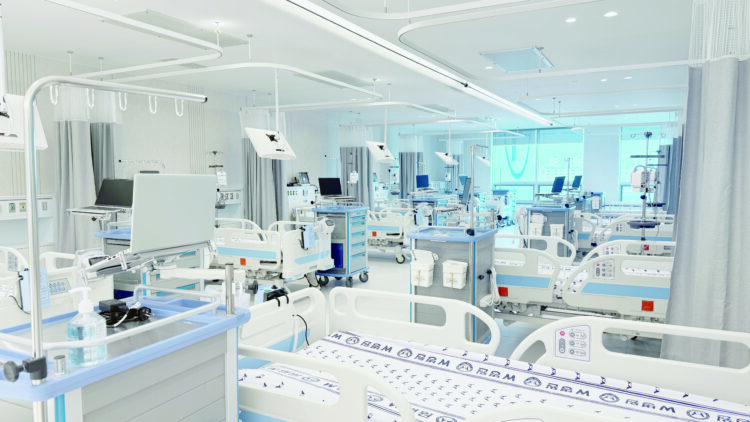
On February 2, 2017, Director Woo successfully performed South Korea's first-ever arm transplant. Having trained at the University of Louisville in the United States in 1999 as a member of the team that completed the world's first successful arm transplant, he had long vowed to bring the life-altering procedure to his home country. The milestone was realized through a grueling 10-hour marathon surgery, meticulously connecting the bone, muscles, nerves, and blood vessels of a deceased donor to a man in his 30s who had lost his left arm in an industrial accident.
The success transcended clinical boundaries, driving major legislative reform. Previously excluded from the legal definition of "organs," limbs were officially integrated into the Organ Transplant Act, paving the way for National Health Insurance coverage. The historic journey culminated when the transplant recipient stood on a professional baseball mound, throwing out a ceremonial first pitch with his reconstructed arm.
Setting Global Standards in Clinical Science
Director Woo’s contributions to global medicine continue to expand. He recently completed his tenure as a co-author for the upcoming edition of Green's Operative Hand Surgery, universally revered as the global "bible" of upper-extremity surgery. Slated for publication next year, the textbook represents the pinnacle of authoritative hand care guidelines. "Operating by day and writing by night for months was exhausting, but knowing that surgeons worldwide will use this knowledge to help patients is incredibly rewarding," he shares.
This academic leadership stems from his conviction that physicians must act as clinical scientists, systematically tracking, analyzing, and publishing long-term patient data. W Hospital’s clinical volume is practically unmatched: it has surpassed 12,500 carpal tunnel surgeries and executed more than 300,000 cumulative operations. The hospital is internationally renowned for advanced techniques like simultaneous micro toe transfers—moving two toes concurrently to reconstruct fingers—a procedure attempted by only a fraction of medical centers worldwide.
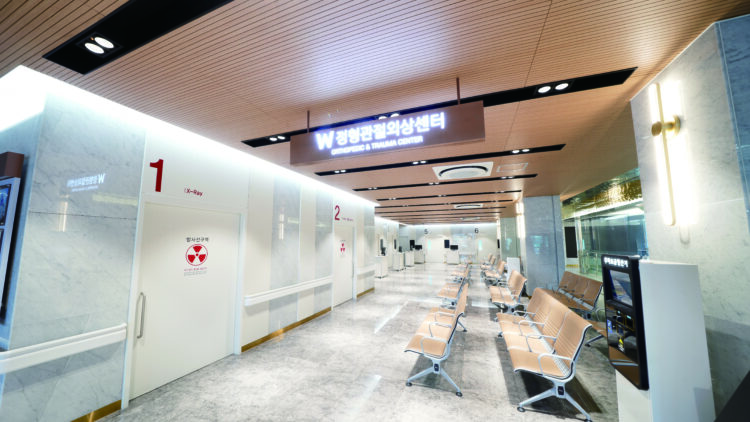
Initially designated by the Ministry of Health and Welfare in 2011 as a specialized finger reattachment facility, W Hospital evolved into a comprehensive general hospital in 2018, becoming the region's sole dual-specialty hub for both hand reattachment and orthopedic joints. Today, it serves as the nation's premier training ground for hand surgery subspecialists, regularly outperforming major university hospitals in certification pass rates. Its "W Fellowship" program draws international surgeons from the United States, Germany, India, and Russia to Daegu to study under Director Woo's team.
Crucially, W Hospital functions as a vital public safety net, operating a 24-hour emergency trauma system staffed by 11 hand microsurgery specialists and six dedicated anesthesiologists 365 days a year. On any given day, the vast majority of patients treated by Director Woo travel from outside the region, often arriving via medical helicopters. Its reputation for limb salvage has even drawn international emergency cases, including two recent patients from the United Arab Emirates (UAE) who successfully avoided scheduled ankle amputations thanks to W Hospital's interventions.
"If you truly want to help a patient, you will always find a path," Director Woo says. "If you don't, you will only find an excuse." For the thousands of patients who travel to Daegu, W Hospital remains a definitive path toward healing.