Microwaves are among the most indispensable appliances in the modern kitchen, relied upon for everything from defrosting proteins to quickly reheating leftovers. However, this frequent use means the interior accumulates splatters and spills rapidly. Left unchecked, this buildup does more than just cause unpleasant odors—it creates an ideal environment for microbial growth.
The Hidden Risks of Food Residue
When food particles are left to bake repeatedly inside a microwave, the issue quickly evolves from a cosmetic nuisance to a health hazard. As trapped oils, broths, and sauces harden under consecutive cycles of intense heat, they can undergo chemical changes. More concerningly, these stubborn organic residues serve as a primary food source for opportunistic bacteria.
A study published in Frontiers in Microbiology by researchers at the University of Valencia in Spain, led by microbiologist Manuel Porcar, revealed that household microwaves harbor surprisingly resilient microbial communities. The team identified strains such as Acinetobacter, Klebsiella, and Rhizobium living inside domestic units. While many are benign, certain strains can cause food-borne symptoms like fever, vomiting, and diarrhea, or even respiratory complications like pneumonia.
Fortunately, maintaining a sanitary appliance requires minimal effort if addressed immediately after cooking. Wiping down the interior walls while steam remains trapped inside prevents grime from hardening, saving you from heavy scrubbing later. For deeper sanitization and deodorizing, common natural ingredients are highly effective.
Harnessing the Power of Lemon
Lemons are exceptional cleaning agents due to two natural components: citric acid and limonene. Citric acid acts as a natural degreaser, loosening the structure of stubborn oils and baked-on food residue so they can be wiped away effortlessly. Meanwhile, limonene—the volatile oil found in lemon peel—evaporates with the steam and binds to airborne odor molecules, acting as a powerful deodorizer.
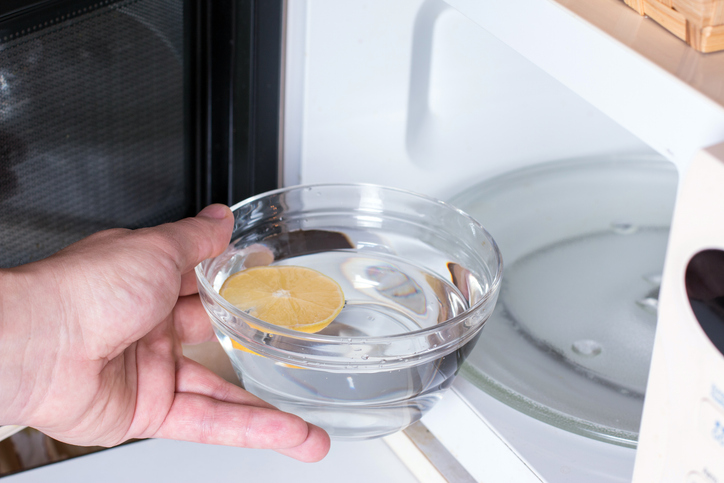
To use this method, thinly slice half a lemon and remove the seeds. Place the slices into a microwave-safe bowl containing 300 milliliters of water and heat on high for three to five minutes. Once the timer goes off, leave the microwave door closed for an additional three minutes to allow the vaporized citric acid and limonene to thoroughly coat the interior surfaces. Finally, wipe down the turntable and walls with a clean cloth or paper towel.
Using Vinegar and Rice Water as Alternatives
If you do not have lemons on hand, white distilled vinegar offers similar acidic benefits. Because of its low pH, vinegar excels at cutting through dense grease and neutralizing pungent food odors left behind by ingredients like fish, onions, or garlic.
Mix one cup of water with three tablespoons of vinegar in a microwave-safe container and heat for roughly one minute until boiling. Let the steam sit inside the closed appliance for one to two minutes to soften stuck-on residue. Afterward, a quick wipe with a dry cloth will lift the accumulated grime without the need for harsh chemical detergents.
Alternatively, leftover rice-rinse water can serve as an excellent, zero-waste cleaning solution. The natural starches suspended in the water act as mild binding agents that help loosen and trap stubborn stains. Simply place one cup of rice water inside, run the microwave for about one minute, and wipe down the interior before the residual steam cools.