
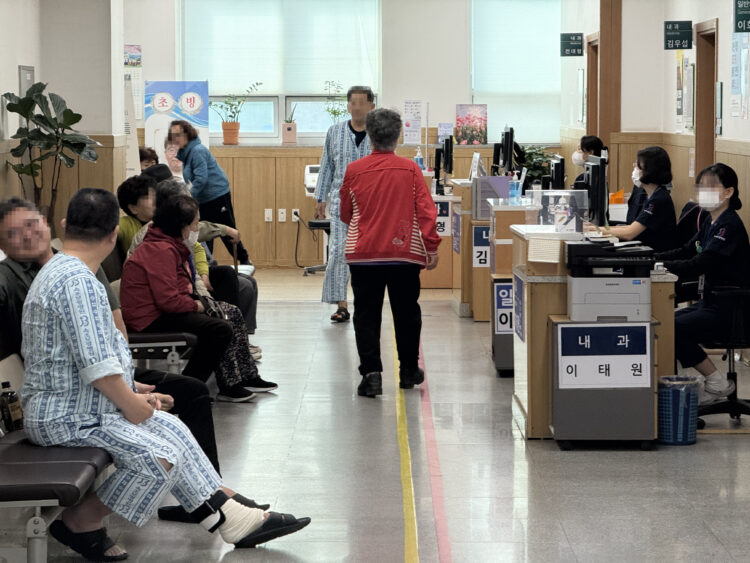
In Sokcho, the northernmost city in South Korea, a unique scene unfolds daily at the local hospital. The patient population is aging rapidly; it is not uncommon to see a 60-year-old caregiver assisting a parent in their 80s. At the heart of this community stands Onjae Hospital, the region's largest medical facility and a critical "front line" for essential services.
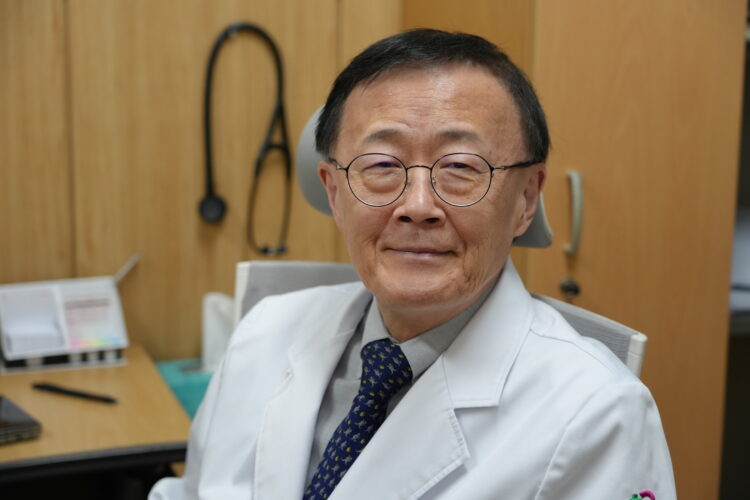
The hospital’s staff is as distinctive as its patients. Many are retired medical school professors from Seoul who have moved to Sokcho to provide specialized care. Recently, 73-year-old Lee Tae-won, a senior internal medicine professor, drew widespread admiration by volunteering for an overnight emergency room shift—his first since his residency in the 1980s.
"An ER shift after 40 years… my heart was pounding"
"I’m 73 this year. My colleagues tried to stop me out of concern for my health, but I was so excited I couldn’t sleep," Lee Tae-won recalled. His eyes sparked with the enthusiasm of a medical student as he described the experience.
Emergency care in Sokcho relies on a delicate balance between the public Sokcho Medical Center and Onjae Hospital. When the head of Onjae’s Emergency Medical Center resigned earlier this year, the facility faced a crisis. To prevent the ER from closing, department chiefs began a rotation to serve as the daily director.
Though excluded from the roster due to his age and a recent injury from a fall, Lee Tae-won insisted on joining. "They were showing affectionate concern because a grandfatherly doctor who looks physically frail was saying he’d take overnight duty," he laughed. "But as a fellow internist, I couldn’t be the only one opting out."
The shift ended successfully and without incident. "Once it was over, the surgery professors and nurses seemed to look at me with a bit more pride. I’ve been getting a lot of affection at the hospital lately, which feels nice."
A "Neighborhood Living Room" Clinic
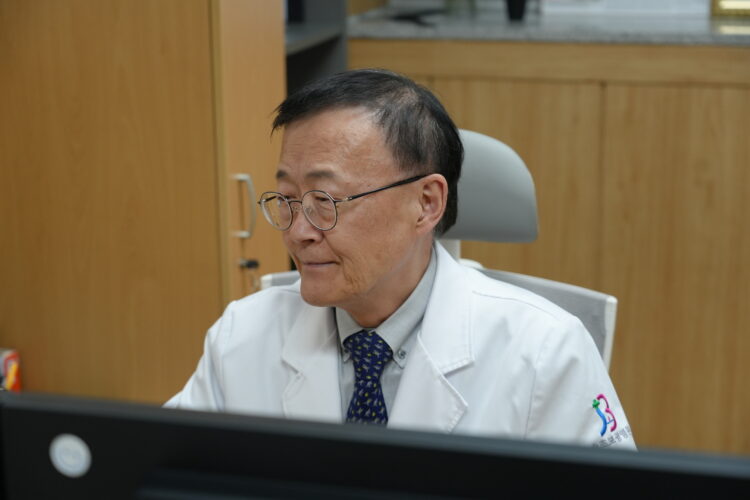
The atmosphere in Lee Tae-won's exam room is a far cry from the rigid efficiency of Seoul’s metropolitan hospitals. Patients without appointments often drop by just to ask a quick question, and scheduled consultations frequently last for dozens of minutes.
Because the hospital lacks residents, Lee Tae-won personally handles all inpatient rounds and oversees the hemodialysis unit. This direct interaction lowers the barrier to care for local residents, who get to see their attending physician's face every day.
Lee Tae-won is a renowned specialist in kidney disease, having served as the Director of the Artificial Kidney Center at Kyung Hee Medical Center and a national ambassador for kidney health. However, in Sokcho, he has embraced the role of an "all-around internist."
"University professors are specialists who take pride in top-tier capabilities in a narrow field. But at a regional hospital, I have to respond to every patient, regardless of the specialty," he explained. "For many of them, this hospital is the last option before they have to travel to another region."
The Joy of Constant Growth
Since moving to Sokcho last September, Lee Tae-won has dedicated himself to broader internal medicine studies. His office is filled with medical texts, which he views as a sign of a "happy environment" where he can continue to train and grow.
"The patients in Sokcho aren't interested in my background or past titles," Lee Tae-won noted. "They simply say, 'Thank you for explaining so well.' Perhaps what they wanted all along wasn't the nameplate of a university professor, but a kind, clear explanation. I believe that is the true role of a regional hospital—and the reason it exists."