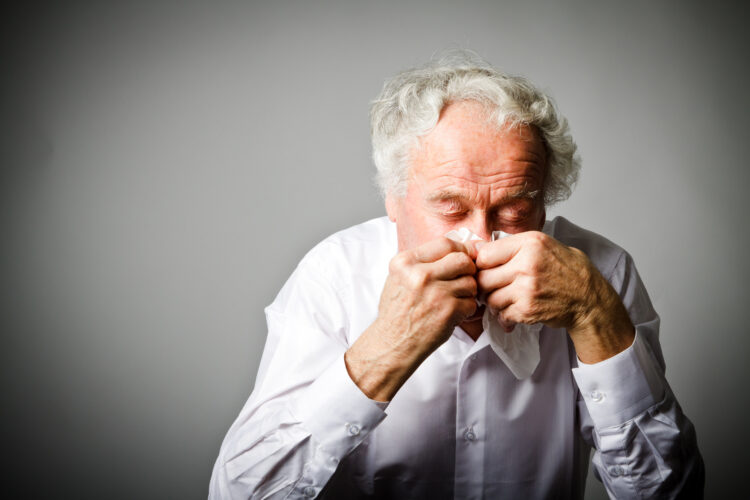
Older adults often experience a decline in their ability to smell. This symptom mainly occurs as aging damages the olfactory nerves and receptors. Ear, nose, and throat conditions—such as chronic rhinitis and sinusitis that worsen nasal congestion—or neurodegenerative brain diseases like dementia and Parkinson’s disease can also be causes. When the sense of smell declines, it becomes difficult to respond to urgent situations in the kitchen, such as food burning. People may also eat spoiled food without recognizing the odor, leading to illness. In such cases, it is advisable to visit an otolaryngology (ENT) clinic to identify the cause and receive medication or, if severe, undergo olfactory rehabilitation therapy.
When olfactory function declines, balance, gait, and grip strength also decrease
Meanwhile, a U.S. study reported that older adults with a reduced ability to smell often exhibit decreased physical motor function. This was the result of a joint investigation of 5,474 adults ages 65 and older (mean age 75.3) conducted by the Gillings School of Global Public Health at the University of North Carolina at Chapel Hill, the Michigan State University College of Human Medicine, and the University of Chicago, among others. A paper presenting the findings, titled ‘Dysfunction in Olfactory Identification and Physical Function Decline in Older Adults,’ was published last month in JAMA Otolaryngology–Head & Neck Surgery.
Olfactory function may help identify older adults with reduced motor function
The survey found that the group with poorer olfactory function had worse balance, lower-extremity strength, walking speed, and grip strength than the group with relatively better olfactory function. The rate at which these physical functions declined each year was also faster. Overall, reduced olfactory function in older adults was shown to be closely associated with physical function decline. The research team concluded that decreased olfactory function could be clinically useful for identifying older individuals with impaired motor function—for example, those who fall frequently while walking or have such reduced strength that standing up from a chair is difficult. They also suggested that future biological research is needed to understand why olfactory dysfunction is linked to functional aging.
Participants’ olfactory function was assessed using the internationally recognized ‘Sniffin’ Sticks Odor Identification Test.’ Using felt-tip pens—tools that dispense scented liquid stored in compressed fibers—the test evaluated olfactory threshold, discrimination, and identification ability using scents such as cinnamon, coffee, and fish. This test is typically used in neurology or otolaryngology to diagnose anosmia, hyposmia, or normal olfaction.
The test was conducted by holding the felt-tip pen 2 cm in front of the participant’s nostrils for 3 seconds, after which the participant chose one option from a provided list. The research team administered tests for 12 scents and assigned a score from 0 to 12 based on the number correctly identified, categorizing results as good (11–12), intermediate (9–10), or poor (0–8).
Physical function assessed using 4 m walk time and usual-pace walking speed

Physical function tests are highly useful because they can be performed easily by older adults at home. Participants underwent physical function testing along with the olfactory test. The assessment consisted of standing balance tests, 4 m walk time, usual-pace walking speed, chair-stand tests, and grip strength tests.
The 4 m walk time test is a standardized short-distance test designed to measure functional mobility and predict health-related events such as falls or mortality. If it takes an average of 3.57 seconds to walk 4 m, it is considered a normal speed. If it takes 5 seconds or more, there may be a strength problem and an increased risk of falls. This test is considered useful for assessing functional physical ability and quality of life.
The usual-pace walking speed test reflects the function of various body systems, including the musculoskeletal and nervous systems. It is a strong indicator of the likelihood of hospitalization, risk of falls, cognitive decline, and mortality. A speed of 0.8 m/s or less was classified as an ‘increased risk of frailty’; 1.0 m/s or higher as ‘independent walking ability and generally healthy’; and 1.2 m/s or higher as a ‘high level of walking safety.’
This test begins by asking the participant to walk at a comfortable pace. The time is measured from the start signal until the foot reaches a target point 10 m away. This is repeated three times to calculate the average.
The 4 m walk time and usual-pace walking speed can be checked easily at home or in an open residential area with only a tape measure and a stopwatch. Based on these, older adults can monitor their own physical function. This study not only shows that impaired olfaction in older age is evidence of declining physical function but also explains methods for performing physical tests at home. While these tests provide a useful check, an accurate assessment of health status should always be performed by a medical professional.