South Korea is currently gripped by a "protein craze." Ours is a society that aggressively pushes protein consumption, leading many to believe they must eat meat, fish, eggs, milk, and cheese daily to stay healthy. Ironically, the abundance of protein found in these animal-based foods is a major contributor to cancer.

‘The China Study’: The “Grand Prix of Epidemiology” Reveals a Shocking Truth
Starting in the early 1980s, Dr. T. Colin Campbell of Cornell University, in collaboration with the University of Oxford, conducted a massive study tracking mortality rates for 12 types of cancer across 2,400 regions in China. This unprecedented study covered 880 million people—96% of China’s population—and included 650,000 participants.
The results were startling. Regional variations in cancer incidence were as high as 100-fold. Because the population was genetically similar, Dr. Campbell concluded that environmental factors—specifically diet—were the cause. These findings, published in the 2007 book The China Study, were described by The New York Times as the most extensive and meticulous "Grand Prix of epidemiology" in history, marking a milestone in clarifying the link between diet and disease [1].
The “Protein Switch” That Controls Cancer Development
The study’s core finding is clear. Americans, who suffer from high cancer rates, derive 15–16% of their calories from protein, mostly from animal sources. In rural China, where cancer rates are low, protein accounts for only 9–10% of calories, primarily from plant-based foods.
Humans require only about 5–6% of their total calories from protein. While staying under 10% is safe, exceeding that threshold triggers health problems. High animal protein intake acts as a “cancer switch,” turning the development of the disease on and off. Notably, plant protein did not have this effect. Therefore, the key to cancer prevention is reducing animal protein intake [2].
Do Industry Interests Override Scientific Truth?
Many health-conscious readers may find this confusing, as mainstream advice often suggests higher protein levels. The U.S. recommends 10–35% of total energy from protein, while South Korea recommends 7–20% [3, 4].
Why are government guidelines so high despite evidence that exceeding 10% triggers cancer? The answer lies in the complex conflicts of interest between governments, academia, and the food industry. Dr. Walter Willett of Harvard Medical School has criticized the USDA dietary guidelines for being heavily influenced by the food industry, potentially harming public health by ignoring scientific truth [5].
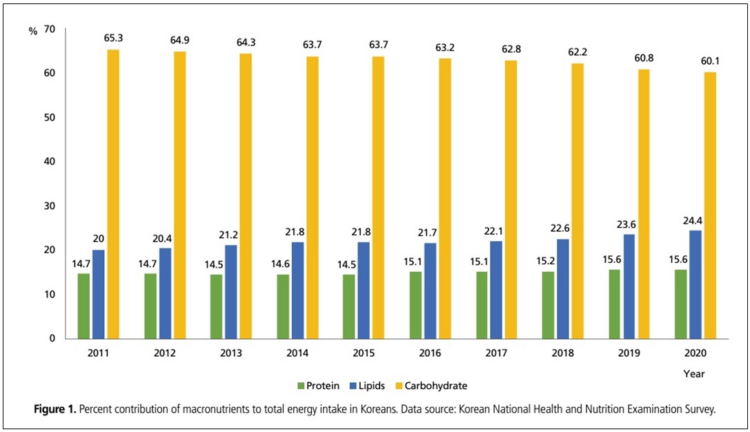
In South Korea, protein intake has risen steadily, exceeding 15% since 2016 [6]. This trend mirrors the U.S. average of 16% [7] and provides the backdrop for why cancer remains the leading cause of death among Koreans.
The Myth of Protein Deficiency: Brown Rice and Vegetables are Enough
Modern nutrition is so protein-centric it could be called "protein nutrition." Marketing-driven stereotypes convince people that "carbs are the enemy and protein is your friend," turning the protein industry into a "goose that lays golden eggs."
However, our bodies do not need such high amounts. Excess protein breaks down into toxic substances like ammonia, hydrogen sulfide, and phenol, contributing to inflammatory bowel disease, kidney disease, diabetes, hypertension, and cancer [8].
Protein is remarkably easy to obtain without animal products. Even on a strictly plant-based (vegan) diet, people typically consume 50% more than the recommended daily intake [9]. If brown rice—which derives 8% of its calories from protein—is your staple, you are already meeting your needs. Supplementing with beans, nuts, and vegetables ensures more than sufficient intake.
In my 30 years as a physician, I have never once seen a patient become ill due to a lack of protein. Unless you are in a famine-stricken or war-torn region, "protein deficiency" is a myth. In reality, "excess protein" is the driver of the chronic diseases plaguing modern society.
It is time to abandon the obsession with protein. If you want to be healthy, you must change what you eat. A high-protein diet is an invitation to cancer. Take a look at your plate; your health depends on it.
P.S. For those curious about why these facts remain obscured, I recommend watching the documentary What the Health.
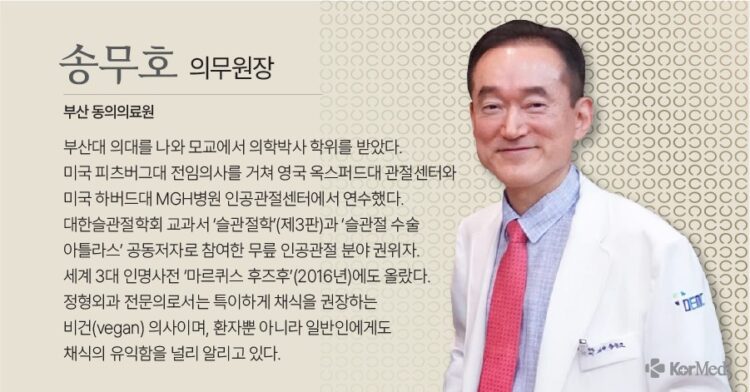
Song Mu-ho, MD, PhD Specialist in Orthopedic Surgery & Lifestyle Medicine
References
1. TC Campbell, TM Campbell. The China Study: The Most Comprehensive Study of Nutrition Ever Conducted and the Startling Implications for Diet, Weight Loss and Long-Term Health. Dallas, TX: BenBella Books; 2007.
2. Weekly Hyundai http://www.hyundaenews.com/93678
3. SW Oh. Current status of nutrient intake in Korea: focused on macronutrients. J Korean Med Assoc 2022;65(12):801-809.
4. P Trumbo, S Schlicker, AA Yates, M Poos. Food and Nutrition Board of the Institute of Medicine, The National Academies. Dietary reference intakes for energy, carbohydrate, fiber, fat, fatty acids, cholesterol, protein and amino acids. J Am Diet Assoc 2002;102:1621-1630.
5. Harvard T.H. Chan School of Public Health.(https://www.hsph.harvard.edu/nutritionsource/2016/01/07/new-dietary-guidelines-remove-restriction-on-total-fat-and-set-limit-for-added-sugars-but-censor-conclusions)
6. SW Oh. Current status of nutrient intake in Korea: Focused on macronutrients. J Korean Med Assoc 2022;65(12):801-809.
7. CDC https://www.cdc.gov/nchs/fastats/diet.htm
8. I Delimaris. Adverse Effects Associated with Protein Intake above the Recommended Dietary Allowance for Adults. ISRN Nutr 2013:126929.
9. NS Rizzo, K Jaceldo-Siegl, J Sabate, GE Fraser. Nutrient profiles of vegetarian and nonvegetarian dietary patterns. J Acad Nutr Diet 2013; 113(12):1610-1619