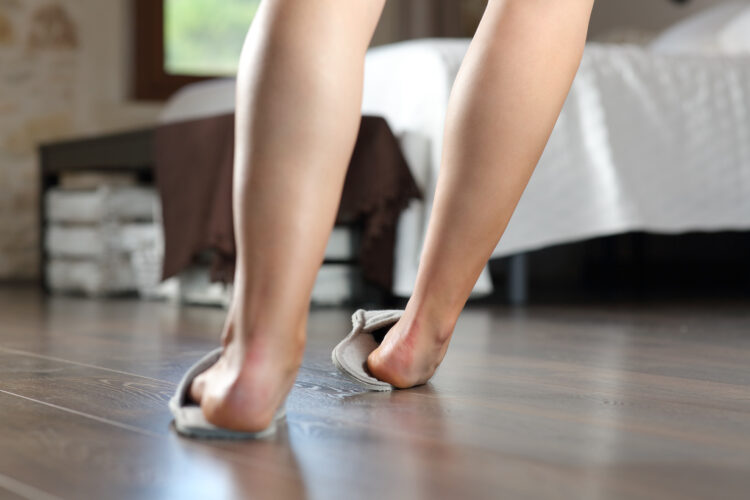
If you wake up, step out of bed, and suddenly find your ankle giving out—making it nearly impossible to plant your foot firmly on the ground—you may be experiencing "foot drop."
Foot drop is the hallmark symptom of peroneal neuropathy. This condition causes significant weakness when attempting to lift the ankle and toes, often resulting in the toes dragging across the floor or making it difficult to navigate stairs. A peripheral nerve disorder, peroneal neuropathy occurs when the peroneal nerve—which runs along the outer side of the knee and controls lower leg movement—is compressed by external pressure.
The number of patients seeking hospital care for peripheral nerve disorders, including sudden cases of foot drop with unclear origins, is rising steadily. According to data from the Health Insurance Review & Assessment Service, the number of patients treated for these conditions increased by 14.9% over four years, rising from 26,938 in 2020 to 30,967 in 2024.
The Diagnostic Challenge
"Peroneal neuropathy can present with symptoms that are easily mistaken for a stroke or a spinal condition," says Yang Jinseo, MD, a professor in the Department of Neurosurgery at Hallym University Chuncheon Sacred Heart Hospital. "If brain and spine MRI scans show no significant abnormalities but you still cannot lift your ankle, peripheral neuropathy is a likely culprit."
Dr. Yang emphasizes the urgency of a correct diagnosis. "If the identification of a nerve injury is delayed, surgical outcomes may be diminished and recovery can become a lengthy process. Early, accurate diagnosis is vital."
Lifestyle Triggers and Prevention
Peroneal neuropathy is frequently rooted in daily lifestyle habits and posture. For instance, repeatedly sleeping in a position that places prolonged pressure on one leg, or the habit of sitting cross-legged for extended periods, can lead to continuous nerve compression.
Experts also warn against falling asleep on a hard floor after consuming alcohol. When intoxicated, the body’s ability to perceive pain or discomfort is dulled. If the peroneal nerve on the outer side of the knee is compressed for several hours in this state, it can result in significant nerve injury.
Treatment Options
When peroneal neuropathy is identified, clinicians typically begin with conservative treatments. This often includes the use of an ankle brace, physical therapy, and medication such as anti-inflammatory pain relievers. However, if symptoms persist or neurological deficits worsen, surgical intervention—such as fibrous tunnel decompression—may be required to relieve the pressure.
To prevent the onset of the condition, it is recommended to change positions frequently when sitting or lying on hard surfaces. When sleeping, ensure you are in a position that avoids direct pressure on the outer side of the knee.
"If symptoms of foot drop appear, it is rarely simple muscle weakness; it is often a sign of a neurological issue," Dr. Yang advises. "It is important to visit a hospital promptly to ensure you do not miss the window for effective treatment."