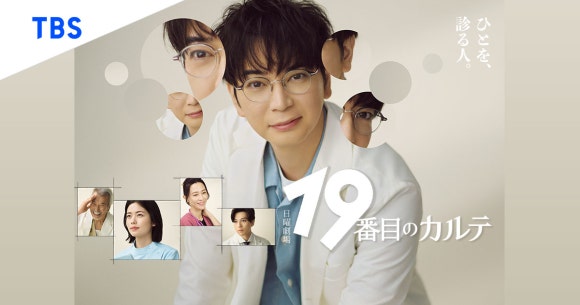
Not long ago, I binge-watched a Japanese medical drama titled The 19th Karte.
What is a "karte"? A quick search reveals it stems from the German word Karte, and in Japan, it refers to a patient’s medical record. But why the 19th?
Japan’s medical system recognizes 18 specialty fields, including internal medicine, surgery, obstetrics and gynecology, and pediatrics. In 2018, when a new specialist system was implemented, "general medicine" was officially recognized as the 19th specialty. General medicine provides integrated care by considering not only a specific organ or disease but also the patient’s overall condition and psychosocial background. In Korea, this concept encompasses the roles of both hospital medicine and family medicine.
The drama was popular enough to post ratings of around 10% in Japan last year. I watched all eight episodes straight through because the story of a protagonist who pioneers a new style of care—amid the doubts and complaints of surrounding physicians—felt deeply familiar. As a hospitalist who cares for ward patients regardless of their specialty, I found myself nodding in agreement at many points.
The first episode was especially striking. Dr. Tokushige, the general medicine protagonist, recognizes that a passing patient owns an izakaya (a Japanese pub) simply by noticing a burn scar on the man's hand. The patient, originally seen by orthopedic surgery, complains that his shoulder pain persists despite treatment. From a single gesture—clutching his left shoulder while breaking into a cold sweat—Dr. Tokushige identifies a myocardial infarction.
It is a scene that shows a physician reading not just a disease, but the patient’s entire life. However, the other doctors are cynical, sneering that he is either a "con artist" or possesses "superpowers." They show no interest in cases outside their specific specialties, sometimes even viewing integrated care as "overstepping."
Throughout the drama, the protagonist asks his patients: “What is the most important problem for you right now?” “Please tell me your story.”
He constantly wrestles with how to prioritize treatment options while keeping the patient's life after discharge in mind. A representative case involves Hotta, a popular news anchor diagnosed with hypopharyngeal cancer. The surgeon insists that surgery offers a cure, but Hotta refuses, fearing the loss of his voice: “Losing my voice is like dying.”
As the surgeon and patient clash, Hotta requests a second opinion from general medicine. Dr. Tokushige listens carefully to experts in surgery, medical oncology, and otolaryngology. However, he does not simply list their conflicting opinions for the patient. Instead, he provides an integrated explanation of the risks, the possibility of alternative treatments, and the limits of function preservation. Above all, he respects the patient’s fears.
A patient is not merely a "disease that must be removed." Each is a person with a unique identity. Dr. Tokushige helps the patient navigate the space between the "medically correct answer" and "the patient's happiness" without being swept up in excessive emotion.
On the ward, hospitalists play a similar role. The condition of hospitalized patients changes daily. Through consultative care, treatment plans from multiple departments often proceed simultaneously. Hospital medicine organizes these diverse treatments into a single flow and, through ongoing discussions, coordinates the overall direction of care.
In cases like the anchor’s—where preserving identity is as vital as survival—this kind of integrated judgment is essential. This is not simple administrative work; it is a highly advanced clinical domain combining specialized knowledge, ethical deliberation, and communication.
The drama also features a terminal lung cancer patient who chooses home visits to "die with dignity." This episode shifts the question from "What more can we do?" to "How can we be with you?" It serves as a reminder that a physician's role includes accompanying a person at the end of life.
At this point, the meaning of hospital medicine becomes clear. It is the central axis that aligns treatment within the ward. It synthesizes opinions from specialists, palliative care, and nursing teams, resetting goals as the patient’s condition evolves. It also organizes the decision-making process through communication with the family. Just as adding treatment does, determining when to stop treatment requires professional competence.
One of the core messages of the drama is that "the process matters more than the outcome." Even physicians cannot save every life, but they can take responsibility for the entire process. Healthcare is often evaluated by metrics like survival rates and length of stay, but in terminal care, the value of medicine cannot be reduced to numbers.
Was the explanation sufficient? Was the patient respected? Were the limits of treatment shared honestly? Was the patient given the time to put their life in order? These factors determine the quality of the medical experience, and addressing this process is the essence of hospital medicine.
Korea’s medical system has 26 specialty departments—more than Japan's 19. This means our medicine is even more subdivided. Yet, a decade after its introduction, the hospitalist system has not yet been recognized as an independent specialty in Korea.
Even so, our role on the wards is clear. If The 19th Karte showcased the identity of a new specialty through a general medicine physician, perhaps we in Korea are still practicing a domain that has not yet been formally named. After watching this drama, I opened my charts with a quiet conviction: even if our role is not yet fully institutionalized, it is one that patients absolutely need.
I believe that someday, hospital medicine will be established as a formal specialty in Korea. The records we leave behind will be more than clinical charts; they will be traces of our effort to understand a person's life.
That is why we look forward to our ‘27th Karte.’ That record will not only contain lab values and imaging results; it will include the patient's living environment, their family's understanding, and their personal choices. It will be a record that weaves the judgments of multiple specialties into a single story, placing the patient’s life at the center. That is the vivid record of a new kind of medicine we must write now on the ward.
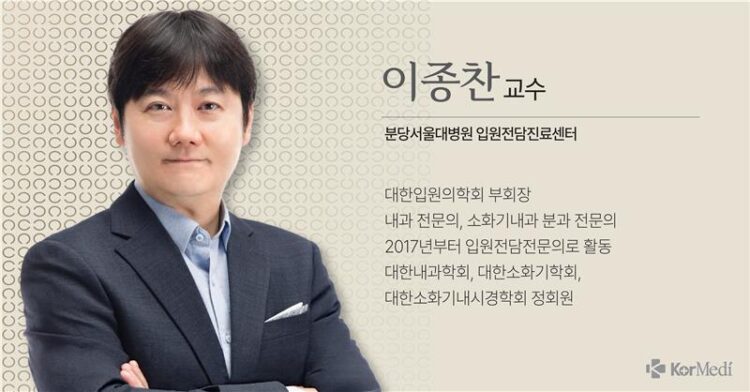
Lee Jong-chan, Vice President, Korean Society of Hospital Medicine
〈Editor’s Note〉 A hospitalist is a physician who remains on the ward to provide close, continuous care for hospitalized patients. Launched as a pilot project in 2016, the hospitalist system was established as a permanent program in 2021 and marks its 10th anniversary this year. ‘Hospitalist Diary’ is a record of the small, daily moments these physicians accumulate as they treat and discharge patients. Through this weekly series, we aim to share the "stories of real people" found within the hospital—from patients and caregivers to medical staff and the hospitalists’ own candid reflections. This series is produced with support from the Korean Society of Hospital Medicine.