“Every major brand we know produces functionally excellent shoes. The most critical factor for walking or running comfortably is how a shoe fits your specific foot, rather than the scientific technology marketed behind it.”
This is the professional insight of Jeong Min-ho, a ‘Sub-3’ marathoner—one who has completed a full 42.195km course in under three hours—and the representative of the Runners Club at Ewha Womans University. Having completed the shoe correction course from the Korean Pedorthic Association, Jeong possesses a deep understanding of foot mechanics. I spoke with him about foot shapes, the science of selection, and the proper way to wear running shoes.
Toe Shapes and the Myth of the Egyptian Foot
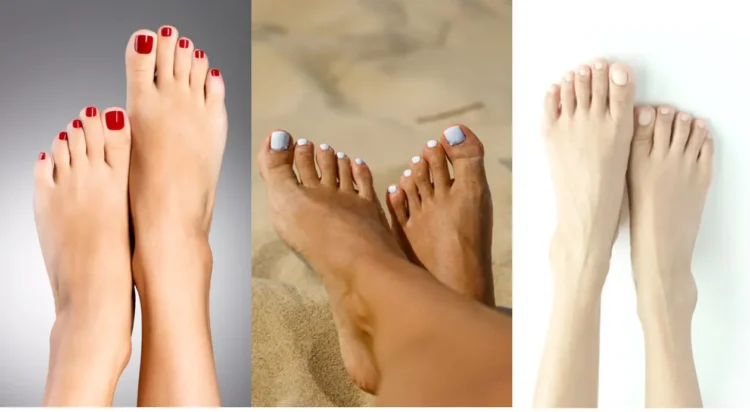
Human feet are generally categorized into three types based on toe length. The Egyptian type is characterized by a big toe that is the longest, with the remaining toes decreasing in succession. The Greek type features a second toe that is longer than the big toe, while the Roman type presents a more squared appearance, with the first three toes being of similar length.
As a runner with over 20 years of marathon experience, I have never suffered an injury to my big toe nail. Despite years of hiking and military service, my big toe remained intact, though I once bruised my second toe. Given that I have Greek-type feet, I developed a hypothesis: perhaps the longer second toe acts as a buffer, touching the shoe first and protecting the big toe from impact. Conversely, I suspected that those with Egyptian-type feet were most prone to big toe injuries.
However, Representative Jeong offered a different perspective. “Toenail injuries are influenced far more by the width of the foot than by the shape of the toes,” he explained. “If a runner with narrow feet chooses shoes based solely on length, the foot will slide forward upon landing, causing the toes to collide with the front of the shoe.” For those with narrow feet, selecting a shoe with a correspondingly narrow width is essential for stability.
Jeong also noted a common mistake among runners who have previously lost a toenail. “Some assume the injury happened because their shoes were too tight. They then overcorrect by buying shoes that are far too loose.” Running in loose shoes causes the foot to shift violently inside the cabin, ironically increasing the risk of the very impact injuries the runner was trying to avoid.
The Importance of Lacing Habits
Beyond selection, Jeong offered a sharp critique of how runners actually handle their gear. “Many people tie their laces once, force their feet into the shoes to run, and then use one foot to stomp on the heel of the other to kick them off.”
Such habits prevent the shoe from properly securing the foot, significantly increasing the risk of injury. Jeong insists that laces must be tied every time you put the shoes on and untied every time you take them off. This ensures the structural integrity of the shoe remains intact and provides the necessary support for the duration of the run.
The Secret of the "Last Hole"
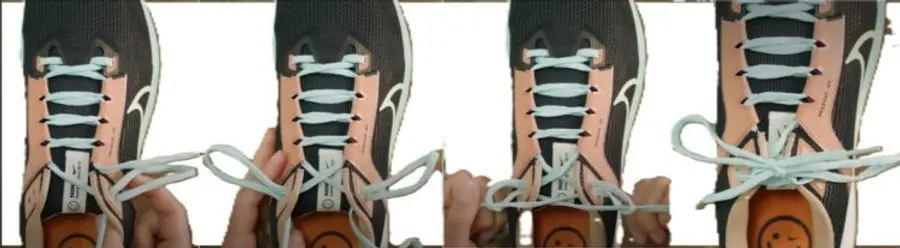
The most overlooked feature of a running shoe is the extra eyelet located at the very top, near the ankle. While manufacturers include this for a specific functional purpose, it is rare to see a runner utilize it. This lacing technique, often called a "heel lock" or "runner's loop," is executed as follows:
Pull the lace out of the second-to-last hole and thread it into the last hole on the same side to create a small loop.
Repeat this on the opposite side.
Thread each lace through the loop on the opposite side.
Cross the laces and tie them in a standard knot.
The benefit of using this last hole is a snug, secure fit around the ankle and heel. “When tied this way, the shoe anchors the rear of the foot, preventing the toes from sliding forward and colliding with the toe box,” Jeong explained. This technique effectively prevents bruised toenails and blisters regardless of whether a runner has Egyptian or Greek-type feet. While this level of tightness isn't necessary for casual walking, it is transformative for running.
Though it may seem cumbersome, the loop only needs to be created once; thereafter, one simply ties and unties the central knot. Representative Jeong emphasizes that a perfect fit considers both length and width. By choosing the right shoe and utilizing the last eyelet to wrap the foot securely, runners can enjoy a safer, more refreshing experience as the spring running season arrives.