‘Homo Viator’—the traveler, or "man on the road." In his essay collection The Reason for Travel, author Kim Young-ha writes, “Humans have been in constant motion since the beginning, and that instinct is etched into our very DNA.” Kim himself has embodied this, packing his bags every year since college, pausing only for his mandatory military service.
“Will the robots of the future travel?” Kim poses this question to highlight that travel is a uniquely human pursuit. No other primate moves as frequently or as far as we do. He suggests that while androids—robots designed to be indistinguishable from humans—might perform our labor, they will never understand the human urge to go backpacking or take a summer holiday.
Humans are the only species on Earth that travels for its own sake. While migratory birds, fish, and whales cover vast distances, we do not call their movement "travel." They are driven by survival and instinct; they do not derive conscious joy from the journey. Humans, however, find profound happiness in the act of exploration itself.
The "Happiness Calorie Chart": Research from Professor Choi In-cheol
In his book Good Life, Professor Choi In-cheol of Seoul National University introduced the "Happiness Calorie Chart." He mapped various human activities based on two metrics: fun (the vertical axis) and meaning (the horizontal axis).
The data revealed that travel occupies a league of its own as the most fun and meaningful activity a person can undertake. It provides a level of overall happiness that exercise, socializing, and even dating cannot match. While shopping and eating offer temporary fun, they score low on meaning. Conversely, obligatory tasks like housework and professional labor were rated as the least enjoyable.
Even on the axis of meaning, travel reigned supreme, consistently outperforming religious activities, volunteering, and parenting. Why is this? Why does travel provide more joy than exercise and more meaning than religion? While dating can be fraught with social tension and stress, the idea that travel provides more spiritual meaning than religion is a more complex puzzle to solve.
Is the Urge to Travel Stronger than the Sex Drive?
To say "the desire to travel is just that strong" feels like an oversimplification. It invites the obvious counter-argument: "Is it really stronger than our biological sexual drive?" To find the answer, we must look at travel’s place in the history of human movement.
For prehistoric humans, movement was a survival strategy—a way to find food and adapt to a changing climate. We walked and ran more than any other primate to hunt and gather. This migration for survival continued well into the modern era, most notably during events like the Irish Potato Famine, which forced a mass exodus to the New World.
However, there are misconceptions about this. While some texts, such as Migrating Humanity, claim that long-distance migration is a hardwired instinct, anthropologist Lee Sang-hee of the University of California, Riverside, offers a correction in her book How Did We Become Who We Are? She explains that prehistoric movement was often the "diffusion" of a population spreading naturally to new areas, which is fundamentally different from the intentional migration or travel we see today.
From Christian Pilgrimages to Joseon Confucian Treks
Over time, human movement took on new dimensions. Armies and merchants moved continuously, building and dismantling empires. The Silk Road and maritime routes became conduits for culture and commerce. Eventually, religious aspiration became a primary driver for travel. In the West, early Christians journeyed to Jerusalem, and by the Middle Ages, they flocked to Rome and Santiago de Compostela.
Interestingly, the term ‘Homo Viator’ was originally coined by the French existentialist philosopher Gabriel Marcel in a religious context. He used it to describe the human quest for meaning through the "metaphysics of hope."
Similarly, for scholars of the Joseon Dynasty, mountain trekking was a form of Confucian self-cultivation. These scholars recorded their journeys in travelogues known as Yusan-gi. Over 1,500 of these works are digitally archived today, many inspired by the Neo-Confucian philosopher Zhu Xi, who famously wrote of his travels in Hengshan (Namak).
By the Age of Discovery, curiosity and the desire to explore the unknown merged with commercial interests. Intellectual exploration—scientific expeditions and geographical surveys—flourished despite the risks. By the 17th and 18th centuries, the "Grand Tour" became a rite of passage for England’s elite. Travel was a form of "cultural capital," where knowledge of art and foreign languages served as markers of social sophistication.
Eun Hee-kyung: “A Game of Resilience Where One Becomes a Stranger”
In the modern era, individuals often feel alienated by society and seek comfort through travel. Author Eun Hee-kyung captures this beautifully in her essay collection Hello, Kind People, defining travel as “a game of resilience where one becomes a stranger and then returns to oneself.” She writes:
“The unfamiliar is fascinating... when I enter the unknown, I sometimes see myself more clearly. There are moments when I meet a version of myself I never knew existed. I love those moments in travel the most.”
Today, travel is also intertwined with social media. For many, the secondary goal of "boasting" online sometimes seems to overshadow the original purpose of preserving a memory.
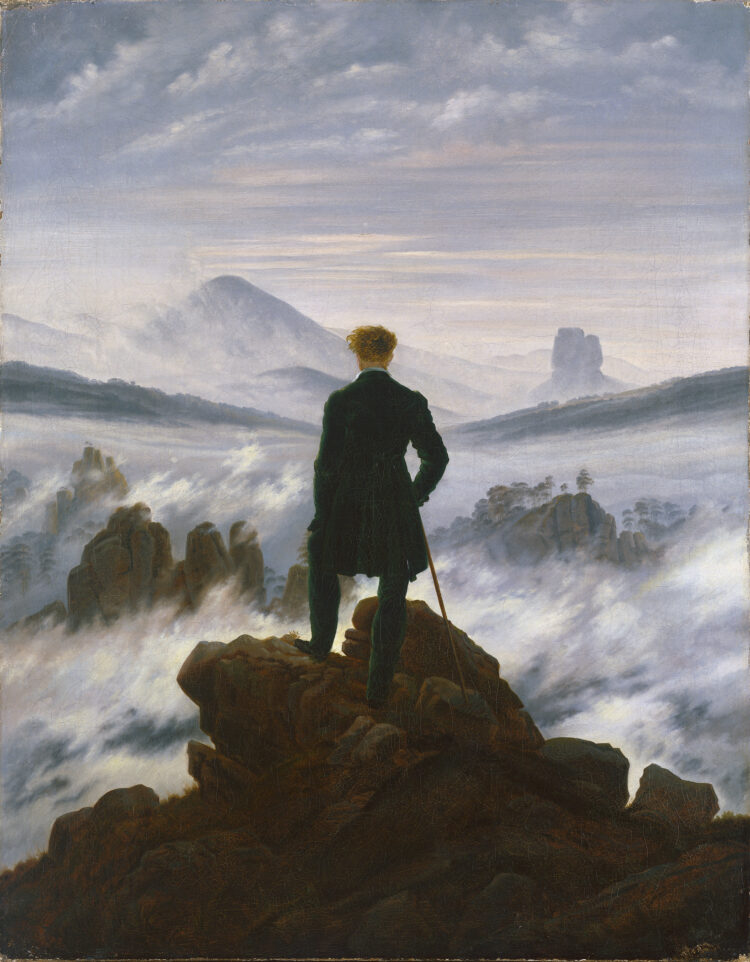
The Ultimate Synthesis: Instinct, Aesthetics, and Gastronomy
Reflecting on Professor Choi’s research, it becomes clear that humans find the most joy in movement that is free from obligation. Our DNA is programmed for tracking and hunting—we have a primal urge to walk. But when the burden of survival is removed, that movement turns into fun.
Consider the difference between a wolf and a pet dog. For a wolf, movement without a purpose is a waste of energy. But for a dog, whose food is provided by a human, a walk is pure joy. Travel is the human version of that walk.
So why does travel bring the greatest happiness? It fulfills our instinct to explore without the stress of work. It satisfies our aesthetic hunger through nature and art. It provides the joy of gastronomy and the pleasure of social connection. In short, travel is a "comprehensive happiness set."
Humans were born to move. While agriculture led us to settle down, it only intensified our desire to explore the unknown. Beyond the food and the sights, what travel fundamentally fulfills is the longing to walk the "path of the heart"—to rediscover who we are in the silence of an unfamiliar place.
Baek Woo-jin, Columnist