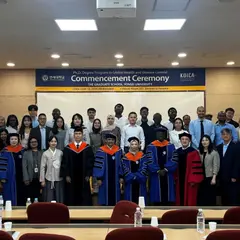
Kim Min-seok of the duo Melomance revealed that he gained weight rapidly due to a wrong diet.
On the 8th, during the broadcast of SBS 'My Little Old Boy' ('MiwooSae'), he mentioned that he gained 10kg in just two weeks around the time of his enlistment. The photo of Kim Min-seok from his enlistment period revealed a chubby figure. Kim Min-seok said, "At that time, I had lost a bit from 100kg to 96kg," and MC Seo Jang-hoon was surprised, saying, "You look like a completely different person."
Kim Min-seok attributed his weight gain to the fact that "the Emperor Diet was trending at that time. I thought I could lose weight by only eating protein," and added, "They say if you eat that much, you won't lose weight," which drew laughter.
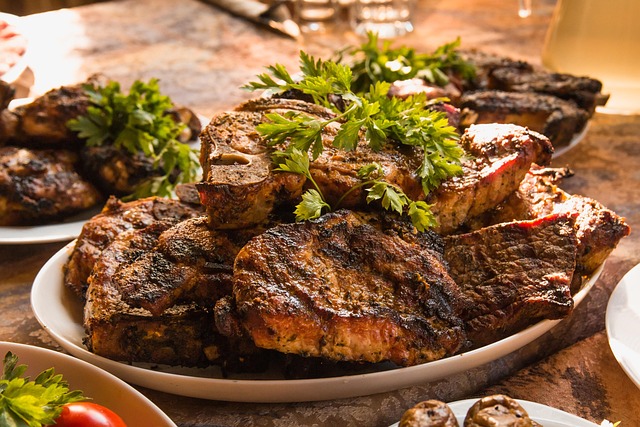
Seo Jang-hoon exclaimed, "You can eat 10 servings of pork belly and 5 servings of intestines at once?" Kim Min-seok, known as a representative big eater in the entertainment industry, looks slim now. What could be the reason behind Kim Min-seok's failure with the once-popular Emperor Diet?

The Principles and Limitations of the Emperor Diet
The Emperor Diet is a low-carb, high-protein, and high-fat diet that almost eliminates carbohydrates and allows unlimited consumption of proteins and fats such as meat, eggs, and fish. Based on the 'Atkins Diet' created by American doctor Robert Atkins, it restricts carbohydrates like rice, bread, and noodles while allowing relatively free consumption of vegetables, hence the nickname that implies losing weight while eating like an 'emperor.'
By cutting carbohydrates, insulin secretion decreases, and the body uses stored glycogen, fat, and protein as energy sources, which can lead to initial weight loss. During this time, glycogen and water are lost, making it appear as if weight has significantly decreased temporarily, but when the diet is stopped, weight often quickly returns to its original state.
If the state of being too low in carbohydrates persists for too long, it can lead to muscle protein breakdown for energy, causing muscle loss, fatigue, and health issues. Additionally, if one thinks, like Kim Min-seok, that "eating only protein will make you lose weight" and excessively consumes meat, it can lead to weight gain, contrary to the principles of the Emperor Diet.
Why Portion Control is Necessary for Protein
Calories ultimately come down to total quantity. Even protein provides about 4kcal of energy per gram, so overeating, like consuming 10 servings of pork belly and 5 servings of intestines, can significantly increase total caloric intake, leading to weight gain even without eating carbohydrates. The extreme claim that "you won't gain weight if you eat a lot of protein" emphasizes only the theoretical aspect, while in reality, if caloric intake exceeds caloric expenditure, weight will inevitably increase.
Excessive protein can also burden the kidneys and liver. When protein is broken down, nitrogen waste is produced, requiring the liver and kidneys to work harder to process it. Even healthy individuals can experience strain from maintaining a long-term excessive protein diet, and it can be particularly dangerous for those with already compromised kidney function.
Moreover, the Emperor Diet often devolves into 'eating as much meat as you want' in practice, and consuming large amounts of fatty cuts like pork belly and intestines can significantly increase saturated fat and total caloric intake. Such a diet can lead not only to weight gain but also to abnormal blood lipids and increased cardiovascular risk.
In terms of muscle and body fat management, appropriate amounts are crucial. During dieting, it is often recommended to consume about 1.2 to 1.6g of protein per kg of body weight to prevent muscle loss, but eating far more than this does not necessarily lead to better fat loss. Instead, excessive protein consumption can increase total caloric intake without effectively reducing body fat, leading to a feeling of weight gain without significant muscle increase.

How to Lose Weight with the Emperor Diet?
The strategy of moderately reducing carbohydrates and increasing protein and vegetables can help maintain satiety and reduce body fat. However, the key is to adhere to the appropriate total caloric intake and protein amount. The healthy dieting formula is not "you won't gain weight if you eat a lot of protein," but rather, "eat protein in moderation while keeping total calories lower than your activity level."
As seen in Kim Min-seok's case, binge eating meat while claiming to be on the Emperor Diet is closer to high-protein, high-fat overeating than actual dieting, so when dieting, it is essential to consider both the quantity of protein and the cooking methods (oil, sauce).
After his discharge, Kim Min-seok successfully lost over 25kg by combining exercise and diet. He practices intermittent fasting by having two meals a day and maintaining a 16-hour fasting period, while also cutting out late-night snacks. He changed his meat-eating method as well. Before eating meat, Kim Min-seok eats 30 to 40 leaves of lettuce to feel full, then wraps the meat in lettuce to lower calories, thus controlling his total intake despite his big eater tendencies. By using vegetables to create satiety, he can reduce excessive protein intake from meat, aiding in weight loss and maintenance.