
Ms. K, a mother of a 2-month-old baby girl from Haeundae, Busan, was once anxious every time she changed her baby's diaper. Other babies could spread their legs wide, but why was her baby so stiff? The folds in the groin and under the thigh were particularly deep on one side.
At first, she thought, 'Every child is different.' But during a hospital check-up, the pediatrician advised, "Please get a hip ultrasound."
She visited a large hospital. There, she received a diagnosis of 'developmental hip dysplasia' (DDH). In simple terms, it means the hip joint has not developed normally.
The doctor said, "If it had been a few months later, treatment would not have been easy," which made her heart sink for a moment. Fortunately, he said, "Since she is still under 6 months, she just needs to wear a brace for a while."
4 to 8 Times More Common in Girls... Must Check if There is a Family History or Breech Birth
Developmental hip dysplasia occurs when the hip socket (acetabulum) is not properly formed from the fetal stage. The head of the femur does not fit securely in the socket and may be unstable or even dislocated.
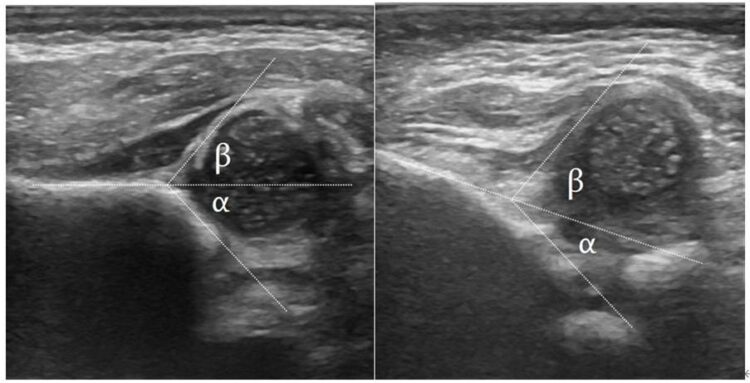
Especially, girls are 4 to 8 times more likely to be affected than boys. Family history, breech birth (when the fetus is born feet first), and low amniotic fluid are also major risk factors.
The problem is time. The sooner treatment begins, the better. If diagnosed before 6 months of age, 80-90% can recover to normal with just a brace.
However, if the diagnosis is delayed, the situation changes completely. After general anesthesia, the joint must be repositioned and fixed with a cast. In severe cases, osteotomy, which involves cutting the bone, may be necessary.
That’s not the end of it. As they grow, they may develop avascular necrosis of the femoral head, walking disabilities, and early osteoarthritis.
It is not uncommon for adults to limp or undergo joint replacement surgery due to these issues. Many of those suffering from hip problems in old age likely had these issues from a young age.
If Discovered Within 6 Months, It Can Be Easily Resolved... But What If It's Too Late?
In a way, developmental hip dysplasia is one of the pediatric diseases that can be resolved most simply if detected early, but can leave the most significant aftereffects if missed.
Parents can check at home. They should be cautious if the legs do not spread well when changing diapers or if one leg appears shorter than the other. Deep folds in the groin and thigh on one side are also warning signs. If the child starts to walk and limps, they should immediately visit an orthopedic specialist.
Especially for baby girls, those with a family history, or those who had a breech birth, it is advisable to have an ultrasound examination between 4 to 6 weeks of age. After regular check-ups at the pediatric clinic, if DDH is suspected, simply requesting a hip ultrasound is sufficient.
Haeundae Bumin Hospital Joint Center Has a Hip Treatment System for Newborns to Adults
The Haeundae Bumin Hospital Joint Center is designated as the 5th specialized joint hospital by the Ministry of Health and Welfare. Its strength lies in multidisciplinary collaboration. Pediatric orthopedics, radiology, and rehabilitation medicine work as a team. From newborn ultrasound examinations to high-level surgeries and long-term follow-up care, it provides a 'one-stop' service.
Diagnosis is enhanced in accuracy using the globally standardized 'Graf method ultrasound.' If brace treatment is not possible or if the diagnosis is delayed, minimally invasive reduction surgery is performed. Preserving the child's growth plate as much as possible is key. After surgery, walking function is evaluated in collaboration with the rehabilitation medicine department.
At the center is Director Kim Hwi-taek. A former professor of pediatric orthopedics at Busan National University Hospital, he has performed over 10,000 complex surgeries. He is an authority in the field of congenital deformities and limb deformities. He has also served as the president of the Korean Society of Pediatric Orthopedics.
He stated, "I do not view pediatric hip problems as a simple 'child's disease' and emphasize that early detection and precise treatment are crucial as they are the starting point for lifelong joint health."