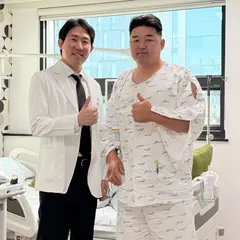
As I stepped into the ward early this morning, the nurse called out the moment she saw me.
“Professor, Patient A was readmitted last night.”
I felt a sudden pang of guilt, though I had done nothing wrong. I couldn’t help but wonder what kind of chaos had unfolded in the ward overnight. Tsk tsk.
I have always struggled to remember names. I can recall a patient’s test results, imaging findings, and even the specific jokes we shared during a previous admission just by looking at their face—but their names often elude me. However, there is one name I can never forget: A.
A suffered from alcoholic cirrhosis. In his world, a man’s worth was measured by how much he could drink; alcohol was an extension of his work and a social necessity. But alcohol is unforgiving. Despite being a robust man weighing over 100kg in his early 30s, his body eventually began to fail him.
When the liver hardens from chronic alcohol consumption and progresses to cirrhosis, the damage becomes irreversible. The liver is a "chemical factory" performing hundreds of essential tasks, yet it is a "silent organ" that often remains asymptomatic until the late stages. By the time symptoms appear, patients may face ascites (fluid buildup), jaundice, or recurring gastrointestinal bleeding. If ammonia toxins accumulate in the bloodstream, hepatic encephalopathy can occur. In mild cases, this manifests as insomnia, restlessness, or delirium; in severe cases, it leads to loss of consciousness and coma.
The first time I met A, he was experiencing "mild" hepatic encephalopathy. He was incredibly irritable, wearing the marks of a rough life in the form of extensive tattoos and a fierce expression. When he was unhappy, he would hurl insults, rip out his IV needles, and shout throughout the night. His "business associates"—imposing men who never left his side—made it difficult for the nurses to even enter the room. Between the exhaustion of cirrhosis and the confusion of encephalopathy, he was nearly impossible to soothe.
In Korea, the causes of cirrhosis generally fall into four categories: Chronic Hepatitis B (the most common), alcohol, Chronic Hepatitis C, and Non-Alcoholic Fatty Liver Disease (NAFLD). Interestingly, patients often divide into two groups: those with alcohol-related cirrhosis and everyone else. While other patients are typically quiet and frail, those with alcoholic cirrhosis often bring the same "rough" energy to the ward that they possessed when they were drinking.
Yet, over several admissions, A was surprisingly polite to me. Even in his fits of encephalopathic rage, he listened to what I had to say.
I am an Emergency Medicine specialist. Before becoming a hospitalist (attending physician), I spent most of my career in the ER of a university hospital. I was used to dealing with difficult patients and heated confrontations. Over time, I learned when to yield and when to let go. In the ER, you rarely see the same patient twice; once the moment passes, it's over. Perhaps that is where I developed the habit of not memorizing names.
The ward, however, is a different world. In inpatient care, if you lose your temper, the trust between doctor and patient is shattered. I learned that if a patient stops following orders, their clinical outcome plummets. This ongoing relationship was a stark contrast to my ER days. It was just as I was adjusting to this new dynamic that I met A.
A always insisted that I be his attending physician. Even when he was assigned to other wards, the professors and nurses there would ask to transfer him to me. I’m not entirely sure why he sought me out. Perhaps it was the "yielding" attitude I brought from the ER, or perhaps he felt a sense of kinship with my own rugged build. He might have even sensed that I, too, enjoy a drink. Regardless, he became "my patient" every time he returned.
“What brought him in this time?” I asked the nurse, assuming it would be the same story as before.
“He has massive hematochezia (bloody stools). It looks like esophageal variceal bleeding, and his encephalopathy is severe.”

I had anticipated this decline. I had tried my best to slow the progression, but his liver was failing faster than expected. When GI bleeding occurs, the blood is digested in the intestines, which spikes ammonia levels and rapidly worsens brain function.
When I saw A again after two months, he was a different man. He could barely speak. His consciousness was hazy, and his vitals were unstable. I quickly placed a central venous catheter and began an emergency blood transfusion. It was a procedure I had done a thousand times in the ER, but this felt different. This wasn't a stranger; this was "my patient" who visited every few months.
Once he was stable enough, we performed an emergency endoscopy to achieve hemostasis (stopping the bleed). I decided to move him to the Intensive Care Unit (ICU) for close monitoring. I remember thinking, I hope I don’t have to go down there and soothe his temper again...
When a patient moves to the ICU, the attending physician changes. I waited for the call saying he was ready to return to my ward, but a week passed in silence. Then, one morning, his name appeared on my computer screen with a notification:
[A] is a deceased patient. Please complete all outstanding clinical records.
I traced the records of his final week. His blood pressure had risen—he seemed to be improving. Then a fever. An infection? His urine output dropped. They started vasopressors. Another transfusion... more bleeding. His blood pressure crashed. Final contact with the family.
I am not usually one to dwell on memories. In the ER, you focus on the next person in line. But even now, A comes to mind. He is the patient whose name I have remembered the longest.
Not long ago, a familiar face greeted me in the outpatient corridor. I struggled to place him—it seems I’m now forgetting faces as well as names. Then, I saw the person's eyes turn red, and it clicked. It was A’s mother. I remembered her clearly then, always by his side, swallowing her tears. I held her hand in silence for a long time, exchanged a few brief words, and parted ways.
I went back up to the ward. I received a call that a patient in Room 2 was having trouble breathing. It was a patient whose name I still hadn’t memorized.
Professor Kim Hyun-jong
Chairman of the Academic Committee, Korean Society of Hospital Medicine
Clinical Professor of Hospital Medicine, Yongin Severance Hospital
Specialist in Emergency Medicine
〈Editor’s Note〉
A hospitalist is a dedicated attending physician who remains on the ward to provide the most direct and continuous care for hospitalized patients. What began as a pilot program in 2016 officially became a permanent fixture of the healthcare system in 2021, and this year marks the 10th anniversary of the hospitalist model.
‘Hospitalist Diary’ is a collection of the small, significant moments that define a doctor's life—the daily cycle of meeting, treating, and discharging patients. Through this weekly series, we share the deeply human stories found within hospital walls, offering honest reflections on patients, their families, medical colleagues, and the hospitalists themselves.
This series is supported by the Korean Society of Hospital Medicine.