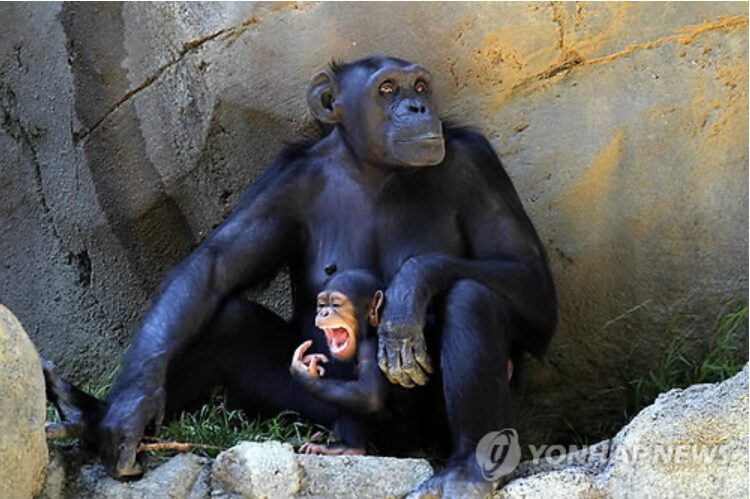
"Basic English consists of about 1,000 words. Chimpanzees have already acquired more than 10% of that number. A few years ago, this would have been considered nonsense science fiction, but I believe that the following is not impossible. That is, a memoir of the natural history and mental life of chimpanzees (probably with 'dictated to' added after the author's name) could be published."
《Cosmos》 popularized science, and Carl Sagan made this prediction in 《The Dragons of Eden》. Sagan expressed this expectation in Chapter 5, 'The Abstract Abilities of Animals,' of 《The Dragons of Eden》, published in 1977.
"The era will come when chimpanzees communicate only in human sign language"
What he mentioned at this point was not the vocal language of chimpanzees. He dealt with the learning of human sign language by chimpanzees. The 'memoir on the natural history and mental life of chimpanzees' was initially narrated in sign language to humans, who would then translate it into human writing. He expected that this astonishing imagination would soon become a reality after several generations of a society of sign language-using chimpanzees formed, defined as a state where "all chimpanzees that cannot communicate in sign language have either died or not given birth to offspring." He predicted that after several generations in that state, the sign language of chimpanzees would develop significantly and become sophisticated.
Science also follows trends. There was a flow that formed the background of Sagan's imagination. It was research on the ability of apes to learn human language. If human language ability is a product of culture and learning, then apes, sharing more than 98% of their genes with humans, might learn language if raised like humans, a hypothesis that began to be tested in the 1930s.
Winthrop Kellogg, a psychologist at Indiana State University, raised a 7-month-old chimpanzee named 'Gua' alongside his 10-year-old son and taught it to speak. His experiment failed after 9 months. At that time, it was not known that the anatomical structure of apes, such as the larynx, was unsuitable for producing vocal language.
Subsequently, researchers turned their attention to sign language. Research on ape sign language was conducted in several places in the mid-1960s.
#1 Case. In 1966, the chimpanzee 'Washoe' of psychologists Allen and Beatrix Gardner at the University of Nevada was the first. According to the Gardners, Washoe learned 34 signs in sign language in 22 months and demonstrated linguistic creativity (metaphor) by presenting the word 'flower' to convey the vocabulary 'smell,' and even taught sign language to other chimpanzees. It was Washoe who referred to a swan as 'Water Bird.'
Their paper was not considered mainstream science, as it was evaluated by peer scholars regarding experimental methodology and data, and thus was mostly ignored or doubted by linguists like Noam Chomsky and the mainstream primatology community, but it stimulated follow-up research merely by its possibilities.
‘Promotion’ and ‘Reality’ of Experiments Teaching Sign Language to Apes
#2 Case. Herbert S. Terrace, a psycholinguist at Columbia University, had a chimpanzee named 'Nim Chimpsky' (a parody of Noam Chomsky) who learned 125 signs over 44 months. However, Terrace concluded that it was nonsense to claim that Nim communicated with humans in human language.
Nim mostly conveyed animalistic needs, such as asking for food, through gestures rather than syntax. In short, it was no different from how pets like dogs and cats communicate with their owners, and the act of communication was merely a result of mimicking or learning the expressions and gestures of the researcher to elicit a good response.
#3 Case. Francine Patterson, an animal psychologist at Stanford University, taught sign language to the gorilla 'Koko.' Some media reported Koko's abilities as astonishing. Koko's ability to create words surpassed that of Washoe, describing 'hairbrush' as 'scratch comb,' 'ring' as 'finger bracelet,' and 'mask' as 'eye hat.'
Doubts and criticisms regarding Koko's abilities have persisted since the 1980s. The main points of criticism were threefold: the meanings were exaggerated, there were too many variables in interpretation and translation, and there was no verifiable research data.
Terrace, who suspected that Washoe's creation of the term (swan→water bird) might simply be referring to the learned 'water' and 'bird' separately, criticized that "the problem is that meaning (not Koko's behavior) lies in the observer's eye," and likened the researcher of Koko to the 'mother of excessive enthusiasm,' saying, "He tends to project meanings that are not easily visible to other researchers because he is so proud of his surrogate child."
Stanford's neuroendocrinologist and primatologist Robert Sapolsky criticized, "Patterson has never released any data worth analyzing, except for a few touching video films."
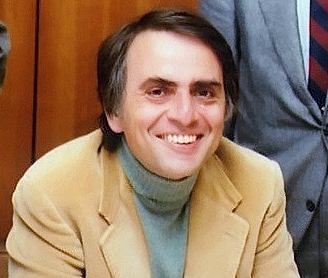
Sagan's hope blinded him to the facts. He argued, "Perhaps the most astonishing aspect of this entire subject is that there exist non-human primates who are overflowing with the eagerness to learn in the zone of language use change, and once they learn a language, they can use it proficiently and apply it creatively."
Sagan: “Humans Eliminated Primates Showing Potential Language Abilities”
Then why has there been no case of a circus chimpanzee learning sign language before the attempts to teach sign language to chimpanzees began in the mid-1960s? He imagines this: it is a claim that is so wrong it does not need to be refuted.
"I think one possible answer to that question is that humans systematically eliminated primates that showed some evidence of intelligence. Especially, primates living in savanna grasslands would have been exterminated by humans. Perhaps gorillas and chimpanzees, living in forests, could have avoided human slaughter to some extent."
Teaching language to apes was a 'misguided trend.' That trend mostly manifested itself passively and naturally faded after the 1980s. Although no one said it outright, it became clear that such activities were closer to selling illusions in a high circus (Source: Choi Yoon-pil, The Gorilla Who Loved Cats and Humans, Korea Daily, 2018.07.02.).
Carl Sagan's 'The Dragons of Eden' came out at the tail end of that trend.
A Strong Argument Showing Human Language Instinct: 'Sign Language Babbling'
Now we move on to theoretical discussions. Linguist Noam Chomsky has long argued that human language ability is an innate quality acquired genetically, asserting that the learning of sign language by chimpanzees is impossible. Linguist Steven Pinker also made the same argument in 《The Language Instinct》.
Humans are born with language hardware and software that apes do not possess. The former is the oral structure centered around the position of the larynx that allows for the precise production of sounds. The software that utilizes this hardware is installed in the brain, involving several genes. The most representative gene is FOXP2, which regulates the development of brain circuits necessary for speech production and grammar processing. Additionally, genes such as CNTNAP2, KIAA0319, and DCDC2 are involved in phonological processing, grammar acquisition, and reading ability, and these work in concert to form the unique language ability of humans (Graham & Fisher, Decoding the genetics of speech and language, Annual Review of Genetics, 2015.).
Pinker explained in 《The Language Instinct》 that "children are born with a cognitive bias to categorize sounds, infer grammatical rules, and map meanings to structures without being taught."
Humans inherit language abilities inscribed in DNA over long periods, but the human language instinct is somewhat different from the instinct of birds building nests. While birds build nests on their own when the time comes without stimuli, humans require external stimuli. In cases like that of a child raised in a wolf pack, if there is no linguistic stimulation during a critical period, the child will not learn to speak.
A very strong piece of evidence for the human language instinct is 'sign language babbling.' First, looking at the basics of sign language, sign language is not a means of communication that expresses spoken language through gestures. Sign language varies by language and can combine gestures corresponding to the language, but it is not an imitation of spoken language. It is an independent language system.
According to Won Seong-ok's 《sign language》, children with hearing impairments who acquire sign language as their primary language babble in sign language. They start this from three months after being exposed to sign language. They express meanings through other means of communication when vocalization is not possible. This shows that the software of the human language instinct is powerful enough to bypass the limitations of the oral structure as hardware. Apes, even when exposed to sign language, do not show a desire to learn, and they will not in the future.
Humans created language, and language became a means to enhance human thought. Humans who theorized through language have also explored language. This is why philosophers and many others have been fascinated by language and have left words about speech.