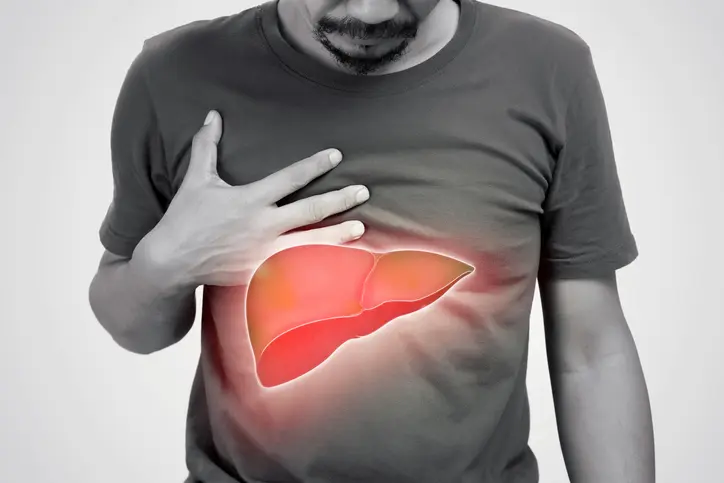
A domestic research team has devised a method to increase the survival rate of patients with progressive liver cancer with vascular invasion.
When cancer cells invade the blood vessels supplying nutrients to the liver, the probability of cancer spreading throughout the liver or metastasizing to other organs significantly increases. As a result, liver cancer patients with vascular invasion experience a rapid decline in liver function, and their prognosis is known to be poor.
Generally, patients with liver cancer that has invaded blood vessels are classified as having progressive liver cancer corresponding to stage 3 (C stage). The most common treatment for these patients is to combine transarterial chemoembolization or targeted therapy with radiation therapy, and recently, methods using immunotherapy have also been attempted.
However, even with the same treatment, the survival period varies greatly among patients, ranging from a minimum of 5.8 months to a maximum of 98.4 months. This has made it challenging for medical professionals to choose treatment methods.
In this regard, the research team from the Department of Radiation Oncology at Samsung Medical Center (Professors Park Hee-cheol, Yoo Jeong-il, and Kim Na-ri) analyzed the prognosis based on treatment methods for 526 patients with vascular invasion liver cancer.
The research team developed a more precise 'risk prediction model' by comprehensively considering the patients' liver function, tumor size, invasion type, and the presence of extrahepatic metastasis. They then verified through 11.6 months of follow-up observation that this model is effective in predicting actual patient prognosis.
As a result of classifying patients using the prediction model, the median progression-free survival period (the period without disease worsening) for the ultra-low-risk group was 11.4 months, while for the high-risk group, it was 1.9 months, showing a clear difference. The overall survival period was also distinctly contrasted, with the ultra-low-risk group at 47.3 months and the high-risk group at 6.6 months.
In particular, it was found that the optimal treatment method varies according to the risk level of these patients. According to the research team, the ultra-low-risk and low-risk groups, which have relatively low risk, showed the best treatment effect when combining the existing treatment of transarterial chemoembolization and radiation therapy.
On the other hand, for the moderate and high-risk groups, immunotherapy was more effective. When immunotherapy was combined with radiation therapy, the risk of disease progression decreased by 43%, and the risk of death decreased by 24% compared to the application of existing treatment methods. It was confirmed that using immunotherapy alone reduced the risk of death by up to 62% compared to existing treatment methods.
The research team explained that radiation therapy primarily destroys cancer cells and activates the immune system, creating a kind of 'vaccine effect,' which enhances the effectiveness of immunotherapy.
Professor Yoo Jeong-il emphasized, "Patients with vascular invasion liver cancer have very diverse clinical characteristics," and added, "Rather than simply deciding on treatment methods based on the stage, predicting risk and finding the treatment combination that benefits the individual patient the most is the shortcut to increasing survival rates."
The results of this study were published in the latest issue of the international journal 《Radiotherapy and Oncology》.