From Technical Instruction to Patient-Centered Care
“How do you tell a patient they have terminal cancer?” “If a senior surgeon makes a mistake, how do you speak up?” “How do you maintain professional collegiality with nurses and physical therapists?”
In the United Kingdom, prestigious medical schools like Imperial College London and University College London (UCL) now vet applicants for teamwork and communication skills before they even set foot in a classroom. From their first year, students engage in simulated patient interviews to learn "medicine for people." National licensing authorities have even enshrined "collaboration with colleagues" as a core graduation competency. Despite the UK's reputation for tradition, its medical education is rapidly pivoting from technical transmission to a human-centered approach.
The shift in Germany has been equally profound. In 1989, students at Charité—one of Europe's largest university hospitals—staged a boycott to protest a lecture-heavy curriculum. That movement successfully moved medical education from the lecture hall to the patient's bedside.
Charité adopted an integrated six-year modular curriculum that eliminates the traditional divide between preclinical and clinical years. Instead of studying subjects in isolation, students work through patient scenarios and handle two real cases per week starting in their first semester. Assessments have expanded beyond written exams to include Objective Structured Clinical Examinations (OSCE), simulations, and portfolios. Harm Peters, head of the Reformstudiengang Medizin, emphasizes that success requires more than a paper plan: “It requires leadership, data, and persistent dialogue.”
The Quiet Revolution: Training Leaders for the AI Era
Worldwide, medical schools are overhauling their systems to produce doctors capable of leading societies shaped by aging populations, artificial intelligence (AI), and big tech. This "quiet revolution" spans student selection, curriculum design, and residency training. The emerging global standards are clear: integrated disciplines, competency-based progression, and multidisciplinary team-based medicine.
Even Harvard Medical School—an institution that has produced 44 Nobel laureates in Physiology or Medicine—refuses to stand still. Harvard treats basic medical science with the same rigor as clinical practice, with approximately 20% of students enrolled in the MD-PhD track. The Health Sciences & Technology (HST) program, run jointly with MIT, forces students to define and solve complex problems at the intersection of medicine and engineering.
“Because the system systematically cultivates basic researchers, students find it natural to contribute to medicine outside the clinic,” says Jun-ryeol Heo, an Associate Professor of Immunology at Harvard. “A solid foundation in basic science imprints itself on their career paths, opening routes into research, policy, and industry.”
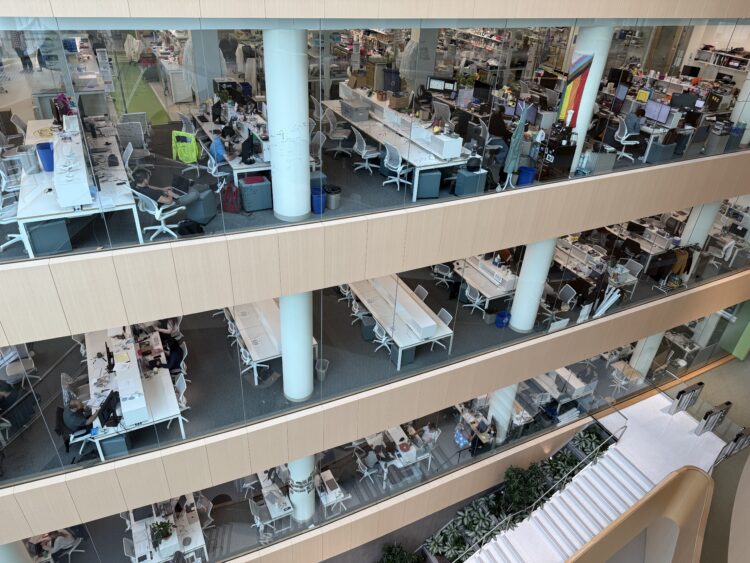
This philosophy is embodied by the Ragon Institute in Boston. Spanning over 300,000 square feet, the institute brings together physician-scientists from Massachusetts General Hospital and Brigham and Women’s Hospital to develop innovative therapies, including the world’s first HIV/AIDS treatments and COVID-19 vaccines.
Teamwork and the Public Role of the Physician
To reduce errors caused by physicians acting in isolation, global healthcare systems are embracing multidisciplinary care. In these models, nurses, pharmacists, and therapists collaborate as equals to design treatment plans.
“There is no hierarchy in hospital meetings,” says Jo Jun, a professor at London’s Royal Free Hospital. “It is routine for a nurse to challenge a doctor, and that is the path to patient safety.”
The public role of the doctor is also a central pillar. Japan has long addressed regional healthcare disparities through Jichi Medical University, which requires graduates to serve in rural communities for nine years. Minako Kamimoto, a professor at Tottori University, notes that policy alone isn't enough: “Living and learning alongside residents produces community-focused doctors. The town, not the classroom, must become the lecture hall.”
The Challenge for South Korea: Moving Beyond Memorization
While the bright minds of the 1970s built "IT Korea," there is hope that the talent currently entering medical schools will drive the digital health and biotech industries. However, critics warn that a stagnant educational model is a significant bottleneck.
South Korean medical schools have introduced problem-based learning, but many argue these are mere imitations of foreign models. The current curriculum remains heavily focused on clinical techniques—90% of which may become obsolete in the AI era. Furthermore, because faculty incentives are tied to research and clinical volume rather than teaching, education is often treated as a secondary duty. Students frequently resort to memorizing facts for exams rather than cultivating the values of the profession.
Searching for Answers
KorMedi.com is launching a five-part series visiting the frontlines of medical innovation in the United States, Germany, the United Kingdom, and Japan. Beyond the current disputes over enrollment quotas, we seek to answer a more fundamental question: What kind of doctors do we need at the bedside, in the lab, and in the industry—and how must our schools change to produce them?
This project was supported by the Press Promotion Fund, financed by government advertising fees.