


As people spend more hours looking at computer monitors and smartphones, a growing number are reporting neck and shoulder discomfort. One common culprit is “text neck,” or forward head posture. Holding the head forward of the shoulders places steadily increasing strain on the muscles and ligaments supporting the neck.
Viewed from the side, the cervical spine normally forms a gentle C-shaped curve. Over time, repeatedly holding poor posture can alter that alignment or cause the neck to straighten. As the condition progresses, it can trigger neck stiffness, shoulder pain, and headaches, along with upper and lower back discomfort or pain around the jaw joint.
Relieving symptoms starts with avoiding prolonged static positions and moving the neck and shoulders regularly. Stretch slowly within a pain-free range of motion, and avoid forcefully bending or pulling the neck. Here are nine practical ways to manage forward head posture in daily life.
Stretch every hour
If you have been sitting at a computer for an extended stretch, make a point to get up and move at least once an hour. Slowly turning your neck from side to side, rolling your shoulders, or taking a brief walk helps release built-up muscle tension. Consistency matters more than duration—frequent, brief movement breaks work far better than one long stretching session.
Use a standing desk
A height-adjustable standing desk makes it easier to cut down on sitting time and shift positions throughout the day. While standing, change your stance frequently to keep tension from building in your neck and shoulders. Because standing for too long can strain the lower back and legs, alternate regularly between sitting and standing. If you do not have a standing desk, simply getting up at regular intervals for a short walk offers similar benefits.
Cut back on smartphone use
Repeatedly looking down at a phone tilts the head forward and overloads the muscles along the back of the neck. Trim unnecessary screen time and hold your device closer to eye level when checking messages or reading. During breaks, opt for screen-free activities like walking or light exercise rather than scrolling through social media or watching videos.
Try chin tucks
Chin tucks are a simple, effective exercise for realigning a forward head position. Sit in a chair or stand upright while looking straight ahead. Draw your chin straight back horizontally, as if creating a double chin, without tilting your head up or down. Hold for about five seconds, then slowly relax and repeat.
Try a side-bend stretch
When the muscles along the sides of your neck feel tight, sit or stand with your back straight and gently rest your right hand on the left side of your head. Slowly tilt your head toward your right shoulder without pulling down with your hand. Once you feel a mild stretch along the left side of your neck, hold briefly before returning to the center, then repeat on the opposite side. Keep both shoulders relaxed so they do not creep upward.
Loosen up with neck turns and shoulder rolls
Gentle movement alone can help ease chronically stiff muscles. Sitting or standing tall, slowly turn your head from side to side. Next, shrug your shoulders gently toward your ears, lower them, and roll them forward and backward in smooth circles. Move slowly without bouncing, and avoid rolling your neck in a full, sweeping circle, which can trigger dizziness or strain.
Try cobra pose
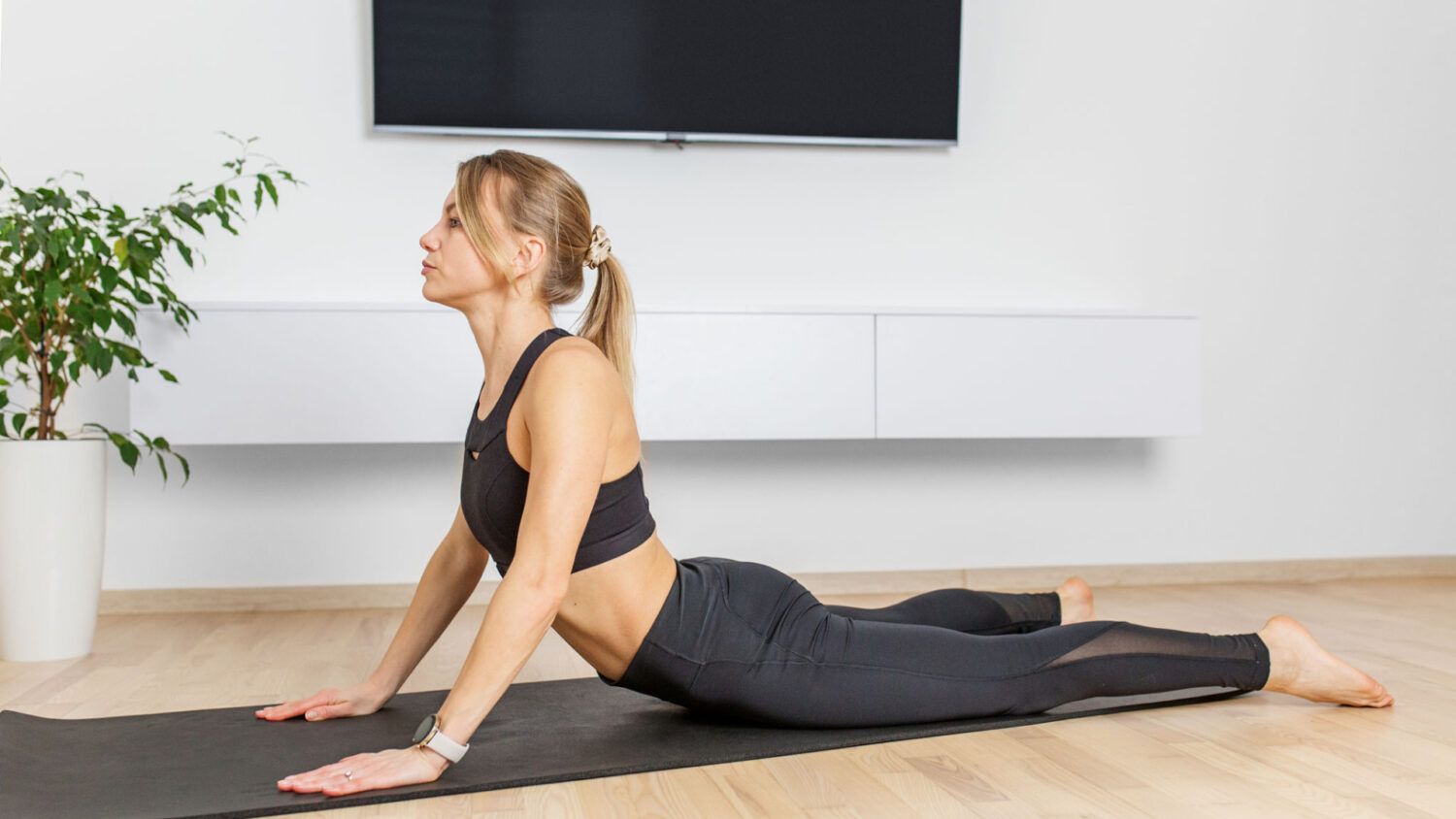
Yoga’s cobra pose opens the chest and front of the torso while engaging the muscles of the upper back. Lie face down on the floor with your hands placed beside your chest and your elbows tucked close to your sides. Gently press your palms into the floor to lift your chest, taking care not to overarch your lower back or shrug your shoulders toward your ears. Keep your neck aligned with your spine and gaze straight ahead or slightly downward. Beginners should start with a low lift rather than fully straightening their elbows.
Try the Superman exercise
The Superman exercise strengthens the back and gluteal muscles that support upright alignment. Lie face down with both arms extended overhead and your legs straight. Lightly brace your abdominal muscles, then slowly lift and lower your right arm and left leg together before switching to your left arm and right leg. Avoid lifting your limbs so high that your lower back overarches, and keep your gaze toward the floor rather than tipping your head back.
Maintain good everyday posture
Preventing and easing forward head posture ultimately comes down to daily habits. Keep smartphone screens as close to eye level as possible rather than hunching over them. Position your computer monitor directly in front of you with the top of the screen at or just below eye level, and sit with your hips all the way back against the chair and your feet resting flat on the floor.