"Managing myopia in children and adolescents is an investment that will dramatically reduce South Korea’s future burden of preventable blindness."
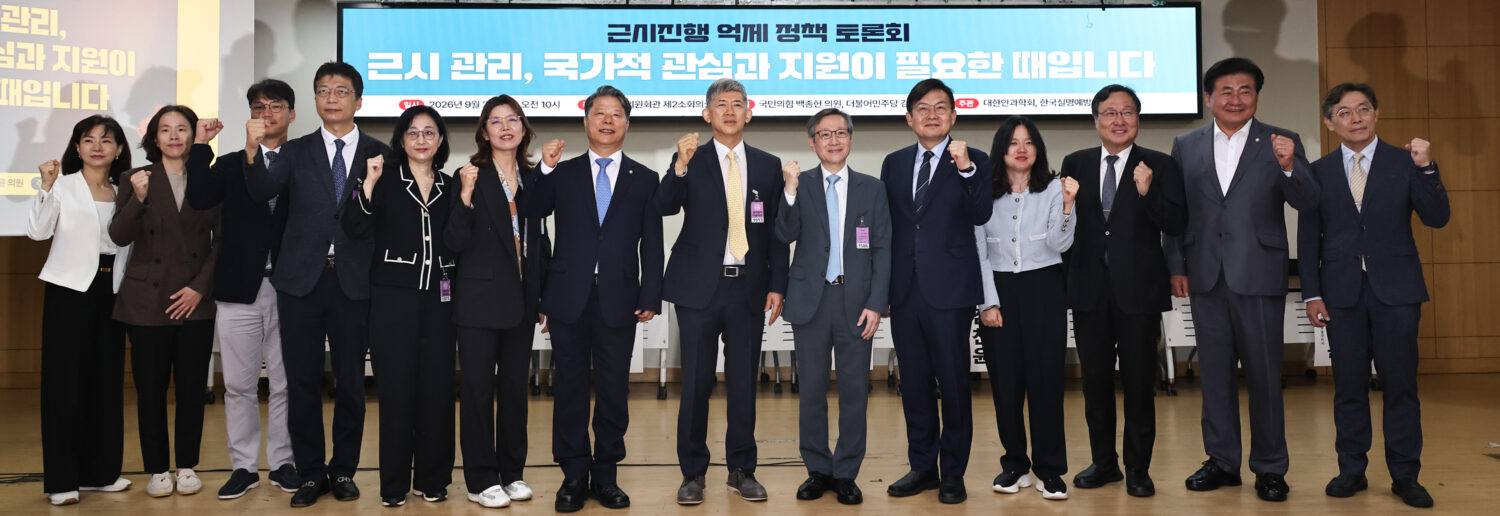
At a parliamentary policy forum titled “Slow the Progression of Myopia: Time for National Attention and Support,” held at the National Assembly Members’ Office Building in Seoul, medical experts emphasized that childhood myopia must no longer be dismissed as a routine decline in vision. Instead, they urged the government to recognize it as a chronic condition requiring lifelong medical oversight and a structured national framework.
The forum was co-hosted by Representative Baek Jong-heon of the People Power Party and Representative Kim Yun of the Democratic Party of Korea, both members of the National Assembly’s Health and Welfare Committee. Organized by the Korean Ophthalmological Society and the Korea Foundation for the Prevention of Blindness, the event brought together medical specialists, educators, and health officials to address the rapid rise of youth myopia and its escalating socioeconomic toll.
Opening the presentations, Choi Mi-young, President of the Korean Association for Pediatric Ophthalmology and Strabismus, outlined current epidemiological trends and evidence-based interventions. Analyzing data from approximately 520,000 19-year-old men in the Seoul metropolitan area between 2013 and 2022, Choi delivered a stark projection: "By 2050, overall myopia prevalence among young adults is expected to reach 90.9%, with high myopia hitting 31.3%." She stressed that curbing this trajectory requires immediate lifestyle shifts, including encouraging outdoor activities while limiting prolonged near-work and screen time.
Citing public health initiatives in Asian neighbors like Taiwan, China, Singapore, and Japan, Choi urged South Korea to follow suit. "These countries treat myopia as a national public health priority," she noted. "South Korea must build an integrated system that promotes outdoor play while actively slowing myopia progression."
Escalating Disease Burden and Socioeconomic Losses
The severe medical risks associated with unmanaged high myopia were detailed by Choi Kyung-sik, Policy Director of the Korean Myopia Society. He explained that as nearsightedness worsens, the risk of sight-threatening ocular diseases increases exponentially. Compared to individuals with normal vision, the risk of retinal detachment is 3.2 times higher in low myopia, 8.7 times higher in moderate myopia, and 12.6 times higher in high myopia.
For patients with high myopia, the likelihood of developing glaucoma rises by 4.6 times, while the risk of myopic macular degeneration surges by roughly 102 times.
Despite these figures, Choi highlighted a critical lack of official metrics. "There are currently no comprehensive national statistics tracking the true cost of myopia—including progression-slowing therapies, treatment for complications, refractive surgery, and lost economic productivity," he said. While annual optical shop sales in South Korea stand at approximately 2.28 trillion KRW, he emphasized that retail revenue does not reflect the actual disease burden. "This statistical void is precisely why a national surveillance system is urgently needed."
To bridge this gap, Ahn Ji-yoon, Deputy Executive Director for General Affairs at the Korean Ophthalmological Society, proposed establishing a comprehensive national myopia surveillance and blindness prevention strategy.
Under current regulations, student health screenings are performed only in select years, such as the first and fourth grades of elementary school. Ahn argued that vision should be tested at least once a year across every grade, with cumulative records tracked over time. Under this proposal, schools would automatically refer students to specialized ophthalmic care whenever screening reveals early-onset myopia or rapid visual changes.
Ahn’s proposal also encompasses school-based eye health education, regulatory oversight for the safety and efficacy of myopia treatments, long-term cohort studies, and structured adult follow-up care for high-myopia complications.
Building a Unified Infrastructure Across Schools and Clinics
During a panel discussion moderated by Kim Chan-yoon, experts explored concrete ways to align medical institutions, schools, and government agencies.
Addressing clinical standards, Kim Eun-chul, President of the Korean Optometry Association, emphasized that myopia prevention and control are formal medical practices. "Unlicensed, non-physician interventions led by commercial optical shops deprive patients of early diagnostic opportunities," Kim warned, calling for transparent, evidence-based guidance for parents.
Panelists also underscored the need for continuous care spanning from childhood into adulthood. Kim Sung-soo, President of the Korean Myopia Society, noted that many patients drop out of care after reaching adulthood, urging the creation of a lifelong, life-course management model.
Media and educational representatives supported leveraging schools as key intervention sites. Yoon Eun-sook, Deputy Editor-in-Chief of Healthy Hankyoreh, noted that because Korean students spend most of their daytime hours in school, educational institutions represent an ideal public health platform.
To operationalize this, Park Jin-gu, Secretary-General of the Korean Association of Ophthalmologists, and Shin Sun-young, Director at the Korean Association for Pediatric Ophthalmology and Strabismus, recommended distributing a standardized vision-testing manual to schools, backed by clear referral pathways to local ophthalmic clinics.
Shin also proposed a practical guideline for families and schools called the "2-3-4 Policy": spending 2 hours outdoors daily, maintaining at least 30 cm of distance from screens and books, and taking a break every 40 minutes of near-work.
Representing the government, Jeon Eun-jung, Director of the Health Promotion Division at the Ministry of Health and Welfare, noted that modifying student health checkups requires close coordination with the Ministry of Education. "To expand vision screenings to an annual cycle, solid clinical evidence must demonstrate that children's vision changes rapidly enough to justify yearly observation," Jeon explained, drawing a comparison to annual dental exams designed to monitor tooth replacement. "However, because the Ophthalmological Society proposed a basic screening model that relies on existing infrastructure, the policy carries strong practical acceptability."
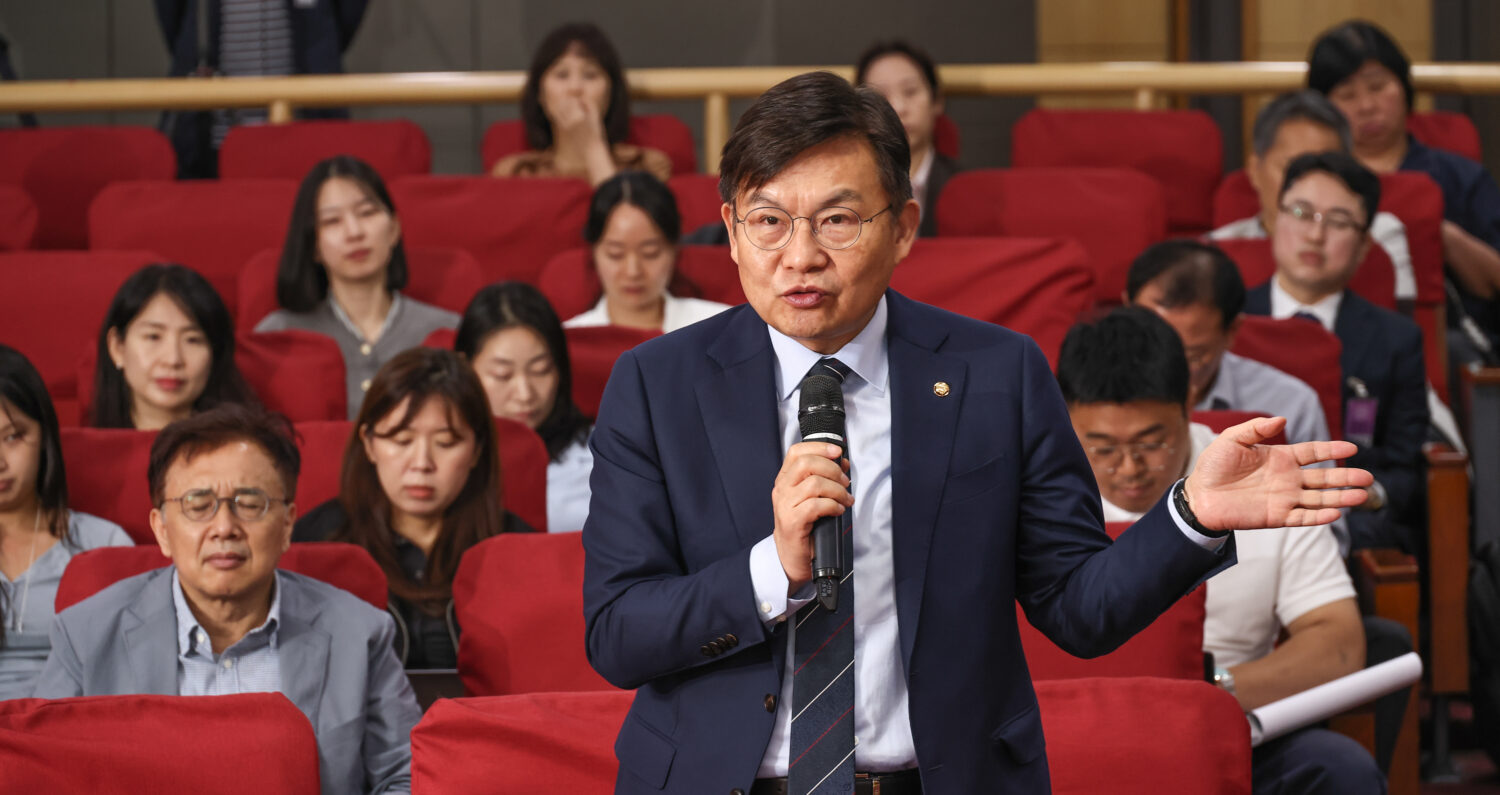
Legislative leaders pledged to facilitate the necessary inter-agency cooperation. Representative Kim Yun affirmed his commitment to advancing the policy, stating, "We will actively coordinate discussions between the Health and Education ministries. If necessary, I will introduce new legislation or refine existing bills so that national myopia management receives the statutory support it requires."