The traditional maxim that frugality is always a virtue does not always apply in the kitchen. Holding on to worn-out cookware, scratched containers, or old dish sponges to avoid waste can inadvertently increase exposure to harmful bacteria, endocrine disruptors, and potential carcinogens.
Pharmacist Choi Hyung-jae recently highlighted "five kitchen items that increase health risks and long-term toxicity" across social media, urging households to inspect their kitchenware. The items listed include single-use plastic water bottles, long-used dish sponges, nonstick frying pans with peeling coatings, melamine tableware, and scratched aluminum containers.
Plastic Water Bottles: Microplastics and Contamination Risks
Choi warned that single-use plastic bottles can release significant quantities of microplastics into liquids, noting concerns regarding microplastic accumulation in human tissues over time.
A landmark 2024 study led by researchers at Columbia University analyzed bottled water from major commercial brands and detected an average of 240,000 plastic particles per liter, roughly 90% of which were classified as microscopic nanoplastics. While health authorities emphasize that a direct causal link between daily microplastic exposure and specific diseases like cancer or dementia remains under active scientific investigation, experts advise against reusing single-use plastic bottles. Repetitive washing, physical flexing, and storing liquids or dry goods like rice inside damaged plastic bottles accelerate the degradation of the plastic lining, releasing microparticles into food and drink.
Worn Dish Sponges: Breeding Grounds for Billions of Bacteria
Because kitchen sponges constantly trap moisture and food remnants, they create ideal environments for rapid bacterial proliferation. Choi recommended replacing old sponges frequently rather than attempting to sanitize them.
Research published in Scientific Reports in 2017 revealed that internal sections of used kitchen sponges contained bacterial concentrations as high as 54 billion cells per cubic centimeter (5.4×10¹⁰). The study noted that even in sponges subjected to regular home disinfection—such as microwaving or washing in hot soapy water—resistant bacterial strains quickly recolonized the porous matrix. Experts stress that replacing sponges regularly or using disposable cleaning pads is far safer than relying on long-term disinfection.
Peeling Nonstick Frying Pans: PFAS and Chemical Leaching
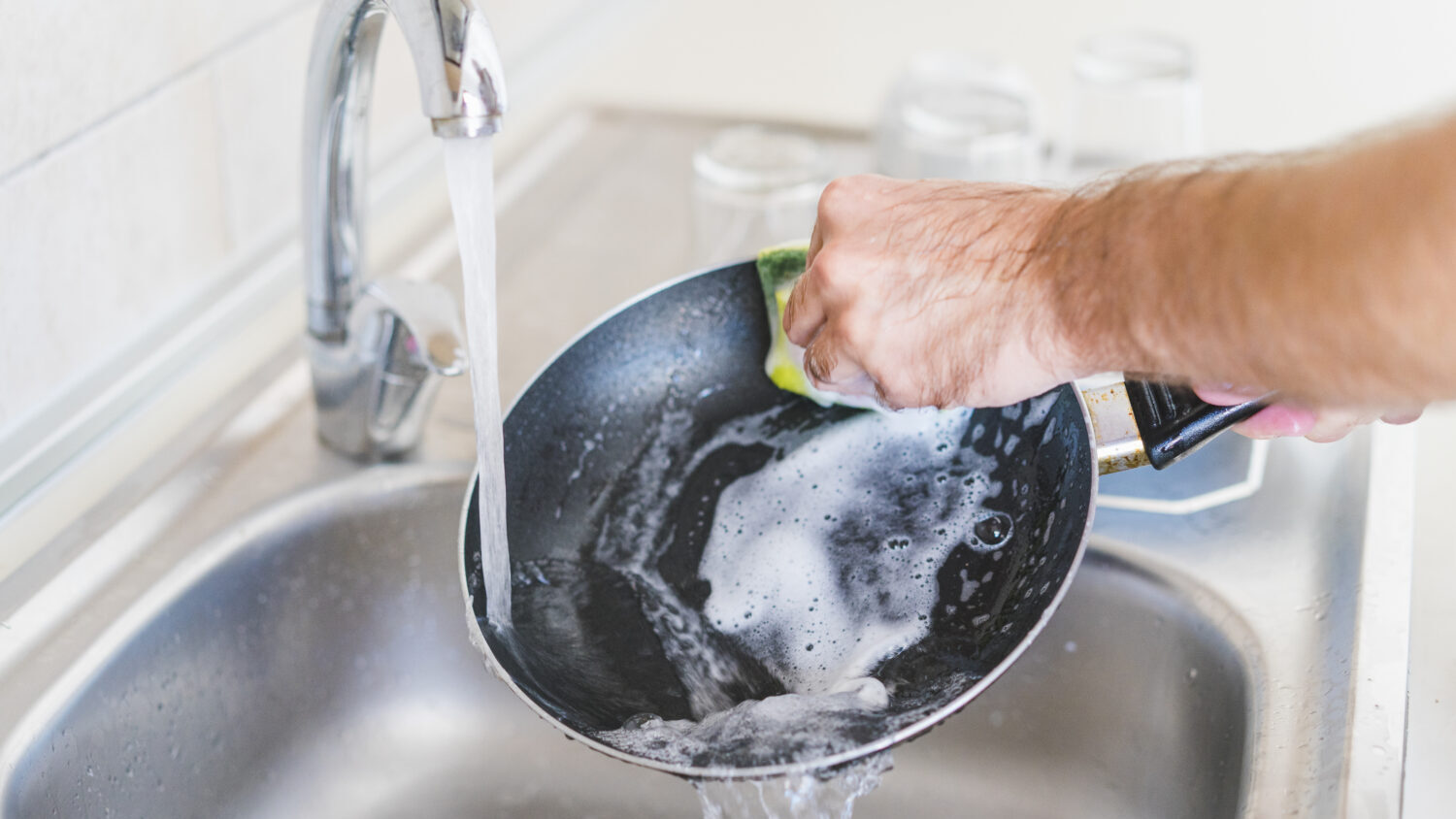
Continuing to cook with a nonstick pan whose coating is scratched or peeling exposes food to degraded chemical compounds. Modern nonstick cookware uses polytetrafluoroethylene (PTFE) to create a slick surface. While intact PTFE is chemically inert, older manufacturing processes utilized perfluorooctanoic acid (PFOA), a persistent compound within the per- and polyfluoroalkyl substances (PFAS) family linked to hormone disruption and reduced reproductive function.
The International Agency for Research on Cancer (IARC) reclassified PFOA as "carcinogenic to humans" (Group 1). When a nonstick surface degrades, microscopic flakes and chemical byproducts can leach directly into cooked meals. Damaged pans should be retired immediately.
Melamine Tableware: Heat-Induced Formaldehyde Release
Melamine plates and bowls, widely used in restaurants and households for their durability, require proper handling to prevent chemical migration. Choi cautioned that exposing melamine resin to high heat, microwave radiation, or ultraviolet sterilizers can trigger the release of formaldehyde.
Melamine tableware is manufactured by synthesizing melamine and formaldehyde into a dense resin. When subjected to high temperatures or microwave heating, the chemical bonds break down, allowing formaldehyde and melamine to migrate into food. Germany’s Federal Institute for Risk Assessment (BfR) strongly advises against using melamine-formaldehyde tableware for heating foods or serving piping-hot liquids. However, melamine items remain completely safe for serving cold or room-temperature dishes under normal conditions.
Scratched Aluminum Cookware: Leaching from Acidic Foods
Scratched or heavily worn aluminum pots and containers pose leaching risks when used with highly acidic or salty foods. Choi noted that storing items like fermented kimchi, pickles, or vinegar-based dishes in damaged aluminum vessels causes the metal to dissolve into the food.
Excessive long-term aluminum intake can pose health risks, particularly for individuals with compromised renal function. According to the European Food Safety Authority (EFSA), chronic high-level aluminum exposure can contribute to neurotoxicity and bone disorders like osteomalacia in vulnerable populations. To minimize exposure, acidic and high-sodium foods should be prepared and stored in glass, ceramic, or stainless steel containers rather than worn aluminum.