As the adoption of GLP-1 receptor agonist obesity medications such as Wegovy and Mounjaro accelerates, medical experts are calling for structured oversight to prevent non-therapeutic and cosmetic misuse. They argue that South Korea should draw from international policy models to implement a phased management framework, offering prescribing support integrated with the Drug Utilization Review (DUR) system alongside targeted insurance coverage for high-need patients.
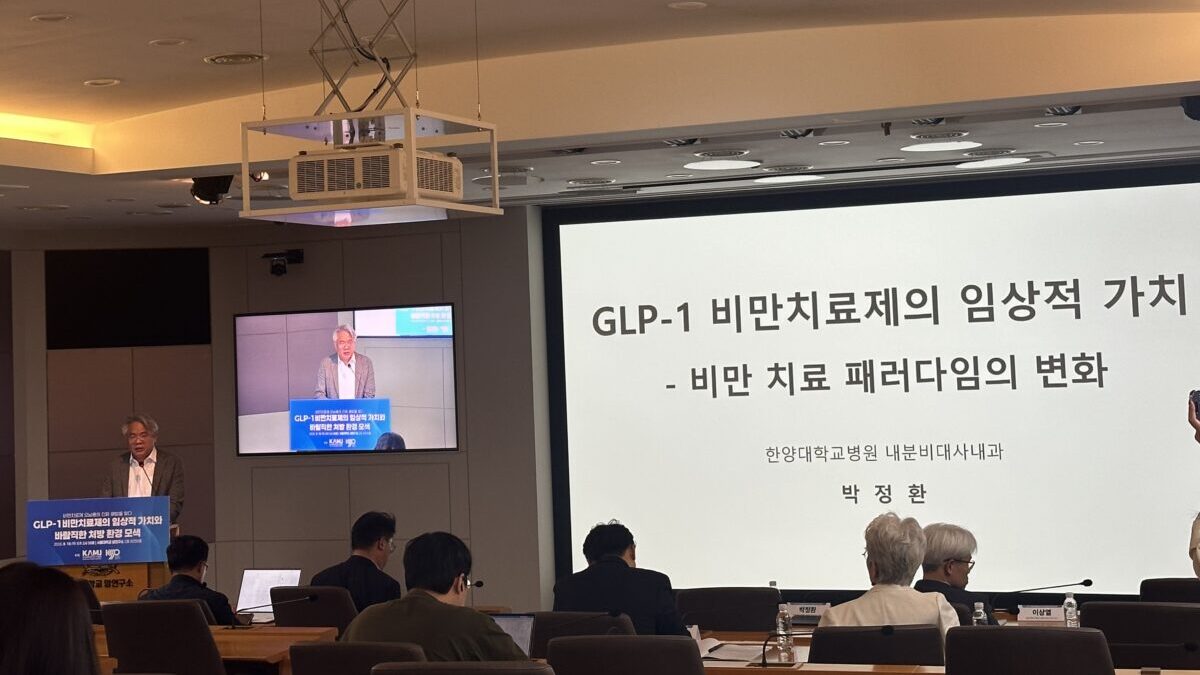
The Korean Society for the Study of Obesity, in collaboration with the Korean Association of Medical Bio Journalists, hosted a symposium on June 10 at the Lee Kun-hee Hall of the Seoul National University Cancer Research Institute. Titled “The Clinical Value of GLP-1 Obesity Drugs and the Search for a Desirable Prescribing Environment,” the event brought together healthcare professionals and policy experts to address key challenges surrounding GLP-1 therapies.
Presenting on “The Clinical Value of GLP-1 Obesity Drugs—A Shift in the Obesity-Treatment Paradigm,” Park noted, “Semaglutide, the active ingredient in Wegovy, and tirzepatide, the active ingredient in Mounjaro, have demonstrated significant clinical efficacy in large-scale trials, not only for weight loss but also in reducing cardiovascular disease risks.” However, Park questioned whether these medications are actually reaching the patients who genuinely need them.
Because most GLP-1 obesity drugs are prescribed out-of-pocket without health insurance coverage, prescription details are not captured in National Health Insurance claims data. Consequently, the drugs are frequently prescribed indiscriminately for cosmetic weight loss. Park emphasized that real-world safety monitoring remains severely limited for non-covered GLP-1 therapies, adding that even GLP-1 diabetes medications containing the same active ingredients face overly restrictive reimbursement criteria that hinder optimal patient care.
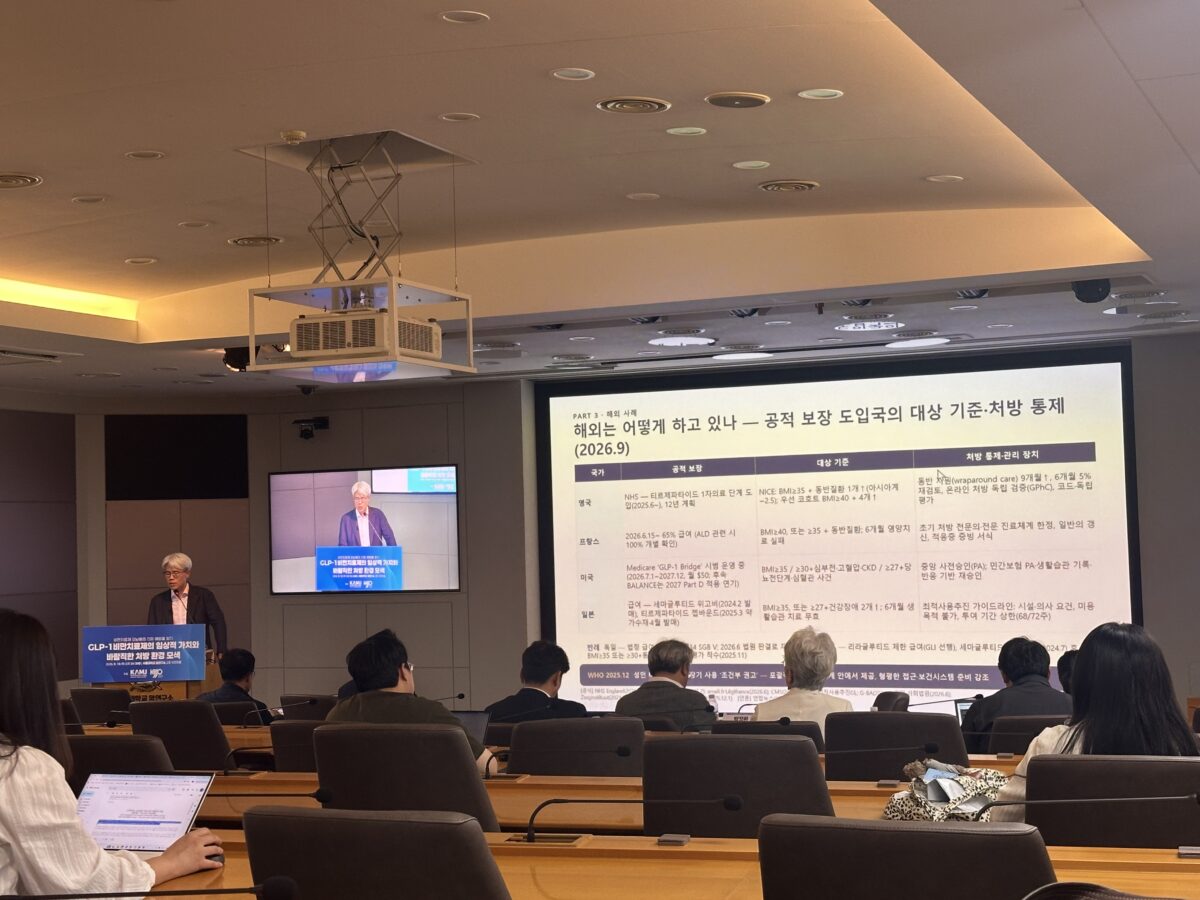
Presenting on “The Effectiveness of Current Regulatory Discussions and Desirable Alternatives,” Lee pointed out a fundamental flaw in current oversight efforts. “Existing and proposed regulatory measures lack a clear data framework that identifies for whom and on what clinical grounds these drugs are being prescribed,” Lee stated. Lee argued that policies focused strictly on controlling distribution channels—such as restricting telemedicine or designating GLP-1s as high-risk medications prone to abuse—have inherent limitations. Instead, the priority should be establishing a clinical management system that records and evaluates prescribing appropriateness.
Citing public coverage models in the United Kingdom, France, and the United States, Lee recommended that South Korea introduce an evidence-based, phased management system. Key proposals included integrating prescribing support tools into the Drug Utilization Review (DUR) system to track body mass index (BMI), comorbidities, and age; introducing phased health insurance coverage focused on high-risk patients; and providing institutional support for validated telemedicine and hybrid care models.
“Going forward, policy must shift from restrictive regulations that block access to constructive regulations that manage care,” Lee concluded, “ensuring patients receive safe and sustainable treatment.”