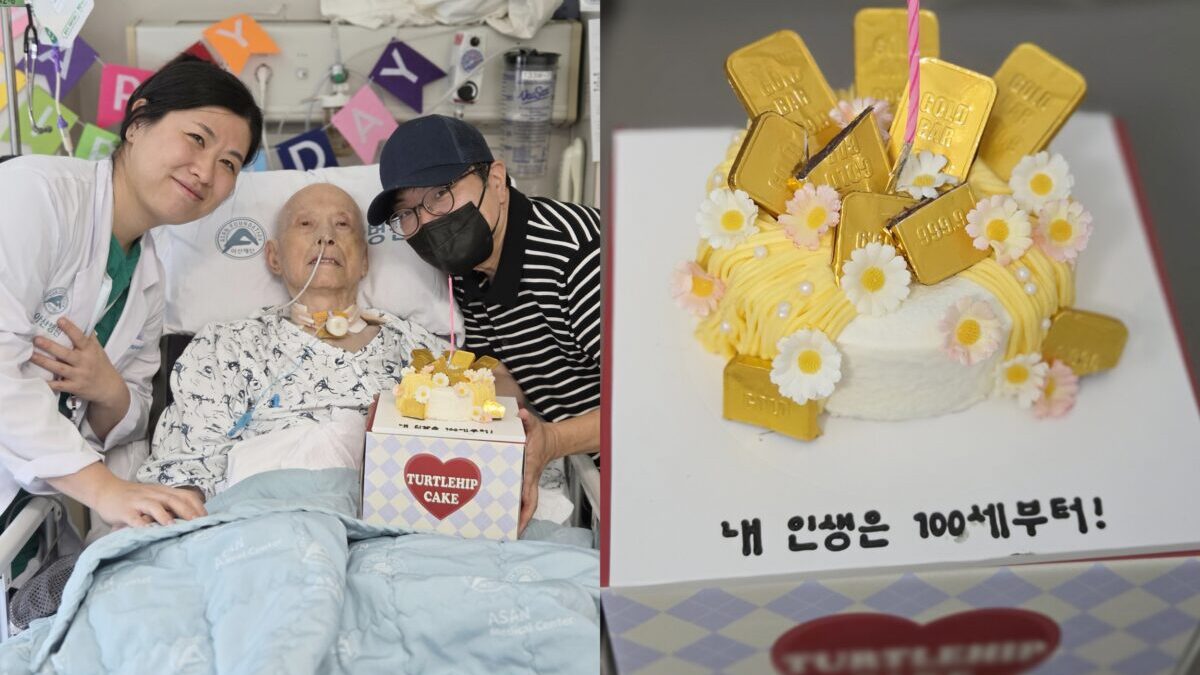
A 99-year-old man who suddenly lost consciousness and began vomiting was rushed to the emergency room, where a chest computed tomography (CT) scan revealed a life-threatening tear in his aorta—the body’s main artery carrying blood from the heart. Diagnosed with an acute aortic dissection, a condition where mortality rises by roughly 1% for every hour left untreated, he required immediate surgical intervention.
Following a complex emergency operation lasting over five hours and a month of intensive care, the patient reached a remarkable milestone: he celebrated his 100th birthday in his hospital room before recovering sufficiently to be discharged home.
Asan Medical Center announced on September 8 that it had successfully performed emergency surgery on 99-year-old Lee Seung-man for an acute aortic dissection, making him the oldest patient in South Korea to undergo and survive the procedure.
High-Risk Five-Hour Emergency Operation
Born on August 5, 1926, Lee Seung-man worked as an elementary school teacher before retiring. Prior to the incident, he lived in Seoul with his son and daughter-in-law, maintaining an active, independent lifestyle and never missing his three daily meals. However, late in the night on June 28, he suddenly experienced a drop in consciousness and severe vomiting.
At Asan Medical Center's emergency room, doctors confirmed a tear in his ascending aorta, located directly above the heart. An aortic dissection occurs when the innermost layer of the aortic wall tears, allowing blood to surge through the split and potentially cause a fatal rupture or cut off blood flow to vital organs.
Operating on a 99-year-old patient presented immense surgical risks. However, because non-surgical management carried near-certain mortality, Lee's family authorized the procedure. Shortly after 2 a.m. on June 29, a surgical team led by Professor Koo Min-jung of the Department of Cardiothoracic Surgery initiated emergency open-chest aortic replacement surgery.
During the operation, a critical moment arose when the damaged section of the aorta was exposed, causing the patient's blood pressure to drop precipitously. The surgical team stabilized his circulation using a heart-lung machine and successfully replaced the damaged segment with an artificial blood vessel over the course of five hours.
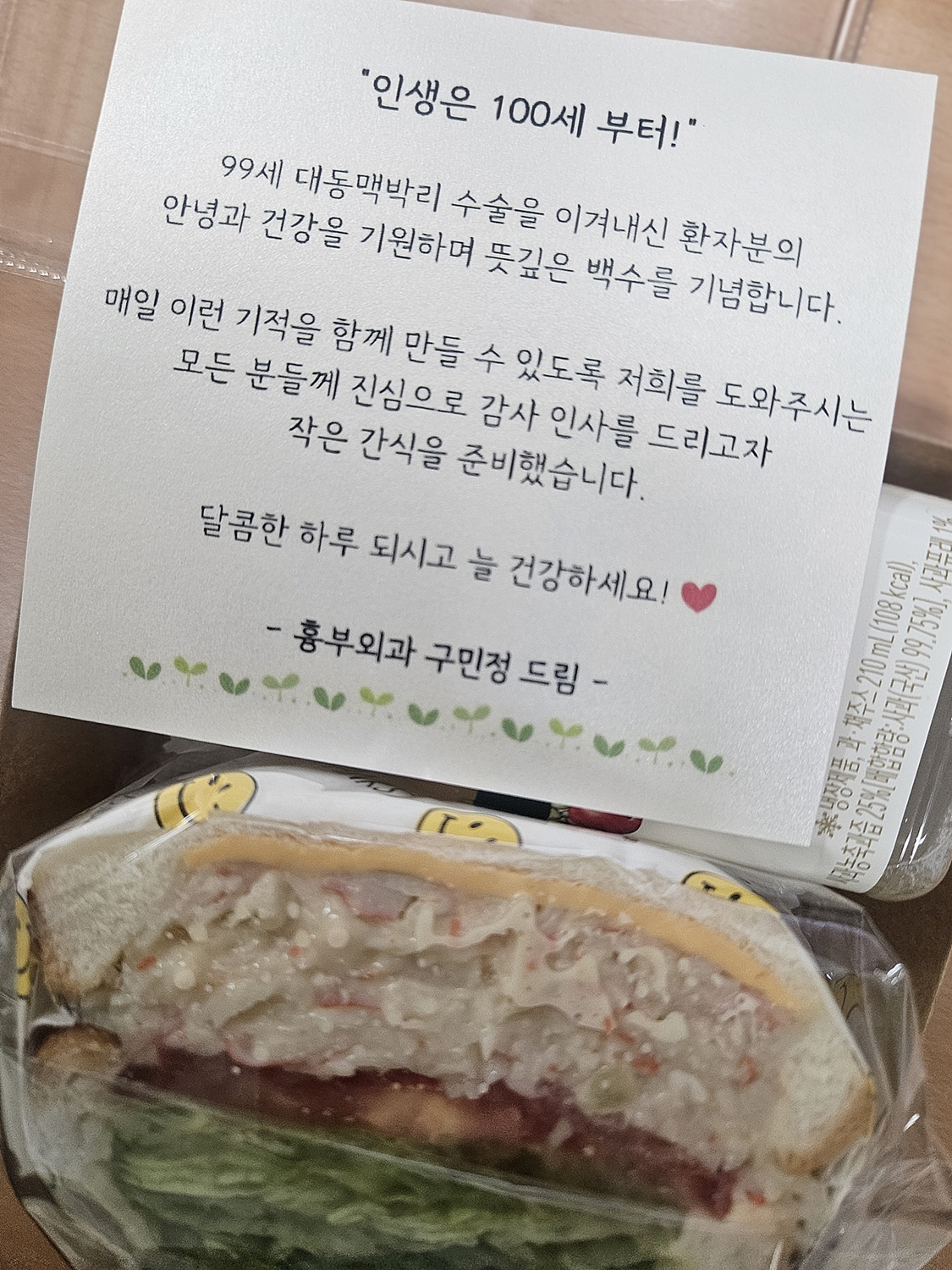
A 100th Birthday Celebration in the Ward
Lee Seung-man was transferred to the intensive care unit, where his recovery required constant vigilance. At one point, his oxygen saturation plummeted during attempts to wean him off mechanical ventilation. After a month of intensive monitoring and critical care, his condition stabilized sufficiently for transfer to a general ward.
On August 5, approximately one month after surgery, Lee marked his 100th birthday in his hospital room. Professor Koo Min-jung personally prepared a birthday cake, joining the ward's medical staff to celebrate the milestone with Lee and his family.
"Given the patient's advanced age, the surgery posed significant challenges," said Professor Koo Min-jung. "However, leveraging the extensive experience of our dedicated aortic disease team, we were able to perform the operation safely and guide him through recovery. Although his rehabilitation was gradual, we organized this celebration to wish him continued good health."
"This is the first time in my life I have celebrated a birthday in a hospital," Lee Seung-man said. "I am deeply grateful simply for having my life saved, and I want to express my sincere thanks to the medical staff for such an overwhelming celebration."
Lee was safely discharged from Asan Medical Center about a month and a half after his emergency surgery. Medical experts emphasized that even in nonagenarian patients, surgical decisions should not rely on age alone, but should weigh baseline functional independence, comorbidities, and organ reserve against the immediate threat to life.