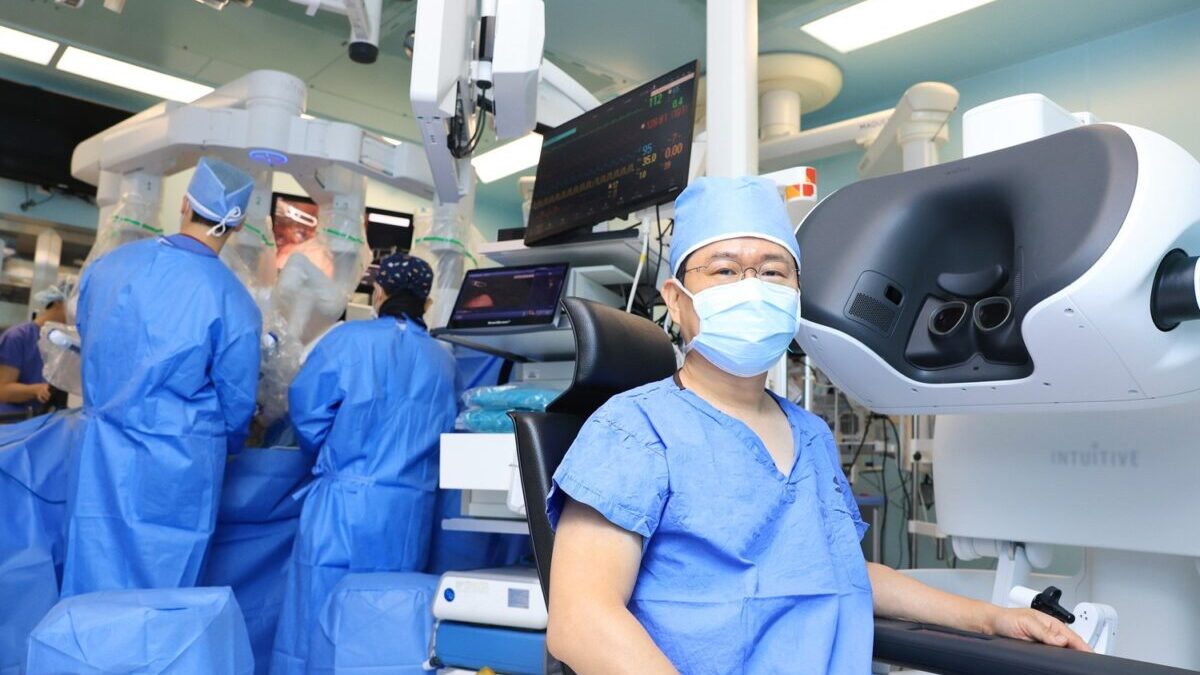
Samsung Medical Center has introduced the latest robot-assisted surgery platform, the Da Vinci 5, for lung and esophageal cancer operations. The hospital stated that the system is engineered to enhance surgical precision within the deep thoracic cavity—where critical blood vessels and nerves are densely concentrated—while broadening minimally invasive treatment options tailored to individual patient conditions.
Samsung Medical Center announced on March 3 that it has deployed the Da Vinci 5 specifically within its thoracic surgery division specializing in lung and esophageal procedures. Having previously become the first medical institution in Asia to establish a dedicated robotic unit for lung and esophageal thoracic surgery in 2023, the hospital plans to utilize the new model to perform increasingly complex oncological operations.
A Surgical System Named After Leonardo da Vinci
Developed by U.S. medical device manufacturer Intuitive Surgical, the Da Vinci system traces its roots to remote-surgery research conducted during the 1980s at SRI International. The first commercial system was released in 1999, receiving clearance from the U.S. Food and Drug Administration (FDA) for laparoscopic procedures the following year. The platform was named after Leonardo da Vinci to honor the Renaissance master’s pioneering studies in human anatomy and mechanical engineering.
Despite being called "robotic surgery," the system does not operate autonomously. Instead, a surgeon sits at a master console inside the operating room to directly manipulate the camera and instruments. The system translates the surgeon’s hand movements into smaller, ultra-precise motions inside the patient's body. The Da Vinci system comprises three main components: the surgeon console where the operator sits, robotic arms positioned at the patient's side, and a high-definition 3D visualization system. Key technical capabilities include filtering out human hand tremors, deploying multi-jointed instruments that bend like human wrists, and providing magnified 3D views of narrow, deep surgical fields.
Force-Feedback Technology Transmits Tactile Resistance
A major technological advancement in the Da Vinci 5 is the introduction of "force feedback." When utilizing specialized instruments, the system measures pushing and pulling forces at the surgical site and transmits that physical resistance back to the surgeon’s control handles. Force feedback is not active by default in every procedure, requiring dedicated force-sensing instrumentation.
While earlier robotic generations provided magnified 3D imagery and high precision, surgeons could not physically feel organ or vascular resistance. By informing surgeons of tissue resistance, force feedback helps prevent excessive gripping or pulling forces during delicate procedures. Enhanced imaging and motion control further facilitate intricate maneuvers within tight anatomical spaces.
The tissue surrounding the lungs and esophagus contains vital, highly vulnerable structures, including the heart, major cardiovascular trunks, the trachea, and major neural pathways. Precise manipulation is vital when dissecting lymph nodes around tumors or separating adhesions between blood vessels and nerves. However, experts note that force feedback does not fully replicate human tactile sensation, and the degree to which it reduces bleeding, complications, or length of hospital stay remains to be verified through long-term clinical data.
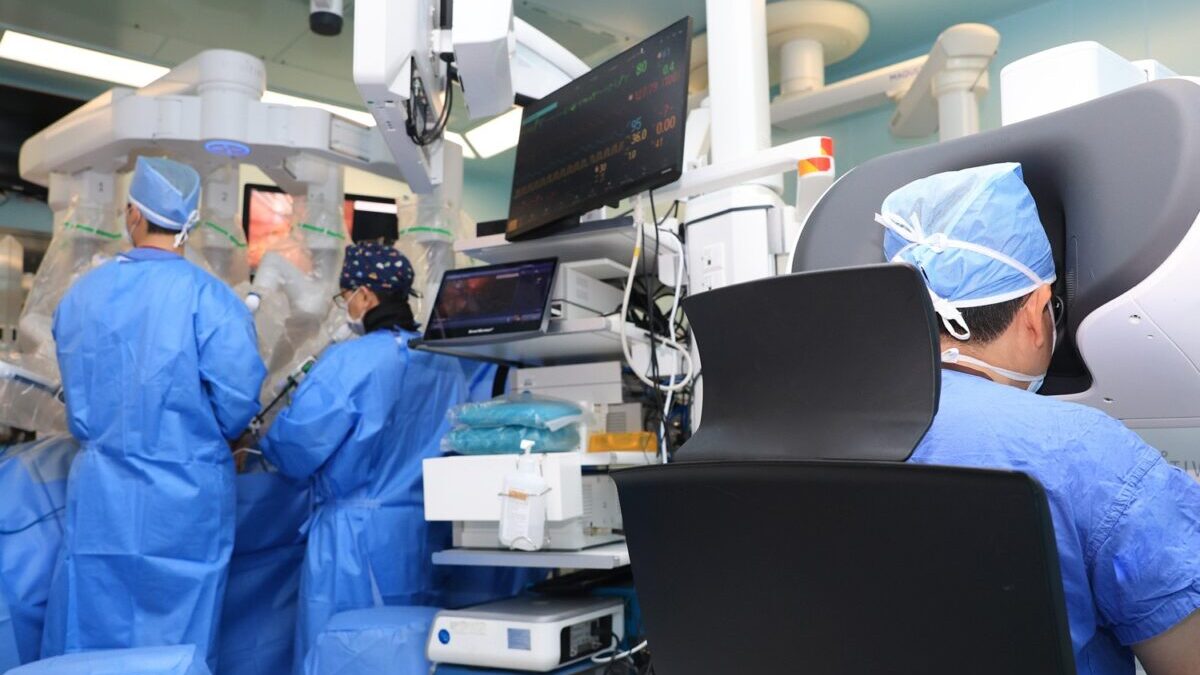
Multiport System Complements Existing Single-Port Options
The Da Vinci 5 is a "multiport" platform, requiring several small incisions to insert robotic arms. For single-port procedures—where instruments and the camera enter through a single incision—a separate system, the Da Vinci SP, is utilized. Having already established single-port robotic procedures, Samsung Medical Center’s addition of the Da Vinci 5 expands its range of surgical approaches based on patient-specific needs.
While single-port procedures reduce the total number of incisions, they are not suitable for all lung or esophageal cancer patients. If a tumor has invaded adjacent organs or if prior surgeries have caused extensive tissue adhesions, multiport robotic surgery or open thoracotomy may offer a safer path. Medical authorities emphasize that the choice of surgical technique should be guided by tumor location, cancer stage, patient physical health, and surgical experience, rather than equipment novelty alone.
Clinical Outcomes and Five-Year Survival Figures
According to Samsung Medical Center’s 2025 clinical performance reports, the 30-day mortality rate following curative resection for primary lung cancer and esophageal cancer was 0.1% and 0%, respectively. Curative resection refers to surgery intended to remove all visible cancerous tissue, while primary cancer denotes malignancy originating within the target organ itself.
The hospital reported five-year relative survival rates of 65.7% for lung cancer and 62.5% for esophageal cancer. Relative survival reflects the likelihood of cancer patients surviving five years post-diagnosis compared to the general population of the same age group. By comparison, reported Korean national average five-year survival rates stand at 42.5% for lung cancer and 43.5% for esophageal cancer, while U.S. national averages are 28.1% and 21.9%, respectively. However, data collection periods differ: Samsung Medical Center and Korean national metrics reflect 2019–2023 data, whereas U.S. statistics cover 2015–2021. Direct cross-institutional comparisons are further limited by variations in patient age, disease stage, and surgical eligibility.
Kim Hong-gwan, head of the Division of Thoracic Surgery for Lung and Esophageal Cancer at Samsung Medical Center, stated, "Building on a solid multidisciplinary framework, our team has pioneered complex surgeries for lung and esophageal cancers. We will continue advancing minimally invasive surgical methods like robotic surgery to protect both oncological outcomes and patient quality of life."
In 2025, Samsung Medical Center's thoracic surgery division was designated an official "Robotic Surgery Epicenter" by Intuitive Surgical, serving as an international training and observation facility for visiting medical staff.
Key Considerations for Patients Prior to Robotic Surgery
For patients evaluating surgical options, selecting the treatment modality best suited to their individual medical status remains paramount. Patients are advised to discuss four key aspects with their surgical team:
The specific benefits of robotic surgery compared to conventional video-assisted thoracoscopic surgery (VATS) or open thoracotomy
Whether a multiport or single-port approach is recommended for their specific condition
The potential need or possibility of converting to an open thoracotomy during the operation
The expected out-of-pocket medical expenses and insurance coverage limits
Robotic surgical fees are currently not covered under Korea's National Health Insurance program, though essential diagnostic tests or ancillary treatments performed alongside surgery may qualify for coverage. Because total patient expenses vary depending on the medical institution and specific surgical approach, patients should verify estimated costs and review their private indemnity insurance coverage in advance.