Peak summer vacation season is in full swing. While it is a time to unwind, it is also a period when people need to be especially vigilant about food poisoning.
According to data released by the Ministry of Food and Drug Safety on July 31, roughly 26 percent (78 cases) of all reported food poisoning incidents over the past five years occurred during July and August. In terms of patient numbers, the summer period accounted for approximately 31 percent of the overall total.
High temperatures and humidity create ideal conditions for food-borne bacteria to multiply rapidly, with peak bacterial activity occurring between 32°C and 43°C. Amid ongoing severe heatwaves, heightened precautions are necessary for food storage, preparation, and hygiene management before eating.
Handle Raw Poultry and Eggs with Care
Nationwide sentinel surveillance data from the Korea Disease Control and Prevention Agency (KDCA) shows a sharp rise in gastrointestinal infections caused by Salmonella, Campylobacter, and enteropathogenic E. coli as of late July.
Campylobacter infections surged from 116 cases in the first week of July to 365 by the fourth week. During the same period, Salmonella cases grew from 111 to 176, while enteropathogenic E. coli infections increased from 111 to 180.
Campylobacter is primarily found in undercooked meat—particularly raw chicken—unpasteurized dairy products, and contaminated water or food. When preparing vacation meals, wash or cook raw chicken at the very end of the cooking process. This minimizes the risk of cross-contamination, preventing bacteria from spreading to other ingredients or utensils.
When storing poultry in the refrigerator, keep it in a sealed container on the bottom shelf so juices do not drip onto or contaminate other foods.
Salmonella infections are most commonly associated with eggs, as eggshells frequently carry the bacteria on their surface. When buying eggs, check carefully that the shells are undamaged and store them refrigerated immediately. After cracking eggs, cook them thoroughly as quickly as possible, and always wash your hands after handling raw eggs.
Safe Food Transport and Dining Guidelines for Travelers
Proper food storage while traveling is equally critical during vacation season. Whenever possible, purchase ingredients near your destination. If bringing food from home, transport items at cold temperatures using ample ice packs and insulated cooler bags.
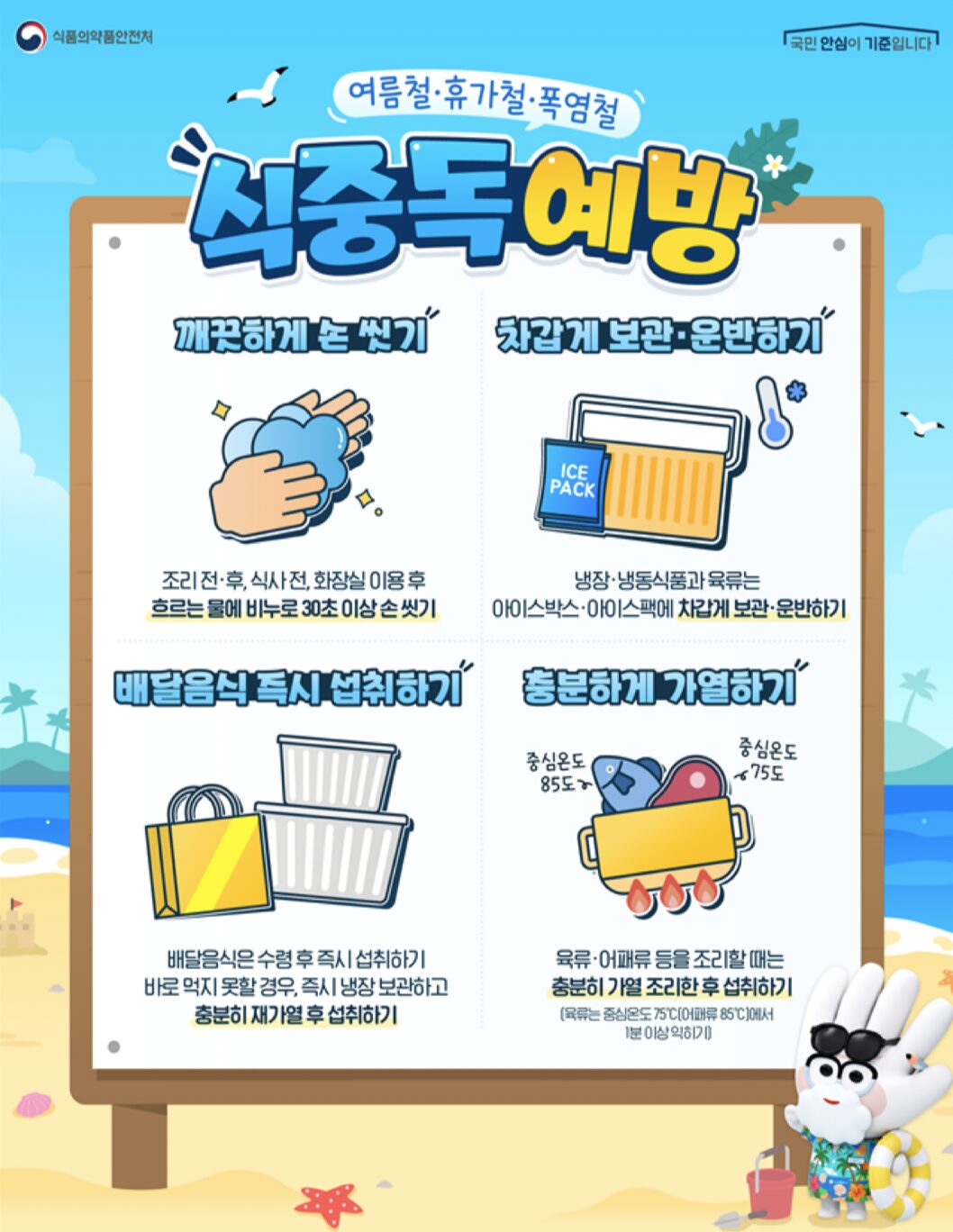
Double-wrap raw meat to avoid contact with other foods. If packing ready-to-eat foods like fruits and vegetables together with meat, store ready-to-eat items on top and place raw meat separated at the bottom.
When dining out near vacation spots, check whether restaurants are designated as food-safety certified businesses with excellent hygiene standards. Safety information, including business names, types, and addresses, can be verified on the Food Safety Korea website under [Specialized Information > Food Safety Information in My Neighborhood > Local Restaurants].
Finally, consume delivered food immediately after arrival. When using meal kits, verify use-by dates and ensure all components are thoroughly heated before eating.