Diagnosing respiratory infections in infants and toddlers using virus-only testing can leave dangerous diagnostic gaps, frequently missing co-infections with pneumonia-causing bacteria. According to a recent analysis by molecular diagnostics firm Seegene, transitioning to a syndromic polymerase chain reaction (PCR) testing strategy—which screens for both viruses and bacterial pathogens simultaneously—is critical to accurately identifying mixed infections in young children.
On July 15, Seegene announced it had analyzed approximately 260,000 respiratory PCR test results from children aged 0 to 5 using its statistical analysis platform, STAgora. The data, accumulated over the past three and a half years, revealed a strikingly high prevalence of co-infections where viruses and pneumonia pathogens coexisted.
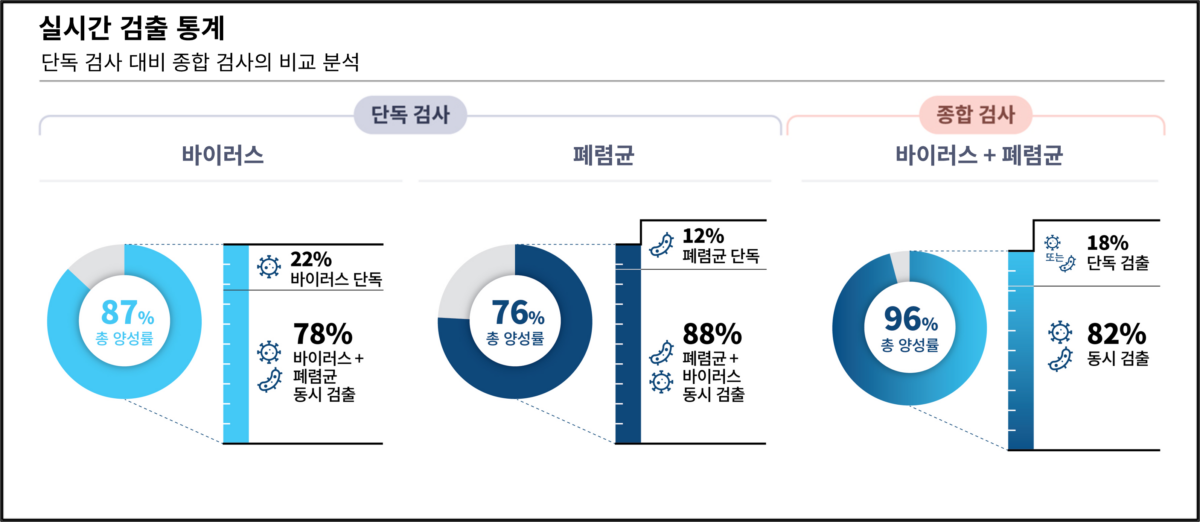
The findings showed that among patients who tested positive for a respiratory virus, 78% also carried pneumonia-causing pathogens. Conversely, among those confirmed positive for pneumonia pathogens, 88% were simultaneously infected with a virus. The company warned that testing for only one category inevitably misses these complex, overlapping infections.
Early symptoms of respiratory illness—such as a cough, fever, and runny nose—look virtually identical whether caused by a virus or a bacterium. Because infants and young children face a high risk of rapid progression into severe illnesses like pneumonia or sepsis, broad diagnostic screening at the initial stage of care is vital.
Overall, 82% of all positive results from Seegene’s comprehensive respiratory PCR panels detected two or more pathogens simultaneously. The company noted that these figures strongly underscore the necessity of multiplex testing over traditional single-pathogen methods.
The Blind Spots of Single-Pathogen Testing
In current clinical settings, testing is predominantly ordered to rule out primary viral culprits such as influenza, COVID-19, and respiratory syncytial virus (RSV). An evaluation of Seegene’s product demand across 62 countries over the last three years mirrored this trend: virus-only testing kits accounted for roughly 80% of supply, while pneumonia pathogen kits made up just 20%.
Yet, real-world respiratory infections frequently involve overlapping viral and bacterial agents. While single-target tests offer rapid answers for specific bugs, they fail to map out the full architecture of a co-infection. To bridge this gap, Seegene's syndromic PCR test uses a single specimen and a single run to identify major respiratory viruses and pneumonia bacteria all at once, giving clinicians the comprehensive data needed for precise treatment decisions.
The resulting STAgora reports go beyond binary positive-or-negative outcomes, visually charting co-infection profiles, pathogen combinations, and cycle threshold (Ct) values that indicate viral or bacterial load. While these Ct values give doctors insight into the relative strength of each pathogen, Seegene noted they must be interpreted alongside clinical symptoms, as environmental and specimen conditions can affect the metrics.
Launching a Global 1-Million-Case Initiative
Looking ahead, Seegene announced it will launch its Global Million Clinical Study (GMCS) this August. The massive initiative aims to validate the clinical utility of syndromic testing across various diseases using real-world data from medical institutions worldwide, ultimately building the scientific foundation for new global diagnostic standards.
Through GMCS, Seegene intends to gather the robust clinical evidence required to pivot the global diagnostic paradigm away from fragmented single-pathogen tests and toward a comprehensive, symptom-based syndromic PCR standard for respiratory illnesses.