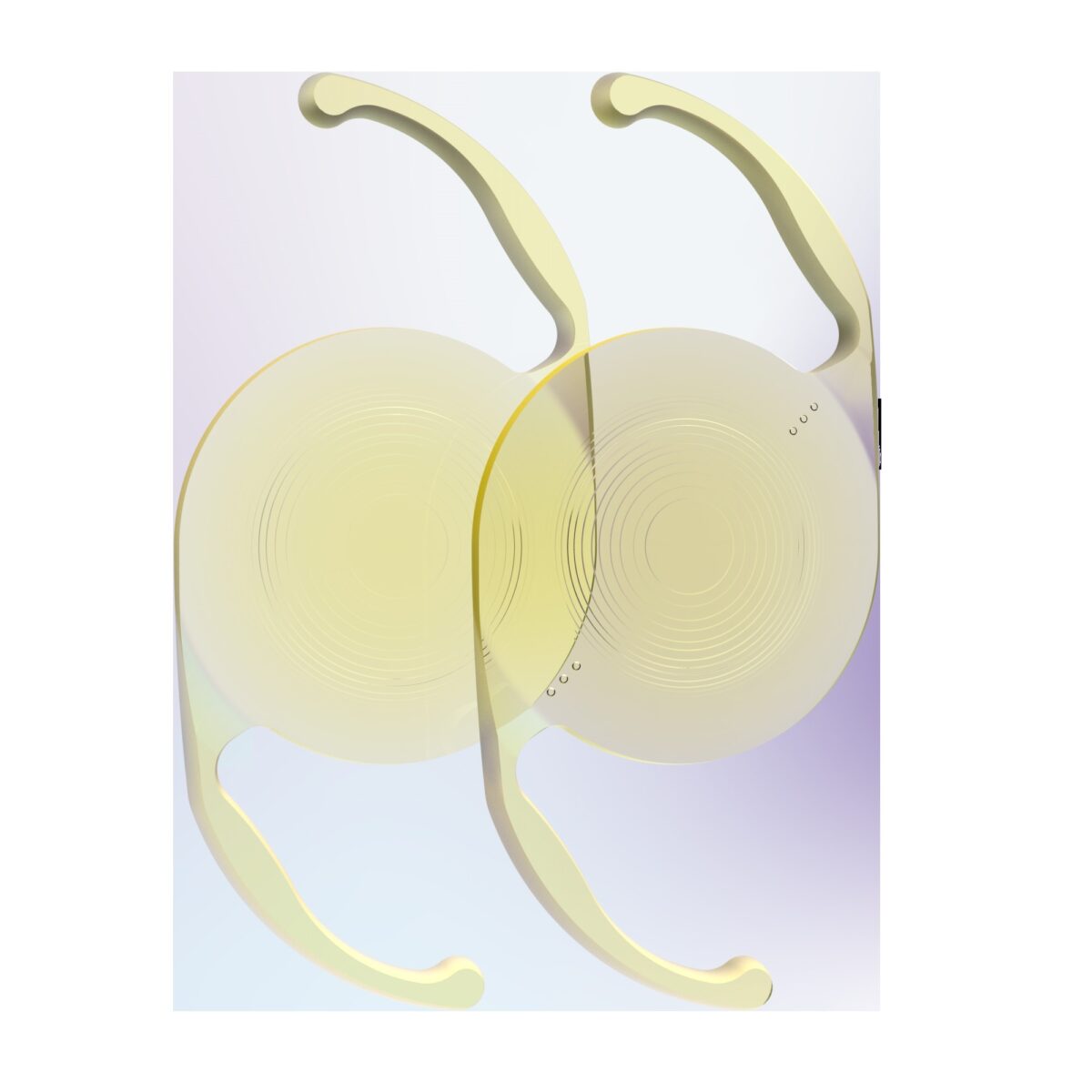
For many cataract surgery patients, clearing up once-cloudy vision is only half the battle. Nighttime driving frequently remains a stressful ordeal as oncoming headlights and streetlights flare into distracting starbursts or ringed halos. This discomfort is often closely tied to the specific type of intraocular lens (IOL) implanted during surgery. While trifocal lenses offer excellent freedom from glasses by providing clear distance, intermediate, and near vision, they are also known to trigger these nighttime visual disturbances.
Ophthalmic medical device manufacturer Alcon announced on the 8th that it has launched its latest trifocal intraocular lens, the Clareon PanOptix Pro, in South Korea. The new lens is engineered to deliver a continuous range of vision, seamlessly covering far distances, intermediate zones like computer screens, and near tasks like reading books or smartphones.
Cutting Light Scatter in Half: Does it Mean Less Discomfort?
Trifocal lenses, which split incoming light into three distinct focal points, are already widely utilized in cataract surgeries. Unlike traditional monofocal lenses that focus at a single distance—often requiring patients to use reading glasses for close-up work—trifocals aim to minimize overall dependence on spectacles. The innovation in Alcon’s new product lies not in adding more focal points, but in optimizing how the lens distributes incoming light.
By deploying its proprietary “Enlighten NXT” optical technology, Alcon designed the lens to minimize scattered light that fails to contribute to image formation, redirecting it instead to the essential focal points where it is needed most. According to company data, the previous-generation Clareon PanOptix utilized 88% of incoming light and scattered roughly 12%. The new PanOptix Pro raises light utilization to 94%, effectively halving the light scatter ratio to approximately 6%. Additionally, the optical image contrast between distance and intermediate vision saw a 16% improvement compared to the legacy product.
However, a mathematical halving of light scatter in a laboratory environment does not automatically guarantee that a patient's real-world night glare will be cut in half. Because these metrics stem from mechanical bench testing and visual simulators, clinical data from actual surgical patients is still required to confirm whether these optical upgrades deliver noticeably more comfortable night vision on dark roads.
Real-World Data: Up to 40% of Patients Report Glare with Existing Lenses
Nighttime visual disturbances remain a prevalent issue for patients receiving trifocal lenses. A comprehensive meta-analysis compiling data from 580 patients across 11 studies in 10 countries evaluated Alcon’s existing PanOptix lens. The findings revealed that 43.9% of patients experienced halos, 33.6% reported glare, and 30.4% dealt with starbursts.
Fortunately, experiencing these symptoms does not necessarily mean they are intolerable. Only a small fraction of patients rated their symptoms as severe: 5.4% for halos, 3.4% for starbursts, and 2.9% for glare. Meanwhile, patients who found the symptoms highly disruptive or very uncomfortable ranged from a modest 0.8% to 2.6%, depending on the specific symptom. Notably, an Alcon employee co-authored the meta-analysis—a potential conflict of interest that clinicians and patients should keep in mind when interpreting these findings.
Matching Lens Choice to Lifestyle and Eye Health
The latest or most expensive intraocular lens is not universally the best choice for every individual. A patient's ideal lens depends heavily on their daily habits—specifically, how much time they spend reading, working on computers, or driving after dark.
Prior to surgery, a thorough evaluation of corneal and retinal health, along with the presence of astigmatism, is critical. Patients should explicitly communicate their lifestyle priorities to their ophthalmologist, noting whether they are comfortable wearing glasses occasionally or how much nighttime glare they are willing to tolerate in exchange for multi-distance vision.
While the launch of the Clareon PanOptix Pro expands treatment options for cataract patients, impressive laboratory benchmarks cannot replace personalized medical choices. The American Academy of Ophthalmology notes that patients who rely heavily on night driving should carefully weigh the risks of halos and glare associated with multifocal or extended depth-of-focus (EDOF) lenses. Furthermore, these advanced lenses may be entirely unsuitable for individuals with concurrent eye conditions, such as glaucoma or macular degeneration. If astigmatism is a factor, consulting a clinician about specialized astigmatism-correcting (toric) options remains essential.