Consider a patient in their 60s whose knee cartilage has completely worn down, making every step up a flight of stairs a painful struggle. Or consider a patient in their 30s living with the physical and emotional reminders of long-standing burn scars. When these individuals decide they want to pursue "stem cell therapy," most have no idea where they should actually go to receive safe, authorized medical care.
While the internet is heavily saturated with clinics advertising a wide array of stem cell and regenerative treatments, the South Korean Ministry of Health and Welfare separates marketing from medicine by strictly granting official status only to "advanced regenerative medicine provider institutions."
Strict Regulatory Standards: A Treatment Not Every Clinic Can Provide
Advanced regenerative medicine refers to specialized, cutting-edge treatments—such as cell therapy, gene therapy, and tissue engineering—intended for patients who have exhausted or are unlikely to benefit from conventional medical approaches. Under the Act on Safety of and Support for Advanced Regenerative Medicine and Advanced Biopharmaceuticals (Advanced Regenerative Bio Act), which originally took effect in 2020, the Ministry of Health and Welfare designates provider status exclusively to medical institutions that meet rigorous legal criteria for specialized staffing, high-tech equipment, physical facilities, and strict safety management protocols.
Crucially, these authorized institutions must also operate an independent, certified cell processing facility to isolate and handle human cells safely. Performing stem cell procedures without this official government approval is entirely illegal. For patients, verifying whether a hospital is an officially designated provider is the absolute first checkpoint before consenting to treatment.
Bridging Lab and Clinic: Aligning Research, Policy, and Operations
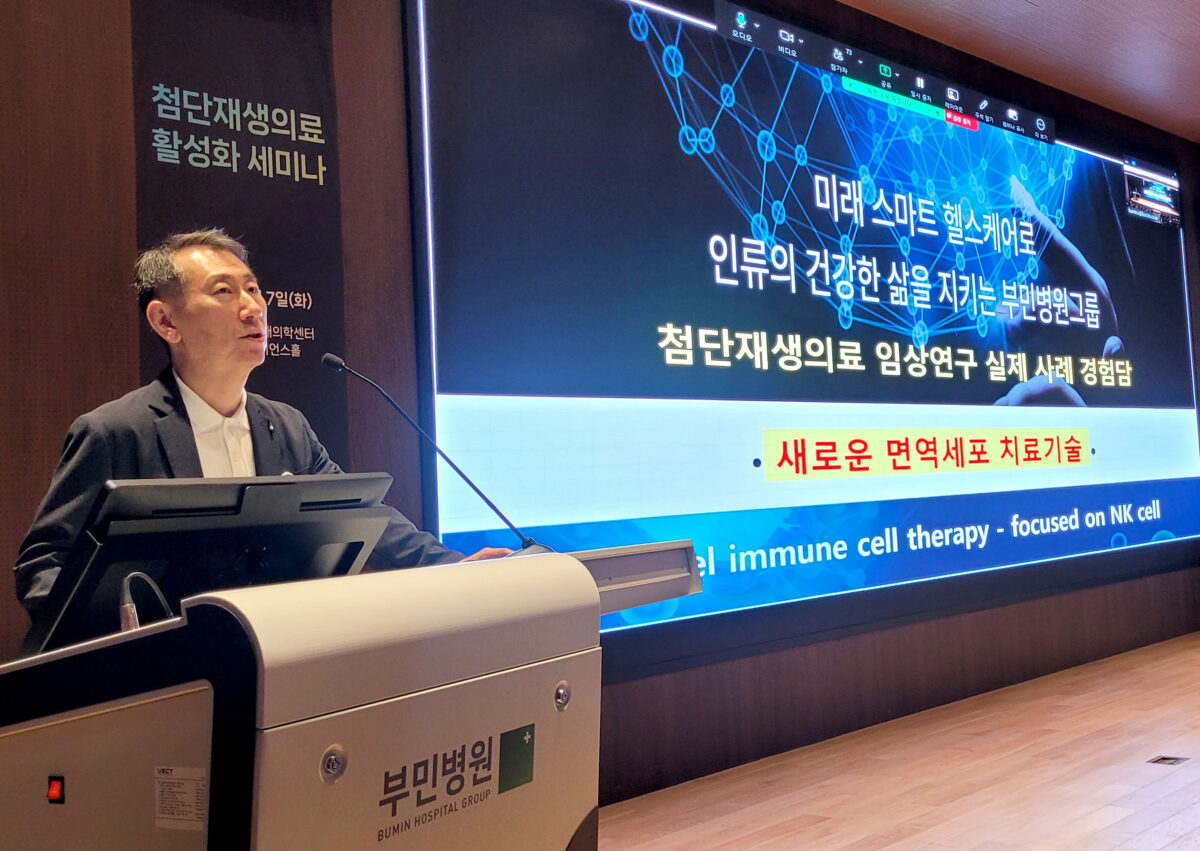
Bumin Hospital Group (comprising Seoul Bumin Hospital and Haeundae Bumin Hospital) recently hosted its first major professional academic event since receiving its official government designation as an advanced regenerative medicine provider. A total of 180 clinicians and researchers gathered for the "Advanced Regenerative Medicine Activation Seminar," held on July 7 at the Future Medicine Center of Seoul Bumin Hospital.

The seminar was structured into three comprehensive sessions. Lee Ju-ho, head of Bumin Hospital’s Advanced Regenerative Medicine Research Institute, guided attendees through the practical processes and critical parameters of conducting real-world clinical research. Next, Lee Dong-hyun, a division director at the Regenerative Medicine Promotion Foundation, outlined the latest regulatory trends and upcoming revisions to the Advanced Regenerative Bio Act, advising institutions on how to effectively adapt. Finally, Kwon Ju-ha, CEO of Medvia, shared essential operational know-how, focusing on compliant strategies for constructing and managing certified cell processing facilities.
Across all three presentations, the core message remained entirely consistent: For advanced regenerative medicine to successfully reach and benefit patients, scientific research (clinical study design), systemic frameworks (legal and policy compliance), and on-the-ground hospital operations (facilities and expert staffing) must move in perfect tandem.
"Research, clinical practice, and policy must advance together to provide patients with better, safer treatment opportunities," emphasized Lee Ju-ho. In other words, for regenerative medicine to successfully transition from the laboratory bench to the hospital exam room, it cannot be carried by a single entity; it requires a deeply collaborative framework among specialized institutions.
Essential Checkpoints for Patients
Patients considering advanced regenerative medicine should always independently verify three critical factors: first, whether the hospital is an officially designated provider institution approved by the Ministry of Health and Welfare; second, whether their desired treatment falls within the scope of an actively approved clinical study; and third, whether the management and operational systems of the cell processing facility are transparently and publicly disclosed.
The era of selecting a healthcare provider based solely on generic promotional slogans like "stem cell therapy" is over. Now that a rigorous regulatory framework is firmly established, patients can—and should—align their medical decisions with the official rules and terminology that govern the field.