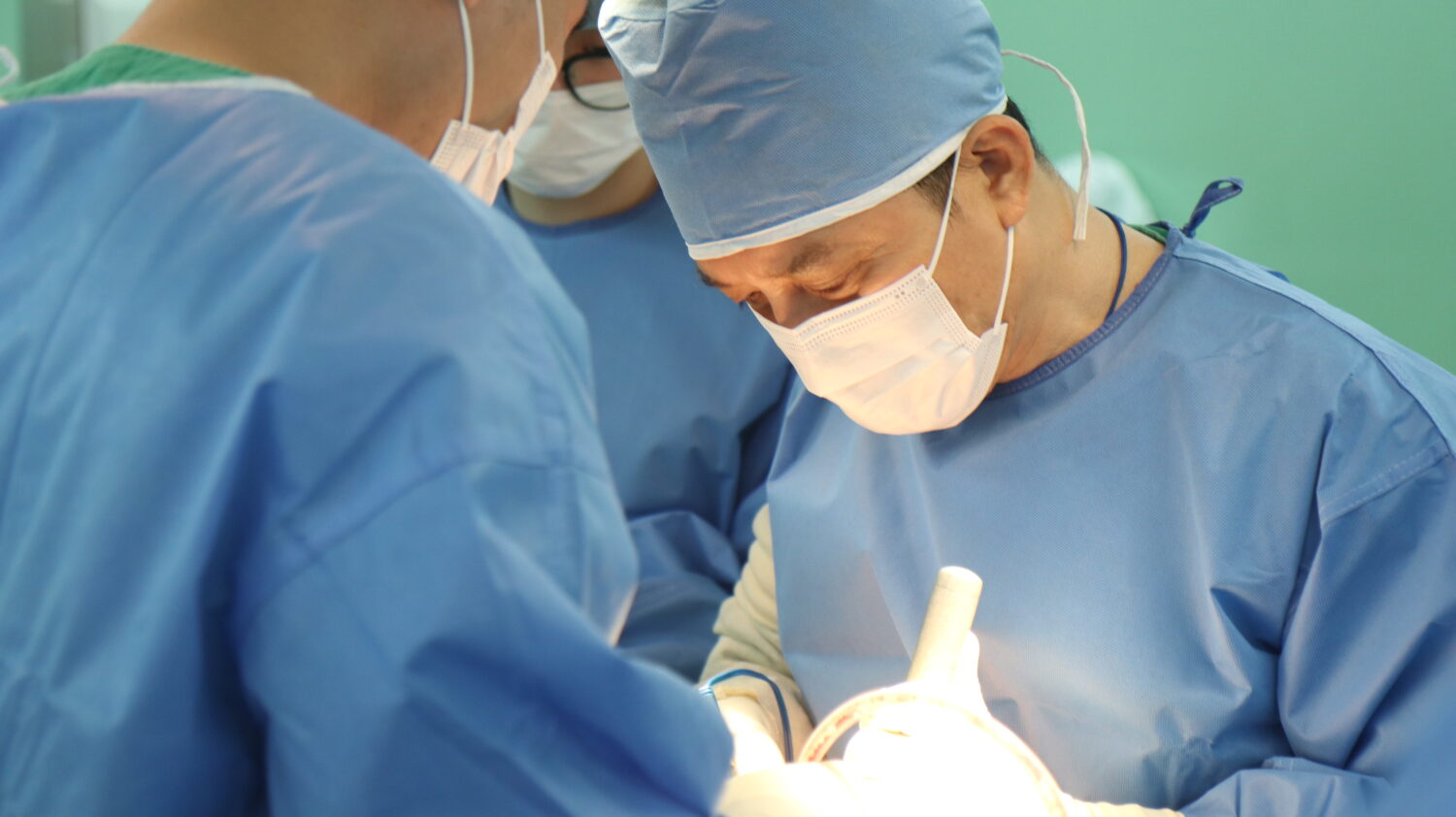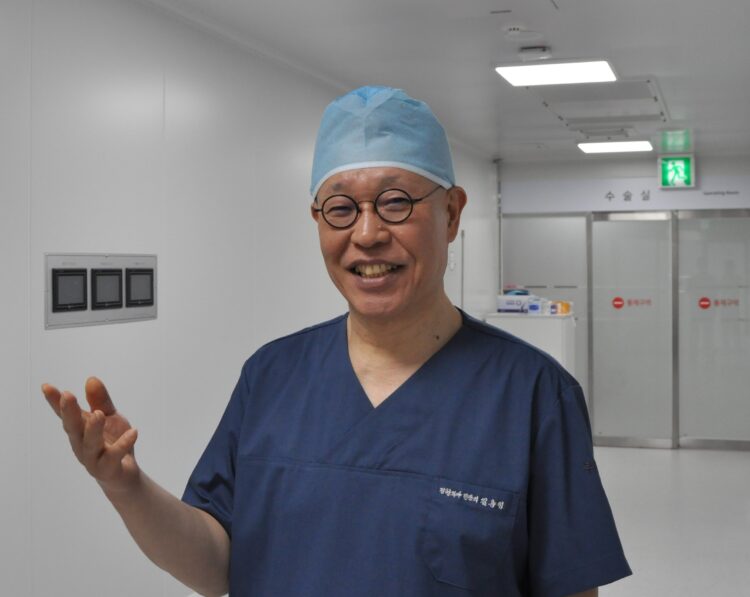
Dr. Kim Yong-jung, Director of the Spinal Deformity Center at Seoul Bumin Hospital, has performed approximately 2,400 surgeries for adolescent idiopathic scoliosis throughout his distinguished career. Having treated complex spinal deformities in both South Korea and the United States, he emphasizes that nothing is more critical than absolute caution when deciding whether a patient should undergo an operation.
After graduating from the prestigious Seoul National University College of Medicine and working at top-tier university hospitals in South Korea, Kim Yong-jung moved to the United States in his early 40s. He advanced his research at Washington University in St. Louis—long regarded as a global epicenter for spinal deformity surgery—before working as a clinical instructor at the world-renowned Hospital for Special Surgery (HSS) in New York and later serving as a professor of orthopedic surgery at Columbia University Vagelos College of Physicians and Surgeons.
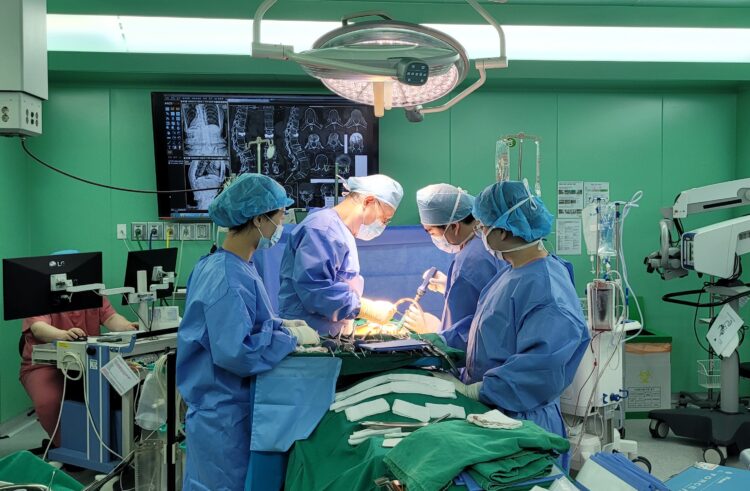
Early in his career, Kim Yong-jung built an international reputation for his mastery of adolescent idiopathic scoliosis surgery. Beyond his 2,400 clinical operations, three of his academic publications rank among the 100 most-cited papers worldwide in the field of spinal deformity. In clinical circles, he is uniquely celebrated for a specialized technique that allows him to place pedicle screws precisely without relying on intraoperative fluoroscopy equipment, a testament to his lifelong dedication to treating growing children while minimizing diagnostic radiation exposure.
Kim Yong-jung joined Seoul Bumin Hospital in 2020 as its chief medical director. In May 2025, the hospital opened the "Kim Yong-jung Spinal Deformity Center" in his honor, allowing him to expand his focus on lifelong spinal curvature issues, ranging from adolescent scoliosis to degenerative osteoporotic deformities in elderly patients.
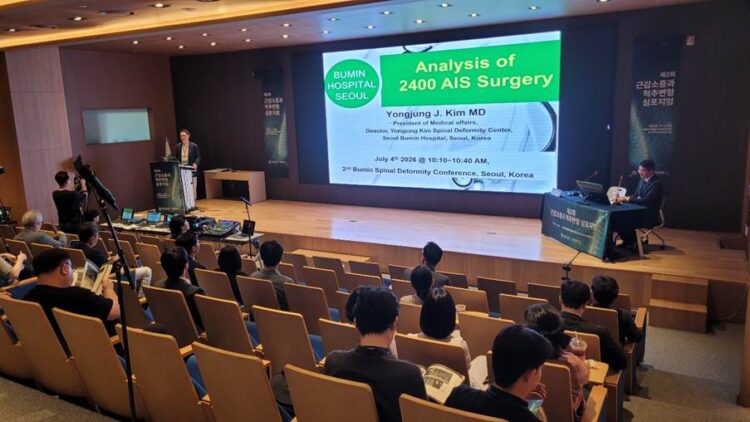
At the Korean Society for Sarcopenia’s (led by President Ha Yong-chan) "2nd Sarcopenia and Spinal Deformity Symposium," held on July 4 at the Future Medicine Center of Seoul Bumin Hospital, Kim Yong-jung presented a lifetime analysis of his 2,400 adolescent idiopathic scoliosis cases. The event served as an invaluable opportunity to distill decades of elite clinical experience for the next generation of orthopedic surgeons.
What originally inspired you to devote your life to treating spinal deformities?
I have a deeply painful family history that drove me to this field. My older brother, who passed away last year, contracted spinal tuberculosis when he was just three years old, which left his back severely hunched. Though he was recognized as a brilliant mind from a young age and graduated at the top of his high school class, he was completely denied the opportunity to even submit an application to the Department of Electrical Engineering at Seoul National University purely because of his physical disability.
As he reached adulthood, his health deteriorated rapidly. He spent his later years dependent on an oxygen tank because only 10% of his lung capacity remained, making it impossible for him to safely undergo corrective surgery. Watching him suffer made me realize that resolving these devastating structural issues was my true calling in life.
Is there a specific reason your center treats the entire age spectrum, from congenital infant conditions to elderly spinal deformities, under a single roof?
True clinical success is impossible without understanding the full lifecycle of spinal deformities. Scoliosis in teenagers and degenerative deformities in patients over 60 stem from vastly different biological causes, but they are intrinsically connected as structural evolutions that the human spine experiences over time. If a surgeon only focuses on pediatric or only on geriatric cases, they lose the bigger picture.
Can parents effectively screen their children for scoliosis at home?
Yes, through a simple screening method called the forward bend test. Have your child remove their shirt, bring both feet completely together, and bend forward at the waist to a 90-degree angle. When viewing them directly from behind, you should suspect scoliosis if one side of the upper back or ribcage protrudes higher than the other, or if their shoulders and waistline appear asymmetrical. However, an official diagnosis and precise curve measurement always require a professional X-ray evaluation.
When a child's spine appears visibly curved, at what point should parents actively consider surgical intervention?
The moment a parent suspects a spinal curve, they should consult a dedicated spinal deformity specialist rather than a general clinic to minimize unnecessary radiation exposure. We begin with a non-invasive physical exam; if we detect a left-right asymmetry of 7 degrees or more, we proceed with targeted imaging.
When imaging is required, it is highly advisable to seek out a hospital equipped with a low-dose imaging system called "EOS." This advanced technology captures full-body spinal images using roughly one-tenth the radiation of a conventional X-ray, which is an immense safety advantage for growing children. Because scoliosis angles can only be measured accurately when the patient maintains a highly specific, standardized posture, choosing an experienced imaging center is vital.
For children undergoing rapid growth spurts, brace treatment is initiated if the spinal curve exceeds 20 degrees. If a child is nearing skeletal maturity and the curve remains at 35 degrees or less, regular monitoring is sufficient. According to leading global textbooks, surgery is indicated if skeletal growth has concluded but the thoracic curve reaches 45 degrees or more, or the thoracolumbar curve reaches 40 degrees or more. However, parents should note that under South Korea’s Health Insurance Review and Assessment Service (HIRA) reimbursement guidelines, national insurance coverage for surgery is strictly applied only when the curvature exceeds 50 degrees.
You have consistently emphasized the principle that surgeons must "minimize fusion" when operating on adolescents. Why is fusing fewer segments so critical?
The human spine achieves its fluid, overall flexibility because each individual vertebral segment moves a tiny fraction. A single healthy segment handles about 15 to 20 degrees of motion. The more segments a surgeon permanently locks together during a fusion surgery, the more overall mobility the patient loses for the rest of their life.
For example, if an operation fuses down to the second lumbar vertebra (L2), the patient retains about 100 degrees of spinal motion. But if the fusion extends down to the fourth lumbar vertebra (L4), that retention plummets to just 53 degrees. At that point, the patient cannot even bend their back halfway.
When I train residents, I tell them: "If you limit the fusion to the thoracic spine or the first lumbar vertebra, this child can grow up to play competitive soccer. But if you carelessly extend that fusion down to L4, even basic K-pop dancing becomes incredibly difficult." Surgeons must minimize fusion so these young patients, who will live to be 100, can remain functional and grateful decades later.
If a patient's back is already structurally curved, can target exercises straighten it?
It is clinically unrealistic to reverse a structurally rigid, advanced deformity through physical exercise alone. However, aggressively strengthening the back muscles—specifically the erector spinae—is highly effective at slowing down the progression of the curve and helping the patient maintain an upright posture. Dedicated strength training is also our primary defense against sarcopenia as patients age.
What is the clinical relationship between osteoporosis and spinal deformity?
When systemic bone density falls, the vertebrae become highly susceptible to compression fractures. As these microscopic fractures accumulate over time, the spine collapses forward, resulting in a severe hunched-back, or kyphotic, deformity. Furthermore, if a patient requires corrective surgery, low bone density significantly increases the risk of severe post-operative complications, such as hardware failure or structural collapse.
To prevent bone loss and muscle wasting in old age, what health measure do you emphasize most?
Peak bone density is largely determined by the time an individual reaches their 20s. Therefore, intense physical activity during middle and high school is the single most important factor for lifelong bone health. I am deeply concerned because South Korea's hyper-competitive educational system currently pushes children in the exact opposite direction, keeping them sedentary.
For older adults, the second most vital defense is maintaining strict postural awareness and making daily calisthenics a permanent habit, followed closely by resistance weight training. Severe spinal deformities do not occur simply because a person grows old; poor lifestyle habits and physical inactivity are what drastically accelerate spinal aging.
Up to what age can a patient safely undergo spinal deformity surgery?
A patient’s systemic health and underlying bone quality matter infinitely more than chronological age. Even in advanced old age, if osteoporosis is medically managed and advanced surgical techniques are utilized, successful structural correction is entirely achievable. At Seoul Bumin Hospital, we routinely perform successful deformity corrections on patients in their mid-80s, and in acute cases of traumatic spinal fractures, we safely consider surgical intervention well into a patient's 90s.
What is the single most important piece of advice you would give to patients and caregivers ahead of spinal deformity surgery?
Because surgical approaches and philosophies vary profoundly from doctor to doctor, you must consult with at least two or three independent spine experts. Take the time to ask detailed questions, compare their proposed fusion segments, and evaluate their long-term strategies before choosing a surgeon. Once you undergo a spinal fusion, you are crossing a river from which you cannot return.
What would you say to older individuals who have resigned themselves to a hunched back, believing it is just an inevitable part of aging?
If you actively seek out specialized care, a medical path forward always exists. If you consult dedicated experts and discuss the options openly with your family, a way to reclaim your quality of life will open.