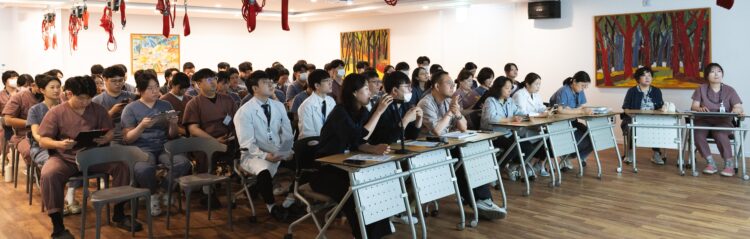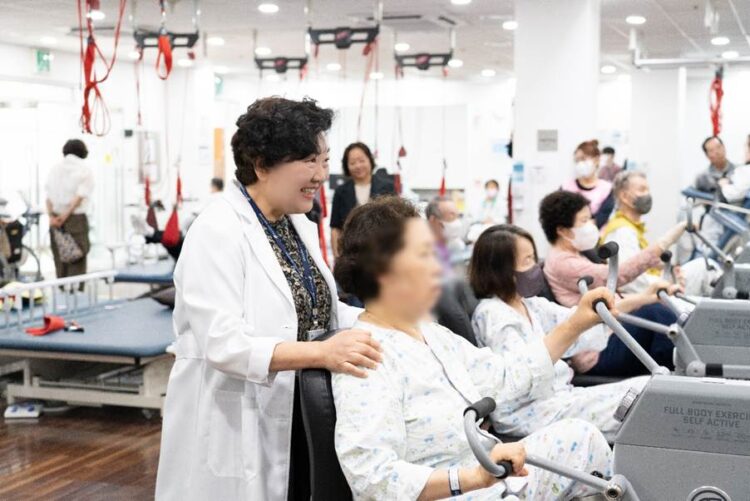
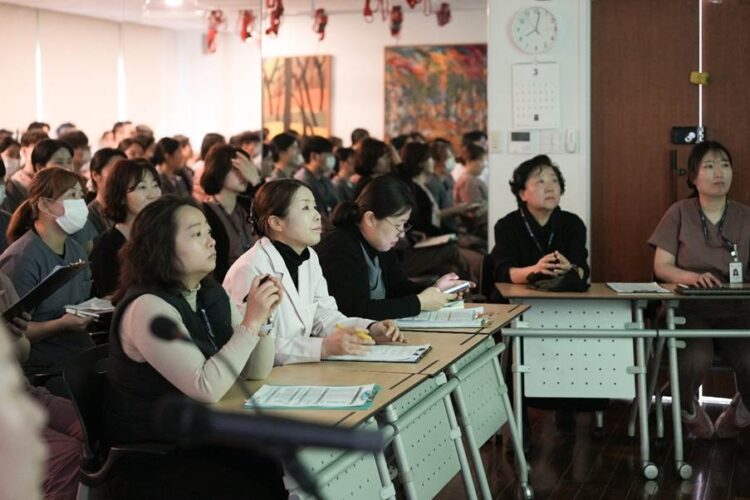
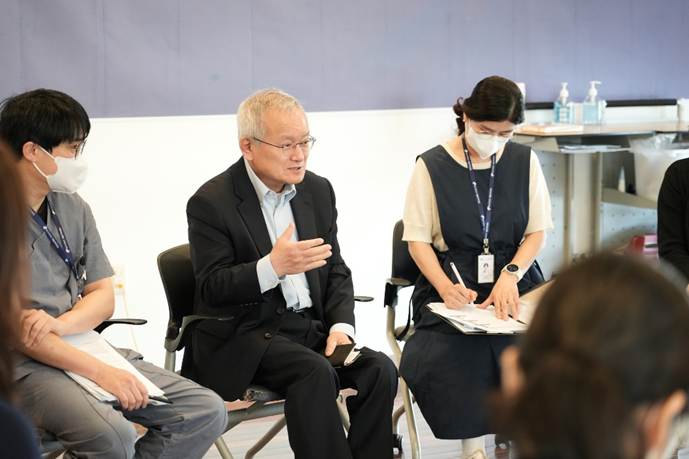
Every Wednesday and Friday, Parkside Rehabilitation Hospital—located near the UN Memorial Cemetery in Nam-gu, Busan—begins its day an hour earlier than usual. While regular medical hours start at 9 a.m., the hospital is already buzzing with activity by 8 a.m.
The main conference room quickly fills with a diverse group of medical professionals: rehabilitation medicine specialists, nurses, physical therapists, occupational therapists, speech therapists, clinical neuropsychologists, social workers, dietitians, and administrative staff.
The cases they discuss change with every meeting, but the core questions remain identical. This is not a gathering to simply confirm a clinical diagnosis. Instead, the team addresses practical, real-world challenges: Can this patient swallow safely? Can they communicate their basic needs? Can they use their hands to grip objects? Do they have a home to return to, and is there a caregiver equipped to take them back? If returning home is impossible, where is the safest place for them to be discharged?
Wednesdays are dedicated to the initial evaluation conference, where the multidisciplinary team conducts comprehensive medical, functional, and social assessments for every newly admitted inpatient. From these evaluations, they project the patient’s long-term trajectory—determining the potential degree of residual disability and identifying the specific living arrangements required after discharge—to establish a tailored treatment plan. Two days later, during Friday’s re-evaluation conference, the team reviews each patient's clinical progress, adjusts the treatment strategy, and confirms whether initial milestones are being met to guarantee a safe transition back into society.
This rigorous process forms the bedrock of the post-acute rehabilitation model that Parkside Rehabilitation Hospital has maintained for 20 years since opening its doors in 2006. To this institution, rehabilitation is far more than repeating walking exercises in an isolated therapy room; it is a comprehensive redesign of the life that remains after acute medical trauma. If emergency surgeries and acute interventions keep a patient alive, post-acute rehabilitation is the essential care that enables them to truly live again.
As an early participant in the Ministry of Health and Welfare’s specialized "rehabilitation medical institutions" pilot program, Parkside has maintained its official designation continuously from Phase 1 through Phase 3. Today, it stands as a leading national model for post-acute rehabilitation care.
Specialized Post-Acute Care for Overcoming Severe Physical Collapse
Parkside primarily treats patients recovering from severe, life-altering medical events. Brain injury patients make up the largest segment of the hospital's population at 50%. Because the aftereffects of neurological trauma can alter everything from physical movement and speech to basic cognitive and swallowing functions, these individuals often require round-the-clock specialized monitoring to manage potential long-term disabilities.
The remainder of the inpatient population comprises individuals battling disuse syndrome (23%), followed by hip fractures (15%), spinal cord injuries (10%), and other debilitating conditions (2%). After completing acute-care hospital treatments, these patients cannot safely return straight home. They must entirely relearn fundamental daily mechanics, such as walking, eating, using the restroom, and transferring themselves safely from a bed to a wheelchair. Minimizing permanent disability requires intensive, early-stage intervention, which drives families to seek out dedicated rehabilitation institutions capable of delivering tailored, one-on-one therapy.
The patient cohort suffering from disuse syndrome illustrates the precise necessity of post-acute rehabilitation. These are individuals who have spent extended periods bedridden due to severe cases of pneumonia, aggressive cancer treatments, or critical internal medicine complications. Essentially, their foundational bodily functions have completely collapsed.
Within the national healthcare framework, Ministry of Health and Welfare-designated rehabilitation medical institutions allow disuse syndrome patients to receive dedicated, intensive therapy for a legally protected window of up to 180 days. Backed by specialized National Health Insurance reimbursement rates, this framework significantly minimizes out-of-pocket expenses for families. This institutional buffer guarantees a period long enough to achieve a meaningful, functional recovery. Currently, there are only seven such designated facilities in Busan and just 71 across the entire nation.
Hospital Director Park In-seon championed this system over a decade ago during its pilot phase, firmly believing that post-acute care needed to be formally integrated into South Korea's medical delivery model. "When the rehabilitation medical institution system was first envisioned, I desperately hoped it would elevate the standard of post-acute treatment nationwide," Park In-seon recalls. "I regularly invited officials from the Ministry of Health and Welfare and the Health Insurance Review and Assessment Service (HIRA) to sit in our 8 a.m. conferences from the very beginning, demonstrating exactly how proper post-acute rehabilitation should be directed."
Finding "The Right Place" Over Simply Going Home
Parkside employs a robust workforce of 131 personnel to manage its 95-bed facility. This includes five physicians (featuring four rehabilitation medicine specialists), 51 nursing staff, 64 health professionals, six technical staff, and five administrative staff. This exceptionally high staff-to-patient ratio ensures that a dedicated therapist remains directly at a patient's side, manually assisting with core stability, monitoring swallowing reflexes, and guiding wheelchair transfers.
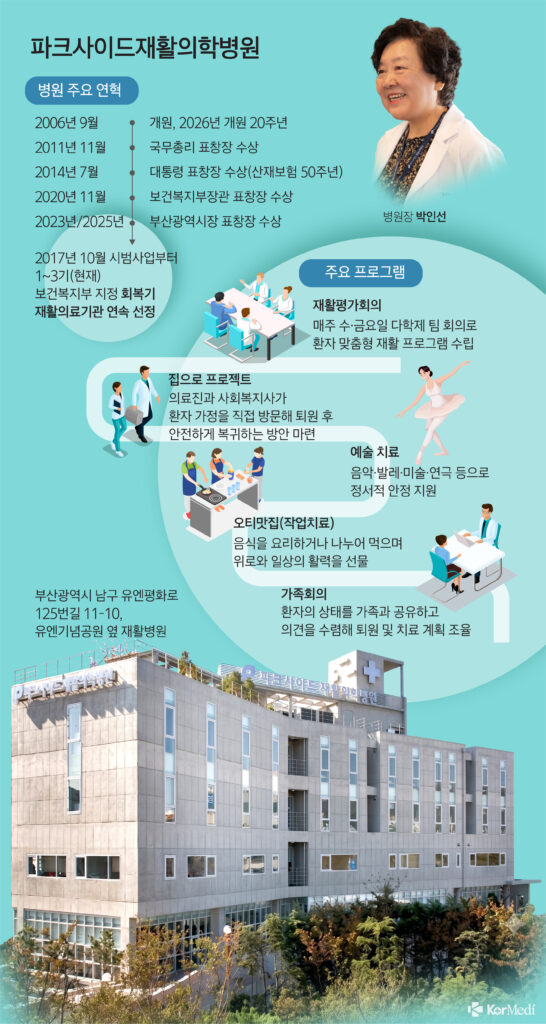
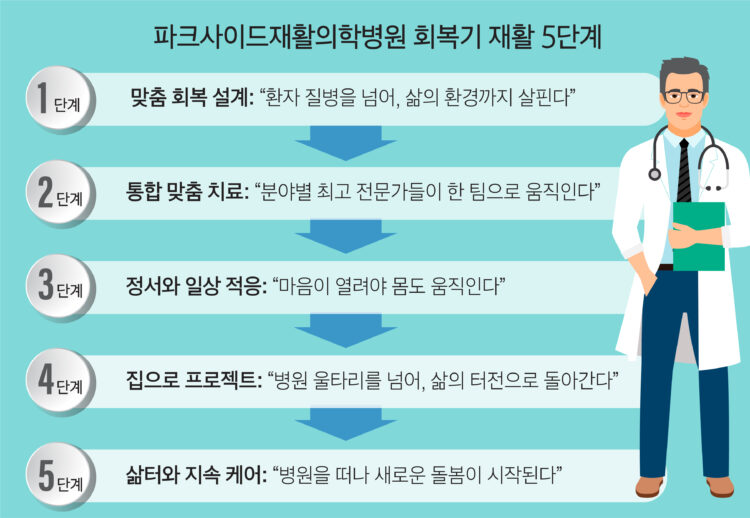
While Hospital Director Park In-seon initially viewed a direct return home as the ultimate measure of success, years of clinical reality refined her philosophy. The hospital frequently organizes detailed "family meetings" to present a patient's functional progress and realign treatment pathways based on the family's domestic capabilities. They even operate a specialized "Home Project," where attending physicians, nurses, and social workers physically visit a patient's residence to evaluate the architectural environment and the family's real-world support systems.
However, domestic discharge is not always the safest choice. In many instances, despite notable physical recovery, a family may lack the physical or economic infrastructure to accept the patient back safely. Some individuals require ongoing clinical monitoring best served by long-term care facilities, while others lack a home entirely.
Consequently, Parkside treats discharge planning as a highly dynamic process where the ultimate goal is matching the patient with "the right place"—whether that means their original home, intermediate housing, a specialized nursing facility, or structured outpatient and home-visit rehabilitation.
This philosophy is fully realized in "Gaonjae," a transitional transit house established by the hospital. Gaonjae serves as a structural bridge for patients who no longer require acute hospitalization but are not yet ready to navigate independent domestic life. The project began organically when a patient living alone in a small studio apartment lost their tenancy during a prolonged illness. Though functionally recovered, the patient had nowhere to go.
Rather than transferring them to a generic long-term facility, Parkside staff personally scouted local affordable housing options near the hospital, modifying the layouts to accommodate wheelchair access and creating clear pathways back to the clinic for outpatient continuity. This hands-on community reintegration defines Parkside's approach to local care.
To ensure no details are missed, the hospital enforces a strict, five-stage consultation schedule starting the day after admission, followed by evaluations at week 4, week 12, immediately prior to discharge, and a final check-up post-discharge to confirm that functional milestones are successfully maintained in daily life.
The engine driving this complex timeline is the 8 a.m. multidisciplinary conference, where diverse professional insights intersect to form a comprehensive view of a single human life. Park In-seon funds full overtime compensation for every staff member attending these early sessions, viewing the financial expenditure as a non-negotiable core investment in patient outcomes.
A Powerful Partnership in Rehabilitation Medicine
The historical trajectory of Parkside is deeply intertwined with the distinct careers of its two guiding medical forces: Hospital Director Park In-seon and Honorary Director Ko Hyun-yoon.
Park In-seon graduated from the Hanyang University College of Medicine in 1984 and completed her doctoral training at Hanyang University Hospital. Relocating to Busan in 1988, she established the Department of Rehabilitation Medicine at Busan Paik Hospital, pioneering a highly unfamiliar medical specialty in the region and serving as department chair for over 14 years with a clinical focus on brain injury recovery. After running a private clinic in 2002, she scaled her vision into the launch of Parkside Rehabilitation Hospital in September 2006. She frequently refers to herself as "a middle-aged doctor crazy about rehabilitation," a testament to 40 years spent navigating the intense emotional and physical realities of patients fighting to reclaim control over their bodies.
Honorary Director Ko Hyun-yoon graduated from the Pusan National University College of Medicine and completed his training at Hanyang University Hospital under Professor Lee Kang-mok, a founding figure of South Korean rehabilitation medicine. Ko Hyun-yoon later pursued advanced clinical training at New York University before returning to build an academic and clinical legacy as a professor at Pusan National University Hospital, dedicating his career entirely to spinal cord injury rehabilitation.
The two physicians originally met during their grueling residency years, eventually marrying and combining their professional talents. Ko Hyun-yoon expanded his expertise through elite international programs in the United States and the United Kingdom, eventually serving as the vice president of the International Spinal Cord Society, president of the Korean Society of Geriatric Rehabilitation Medicine, and president of the Korean Spinal Cord Injury Society.
Recognized as a top authority in his field by national media and television features, Ko Hyun-yoon has maintained a rigorous research schedule even after retiring from academia, recently publishing his fifth sole-authored medical textbook on spinal cord injury rehabilitation with the global scientific publisher Springer. Within Parkside, Park In-seon operates as the operational commander managing local domestic environments and societal transitions, while Ko Hyun-yoon provides the world-class academic and institutional architecture.
Restoring Social Roles and Minds, Not Just Bodies
Parkside also integrates unique psycho-social programming into its standard clinical tracks, operating under the principle that the profound depression, sudden helplessness, and familial friction experienced by post-acute patients are critical pathologies that rehabilitation must actively treat. When individuals suffer catastrophic physical trauma, they do not merely lose motor function; they lose professional roles, social identities, and independence, often falling into the despair of feeling like a permanent burden.
To combat this psychological decline, the hospital's counseling, music, art, and community gardening programs are treated as vital clinical tools rather than superficial amenities. Music and art therapies provide immediate creative outlets for self-expression; even patients experiencing severe aphasia readily engage with rhythmic patterns, and those with compromised hand mobility find agency in selecting color palettes. The hospital's therapeutic garden plots allow patients to physically interact with the soil, cultivate plant life, and experience the slow rewards of growth, serving as an important sensory pipeline connecting the ward to the natural world.
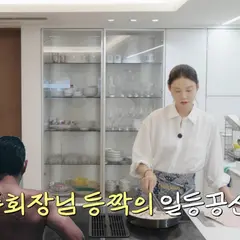
Another popular cultural staple is "OT Matjip," an initiative hosted within the occupational therapy department where staff and patients collaboratively prepare, cook, and share meals. The natural social interaction and shared tasks significantly boost morale while serving as an organic catalyst for motor skill recovery.
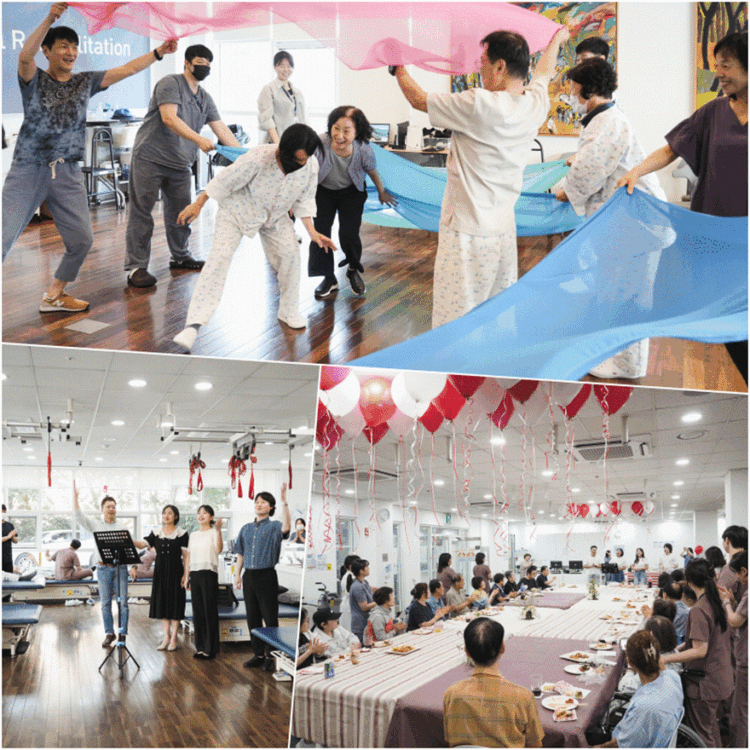
This philosophy is best embodied by the "Nodutdol" program—named after the traditional Korean stepping-stone used to mount a horse. The program deliberately assigns small, meaningful responsibilities to patients inside the hospital, funded by a matching contribution scheme between the staff and the hospital director. For example, a patient dealing with right-side hemiplegia and aphasia was tasked with delivering a daily prayer for a peer, while another patient was given the official mission of reminding a fellow inpatient to adhere to the hospital's strict smoke-free environment. These small duties restore a crucial sense of purpose, reinforcing the understanding that rehabilitation is a concurrent recovery of both physical function and social utility.
This unique operational culture explains why Parkside maintains an exceptionally high staff retention rate, with numerous employees crossing the 10-year service milestone. Remarkably, a scheduling coordinator hired in 2009 originally entered the facility as an inpatient undergoing intensive rehabilitation for a severe spinal cord injury. Upon completing their clinical recovery, they transitioned into a full-time employee, managing the daily treatment schedules for incoming patients. This trajectory embodies Parkside’s ultimate definition of rehabilitation: a complete journey where an individual moves from receiving vital assistance to actively providing it to others.