Approximately six million years ago, early humans evolving from primates sustained themselves on a largely plant-based diet consisting of wild fruits, root vegetables, leafy greens, and nuts. The physiological structure of the human body indicates that our ancestors were far better adapted to gathering and digesting vegetation than to hunting and killing other animals for food [1, 2]. While climate shifts during the Ice Age forced human ancestors to begin incorporating meat into their diets around three million years ago to survive environmental extremes, they remained predominantly plant-eaters for the vast majority of our evolutionary history [3].
In the early 2000s, the "paleo diet" emerged as a widespread health trend based on the idea that pre-agricultural humans were free from modern ailments like obesity. It aims to mirror what people ate in the Paleolithic era about two million years ago [4]. Often marketed as the "caveman diet," its premise is straightforward: it argues that the agricultural revolution introduced an overabundance of grains and processed foods that triggered today's chronic health crises. To counter this, the diet promotes a menu of wild plants and animals—including meat, poultry, fish, eggs, fruits, vegetables, and nuts—while strictly banning processed foods, grains, legumes, dairy, and refined sugar.
The paleo diet does offer clear benefits by eliminating the refined carbohydrates, fried foods, and heavily processed items characteristic of the modern Western diet. However, its heavy emphasis on meat consumption carries a substantial downside. This aspect of the diet overlooks a wealth of medical evidence linking high meat intake to modern chronic conditions, including type 2 diabetes, hypertension, cardiovascular disease, chronic kidney and liver conditions, respiratory disease, stroke, and certain cancers [5].
The Misconceptions Surrounding Grains, Beans, and Lectins
One of the most defining characteristics of the paleo framework is its strict ban on grains and legumes. Proponents argue that plant defense chemicals like lectins are inherently toxic to human health. This concept gained massive traction following the 2017 publication of The Plant Paradox by Dr. Steven Gundry, an American physician whose book climbed to the top of the bestseller lists by warning consumers to avoid these plant proteins.
While it is true that plants produce internal compounds like lectins, phytic acid, and oxalic acid to protect themselves from predators, these defenses do not pose a threat to human health when food is prepared properly. Consuming raw beans can indeed cause acute gastrointestinal distress due to high concentrations of phytohemagglutinin. However, because humans cook their legumes, heat completely dismantles and neutralizes these lectins, making cooked beans entirely safe and highly nutritious [6].
Population data consistently refutes the anti-lectin narrative. If grains and beans were genuinely toxic, societies that rely on them as staples would suffer from shortened lifespans. Instead, global epidemiological data reveals that higher legume consumption consistently tracks with superior health and exceptional longevity [7]. Legumes have been extensively documented to aid in the prevention and management of diabetes, heart disease, obesity, and cancer [8, 9, 10, 11, 12, 13]. Whole grains show identical benefits; consistent intake significantly lowers the risk of premature death and chronic illness [14, 15].
This reality is clearly visible in the world’s "Blue Zones"—the five geographic regions with the highest concentrations of centenarians, including Okinawa in Japan, Sardinia in Italy, Nicoya in Costa Rica, Ikaria in Greece, and Loma Linda in California. The traditional diets of these remarkably healthy populations rely heavily on the daily consumption of whole grains and legumes [16, 17]. The widespread fear of these foods is often driven by commercial interests rather than science; for instance, Dr. Steven Gundry generates substantial profits selling expensive dietary supplements like "Lectin Shield" on his website, which is filled with a high volume of product promotions [18].

Survival vs. Health: How the Human Body Handles Cholesterol
Despite the immense hype, clinical studies show that the paleo diet fails to deliver superior metabolic outcomes over the long term [19]. Research has demonstrated that compared to other diets, it shows no meaningful advantages in fasting blood glucose, insulin levels, or HbA1c levels [20]. A study published in the Journal of Nutrition in 2020 warned that while the paleo diet may produce short-term weight loss by restricting certain food groups, it can lead to long-term nutrient deficiencies and worsen health [21].
Humans descended from a lineage of higher primates capable of eating a wide variety of foods, and scholars agree that the diet of our ancestral line consisted mostly of plant foods such as fruit [22]. Archaeological evidence shows that about two million years ago, humans used stone tools to cut and eat animal carcasses. While this material serves as evidence of meat-eating, plant foods leave little trace, making it impossible to know the exact dietary proportions [23]. Furthermore, Paleolithic hunter-gatherers expanded into highly diverse regions, so diets clearly varied by location; in inland areas where vegetation was easy to obtain, plant foods accounted for 50% to 80% of the diet, whereas in polar regions, meat accounted for 90% [24, 25]. Hunter-gatherers simply ate whatever was easiest to obtain nearby to survive. Using their survival tactics to define an ideal modern diet ignores how human physiology actually processes food.
Throughout our long evolutionary history, early humans rarely encountered foods containing cholesterol, and the abundant fiber in their plant-based diet helped the body excrete it easily. Because cholesterol is essential for cellular function and bile production, but was scarce, the body evolved a highly efficient mechanism to synthesize what it needs and reabsorb it in the ileum—the final part of the small intestine—to retain as much cholesterol as possible.
With the rise of the modern food industry, cholesterol-dense foods like eggs, cheese, chicken, pork, and beef suddenly became daily staples. Once the overflow of cholesterol exceeded the body’s capacity to handle it, it began accumulating inside artery walls, causing atherosclerosis—the narrowing and stiffening of blood vessels. Today, cardiovascular disease caused by these blocked vessels stands as the leading cause of death in the United States [26].
True omnivores and carnivores, such as dogs, can process massive amounts of dietary cholesterol daily without developing vascular disease. In contrast, herbivorous animals, like rabbits, experience rapid arterial damage and severe atherosclerosis when fed even small amounts of cholesterol. Dr. William Roberts, a renowned cardiologist and former editor-in-chief of the American Heart Association Journal, noted that because human blood vessels sustain severe damage from cholesterol-rich foods, human physiology is fundamentally herbivorous like a rabbit's, rather than omnivorous or carnivorous [27].
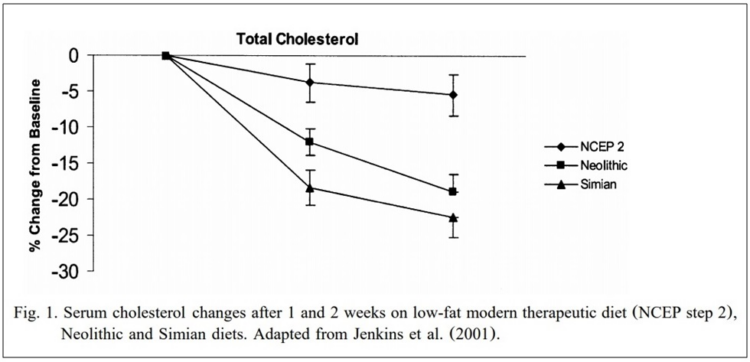
A clinical experiment comparing three distinct dietary frameworks over a two-week period highlights this physiological reality. Researchers tested the standard cholesterol-management diet recommended by the National Institutes of Health (NIH) against a vegetarian "Neolithic" diet rich in grains and beans, and a "Simian" diet modeled after early primates consisting purely of low-starch plants. The results confirmed that both the Neolithic and Simian plant-based diets were three to four times more effective at lowering cholesterol than the modern NIH guidelines [26].
The "low-carb, high-fat" argument that humans are natural carnivores because our ancestors ate meat misses the broader biological picture. The meat-heavy segments of the Paleolithic diet were born out of environmental necessity and survival, not optimal health. Long before the Paleolithic era, the foundational lineage of the human species thrived on a plant-based diet.
Song Moo-ho, MD, is a specialist in orthopedic surgery and lifestyle medicine.

References
1. RF Kay. Diets of early Miocene African hominoids, Nature 1977;268:628-630.
2. SJC Gaulin, M Konner. On the natural diet of primates, including humans. In: Wurtman RJ, Wurtman JJ, editors. Nutrition and the Brain. New York: Raven Press 1977;1-86.
3. K Milton. Primate diets and gut morphology: Implications for hominid evolution. In: Harris M, Ross EB, eds. Food and evolution: towards a theory of human food habits. Philadelphia: Temple University Press 1987:93-115.
4. L Cordain, S Eaton, J Miller, et al. The paradoxical nature of hunter-gatherer diets: meat-based, yet non-atherogenic. Eur J Clin Nutr 2002;56:S42–S52.
5. A Etemadi, R Sinha, MH Ward, et al. Mortality from different causes associated with meat, heme iron, nitrates, and nitrites in the NIH-AARP Diet and Health Study: population based cohort study. BMJ 2017;357:j1957.
6. SS Deshpande, RK Singh. Research Note: Hemagglutinating activity of Lectins in selected varieties of raw and processed dry beans. Journal of Food Processing and Preservation 1991;15:81-87.
7. I Darmadi-Blackberry, ML Wahlqvist, A Kouris-Blazos, et al. Legumes: the most important dietary predictor of survival in older people of different ethnicities. Asia Pacific J Clin Nutr 2004;13(2):217-220.
8. DJ Jenkins, CW Kendall, LS Augustin, et al. Effect of legumes as part of a low glycemic index diet on glycemic control and cardiovascular risk factors in type 2 diabetes mellitus: a randomized controlled trial. Arch Intern Med 2012;172:1653-60.
9. LA Bazzano, J He, LG Ogden, et al. Legume consumption and risk of coronary heart disease in US men and women: NHANES I Epidemiologic Follow-up Study. Arch Intern Med 2001;161:2573-8.
10. X Sanchez-Chino, C Jimenez-Martinez, G Davila-Ortiz, et al. Nutrient and nonnutrient components of legumes, and its chemopreventive activity: a review. Nutr Cancer 2015;67:401-10.
11. B Zhu, Y Sun, L Qi, et al. Dietary legume consumption reduces risk of colorectal cancer: evidence from a meta-analysis of cohort studies. Sci Rep 2015;5:8797.
12. SJ Kim, RJ de Souza, VL Choo, et al. Effects of dietary pulse consumption on body weight: a systematic review and meta-analysis of randomized controlled trials. Am J Clin Nutr 2016;103:1213-23.
13. MD Kristensen, NT Bendsen, SM Christensen, et al. Meals based on vegetable protein sources (beans and peas) are more satiating than meals based on animal protein sources (veal and pork) – a randomized cross-over meal test study. Food Nutr Res 2016;60:32634.
14. D Aune, NN Keum, E Giovannucci, et al. Whole grain consumption and risk of cardiovascular disease, cancer, and all cause and cause specific mortality: systematic review and dose-response meta-analysis of prospective studies. BMJ 2016;353:i2716.
15. G Zong, A Gao, FB Hu, Q Sun. Whole Grain Intake and Mortality From All Causes, Cardiovascular Disease, and Cancer: A Meta-Analysis of Prospective Cohort Studies. Circulation 2016;133:2370-80.
16. Herald Economy https://biz.heraldcorp.com/view.php?ud=20230504000298
17. D Buettner, S Skemp. Blue Zones: Lessons From the World’s Longest Lived. American Journal of Lifestyle Medicine 2016;10(5):318-321.
18. Gundry MD https://gundrymd.com/
19. Medical News Today https://www.medicalnewstoday.com/articles/paleo-diet-is-there-any-evidence-that-it-benefits-health
20. M Jamka, B Kulczyński, A Juruć, et al. The effect of the Paleolithic diet vs. healthy diets on glucose and insulin homeostasis: a systematic review and meta-analysis of randomized controlled trials. Journal of clinical medicine 2020;9(2):296.
21. R Freire. Scientific evidence of diets for weight loss: Different macronutrient composition, intermittent fasting, and popular diets. Nutrition 2020;69:110549.
22. K Milton. Nutritional characteristics of wild primate foods: do the diets of our closest living relatives have lessons for us? Nutrition 1999;15(6):488-498.
23. K Milton. Back to basics: why foods of wild primates have relevance for modern human health. Nutrition 2000;16:480-483.
24. SM Eaton, SB Eaton, MJ Konner. Paleolithic nutrition revisited: a twelve-year retrospective on its nature and implications. European Journal of Clinical Nutrition 1997;51:207–216.
25. KJ Ho, B Mikkelson, LA Lewis, et al. Alaskan Arctic Eskimos: responses to a customary high fat diet. Am J Clin Nutr 1972;25:737–45.
26. DJ Jenkins, CW Kendall, A Marchie, et al. The Garden of Eden - plant based diets, the genetic drive to conserve cholesterol and its implications for heart disease in the 21st century. Comp Biochem Physiol A Mol Integr Physiol 2003;136(1):141-51.
27. Roberts WC. We think we are one, we act as if we are one, but we are not one. Am J Cardiol 1990;66(10):896.