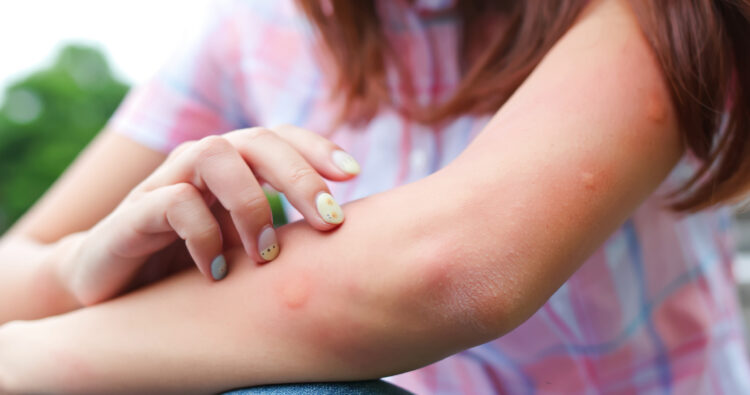
As summer temperatures climb, millions of people find themselves losing sleep to persistent mosquitoes. Yet even within the same room, some individuals are heavily targeted while others remain completely untouched.
Mosquitoes do not choose their victims at random. Instead, they track highly specific sensory cues, including body temperature, respiratory output, body odor, and volatile chemicals released through the skin. Understanding these biological targets allows for simple, effective modifications to daily routines that can keep the insects at bay.
Wash Away Post-Exercise Odor Immediately
Mosquitoes are drawn less to sweat itself than to the specific chemical organic compounds it contains, such as lactic acid, uric acid, and ammonia. This explains why people are significantly more vulnerable to bites immediately following exercise or outdoor physical activities.
Furthermore, exercise raises core body temperature, which serves as a thermal beacon for the insects. Research indicates that mosquitoes preferentially swarm toward individuals with higher metabolic rates and heavier perspiration. Shaper hygiene practices—such as showering immediately after outdoor activity and changing out of damp, sweat-soaked clothing—are critical to removing these chemical attractants.
Swap Dark Wardrobes for Lighter Tones
In addition to olfactory signals, mosquitoes rely heavily on visual cues to locate their targets. Dark colors, particularly black, navy blue, and deep reds, absorb more ambient heat and create a sharp silhouette against the landscape, making it easier for insects to navigate toward you.
International entomological studies have consistently shown that mosquitoes approach black, red, and orange tones far more frequently than softer shades. Conversely, light-colored clothing, such as white, cream, or beige, is visually unappealing to them. When hiking, camping, or walking outdoors at dusk, wearing loose-fitting, light-colored long sleeves maximizes protection by minimizing both visual tracking and exposed skin.
Avoid Outdoor Alcohol Consumption at Night
Enjoying a cold beer outdoors is a staple of summer, but it can turn you into an immediate target. Consuming alcohol has been shown to directly increase an individual's attractiveness to mosquitoes.
Alcohol dilates peripheral blood vessels, causing warm blood to rush to the skin's surface and raising localized body temperature. Simultaneously, alcohol intake alters breathing patterns, increasing carbon dioxide (CO2) exhalation—the primary long-range tracking signal mosquitoes use to locate mammals. Because evening socializing frequently overlaps with peak mosquito feeding hours, extra precaution is necessary if alcohol is served.
Reconsider Sweet Perfumes and Fruit-Scented Mists
It is a common misconception that pleasant human scents act as a natural deterrent to pests. In reality, many floral, fruity, or sweet perfumes and body mists mimic the natural nectar sources that adult mosquitoes feed on for energy.
Overusing heavily scented cosmetic products before heading outdoors can inadvertently attract swarms. To protect yourself effectively, swap out strong fragrances for an insect repellent officially approved by the Ministry of Food and Drug Safety. Applying an authorized repellent to exposed skin safely disrupts the mosquito’s chemical receptors.
Leverage Airflow and Use Repellents Safely
Mosquitoes are notoriously weak fliers, struggling to navigate in even modest crosswinds. Utilizing an indoor fan or air conditioner creates a steady breeze that makes it physically difficult for them to land on human skin. Cooler indoor settings also prevent spikes in body temperature, rendering you less noticeable.
Before sleeping, ensure window screens are entirely intact and free of gaps. Traditional countermeasures like mosquito coils, electric mats, and liquid vaporizers remain highly effective at clearing indoor spaces, but they must be managed carefully. Avoid running these chemical deterrents for prolonged periods in sealed, unventilated rooms. Always follow the manufacturer's ventilation instructions, exercising extreme caution in spaces occupied by infants, young children, or individuals with pre-existing respiratory conditions.