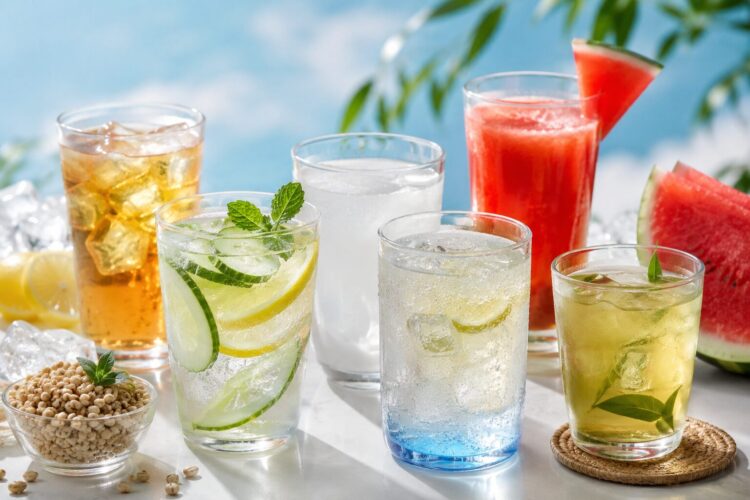
As summer temperatures spike, a common complaint emerges: "I keep drinking water, but I still feel incredibly thirsty." When the body sweats heavily, it loses far more than just fluid; it expels critical electrolytes, primarily sodium and potassium. This systemic depletion explains why standard water sometimes fails to fully quench lingering summer thirst. When your body is exhausted by heat and physical exertion, turning to beverages that simultaneously replenish both fluids and essential minerals can provide rapid relief.
Six Optimal Hydration Alternatives
Cucumber-Lemon Water: Cucumbers are an exceptional summer staple, boasting a water content exceeding 95%. Infusing them with lemon adds a bright, crisp aroma that naturally stimulates the appetite and encourages more frequent fluid intake. Cucumbers deliver a healthy dose of potassium to aid fluid regulation, while lemons supply vitamin C and citric acid. To prepare it, simply slice well-washed cucumber and lemon, submerge them in water, and chill in the refrigerator for one to two hours. However, individuals prone to acid reflux or gastrointestinal sensitivities should exercise caution and limit the amount of lemon used.
Coconut Water: Highly regarded internationally as a natural sports drink, coconut water is naturally packed with essential electrolytes like potassium and magnesium. Drinking it after heavy exertion quickly restores systemic balance while maintaining a relatively low calorie count. When purchasing commercial options, it is important to choose unsweetened varieties and inspect labels closely, as some brands introduce hidden sugars. Additionally, individuals managing chronic kidney disease must monitor their intake due to the beverage's high potassium levels.
Low-Sugar Electrolyte Drinks: Prolonged outdoor activity rapidly drains minerals from the bloodstream. Formulated electrolyte beverages effectively deliver targeted amounts of sodium and potassium to accelerate fluid absorption in the gut. These drinks are particularly beneficial if you experience mild dizziness or early symptoms of dehydration after intense sweating. However, consumers should remain vigilant; many standard commercial sports drinks are surprisingly high in sugar, which can inadvertently increase calorie consumption. Checking nutrition labels is highly recommended.
Watermelon Juice: Composed of more than 90% water, watermelon is a signature seasonal remedy for profound thirst. Blending chilled watermelon without added sweeteners yields a highly bioavailable source of fluids and potassium. It is exceptionally easy to consume when intense heat suppresses the appetite, and its natural sweetness makes it universally appealing. Because fruit contains inherent fructose, it is best to avoid adding extra sugar or syrups and consume it in moderation.
Iced Green Tea: Beyond standard hydration, green tea offers a distinctly refreshing profile and contains potent antioxidant compounds known as catechins. Serving it chilled enhances its crisp flavor, making it an excellent match for hot weather. However, because green tea naturally contains caffeine, it should not be consumed continuously as a complete replacement for plain water. Those who are sensitive to caffeine or struggle with sleep disturbances should avoid drinking it late in the evening.
Barley Tea: Completely caffeine-free and carrying virtually zero calories, barley tea (boricha) has long been South Korea's most trusted traditional summer hydrator. Its deeply comforting, toasty flavor profile makes it significantly easier to drink in large quantities than plain water. Keeping a large pitcher chilled in the refrigerator provides a reliable, everyday beverage that naturally increases fluid intake. Free from restrictive dietary concerns, it remains a classic, wholesome option that individuals of all ages can enjoy safely throughout the season.