Patients suffering from light-chain amyloidosis, a rare and debilitating blood disorder that causes abnormal proteins to accumulate in vital organs, will now have significantly improved access to life-saving care. A newly expanded National Health Insurance policy has drastically lowered financial barriers to the current standard of care.
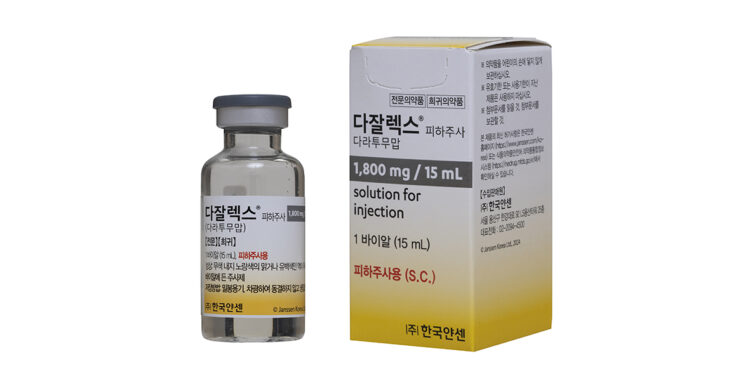
Janssen Korea announced on June 4 that, effective June 1, the National Health Insurance system began covering a potent four-drug combination protocol (known as the DVCd regimen). This therapy pairs Darzalex subcutaneous injection (generic name: daratumumab) with bortezomib, cyclophosphamide, and dexamethasone. The expanded reimbursement criteria apply directly to newly diagnosed light-chain amyloidosis patients who do not present with symptoms concurrently linked to multiple myeloma.
Severe Organ Damage Driven by Delayed Diagnosis
Light-chain amyloidosis manifests when abnormal plasma cells within the bone marrow misproduce immunoglobulin light chains. Left unchecked, these unstable proteins misfold and deposit directly into the tissues of the heart, kidneys, liver, and peripheral nerves, causing progressive, irreversible organ failure.
Because early clinical indicators—such as chronic fatigue, shortness of breath, localized swelling, and unexplained weight loss—mimic routine, less severe conditions, early diagnosis is notoriously difficult. If treatment is delayed, structural damage to the cardiovascular and renal systems can progress rapidly, drastically worsening the patient's long-term prognosis. This reality makes early clinical suspicion and immediate intervention post-diagnosis absolutely paramount.
Under the updated insurance guidelines, newly diagnosed light-chain amyloidosis patients who lack multiple myeloma-related complications—such as osteolytic bone disease, plasmacytoma, hypercalcemia, or a bone marrow plasma cell count of 60% or higher—can receive full insurance coverage when prescribed the DVCd regimen as a first-line therapy. The approved treatment course spans a total of 24 cycles, with Darzalex subcutaneous injection transitioning into a standalone monotherapy starting from cycle 7.
Definitive Survival and Organ Recovery Data from the ANDROMEDA Study
The clinical justification for this coverage expansion stems from the robust results of the global Phase 3 ANDROMEDA clinical trial. At a median follow-up of 11.4 months, the DVCd regimen achieved a remarkable hematologic complete response rate of 53.3%, vastly outperforming the 18.1% rate seen in patients treated with the older, three-drug VCd protocol. Achieving a hematologic complete response indicates that the toxic, disease-causing light chains in the patient's bloodstream have been successfully suppressed to undetectable levels.
Furthermore, the landmark trial demonstrated profound advancements in objective metrics of organ recovery. At the 6-month evaluation mark, patients on the DVCd regimen achieved a cardiac response rate of 41.5% and a renal response rate of 53.0%. In stark contrast, the VCd control group recorded response rates of just 22.2% and 23.9%, respectively.
Long-term follow-up data solidified these therapeutic advantages. An 18-month interim analysis confirmed sustained superiority in cardiac and renal preservation for the DVCd cohort. Most notably, extended 5-year follow-up data revealed that the DVCd regimen maintained a long-term hematologic complete response rate of 59.5%, compared to a meager 19.2% in the VCd group.
Despite the relatively small patient demographic affected by light-chain amyloidosis, the National Health Insurance Service’s decision to extend coverage underscores the profound clinical necessity and undeniable value of the therapeutic intervention.
“Because light-chain amyloidosis is an exceptionally rare disease with highly nonspecific symptoms, many individuals only begin formal treatment after their heart or kidney function has already sustained major structural damage,” explained Kim Ki-hyun, a professor in the Division of Hematology-Oncology at Samsung Medical Center. “This crucial insurance expansion will effectively broaden first-line therapeutic access across South Korea, significantly moving the needle for patient survival outcomes.”
According to Janssen Korea, the DVCd regimen utilizing Darzalex subcutaneous injection stands as the first and only approved therapeutic protocol for light-chain amyloidosis in the nation. The regimen originally secured regulatory approval from the U.S. Food and Drug Administration (FDA) in 2021 before obtaining official clearance from South Korea’s Ministry of Food and Drug Safety in 2024. The newly implemented insurance coverage is expected to immediately ease the financial burden on vulnerable families while smoothing the path toward widespread real-world clinical adoption.