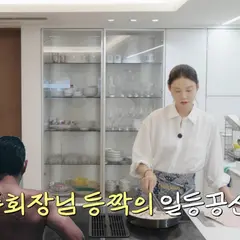
Actress Ko So-young has shared her personal lifting-care routine.
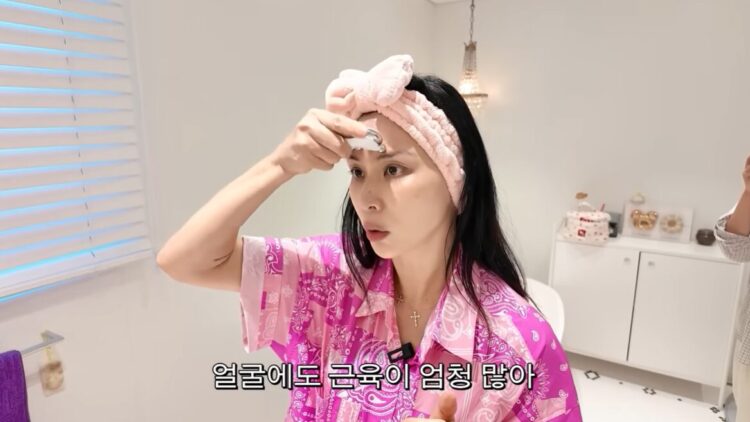
Ko recently walked viewers through the morning routine she has kept up for 30 years on her YouTube channel. She began by lightly rinsing her face with water and applying moisturizer, then ran a roller gua sha over her face to help the product absorb. She then used the roller again, moving it above her eyebrows and across her forehead as a massage. “It’s to lift so it doesn’t sink,” Ko said. “There are so many muscles in the face. If you don’t loosen them up, it hurts.”
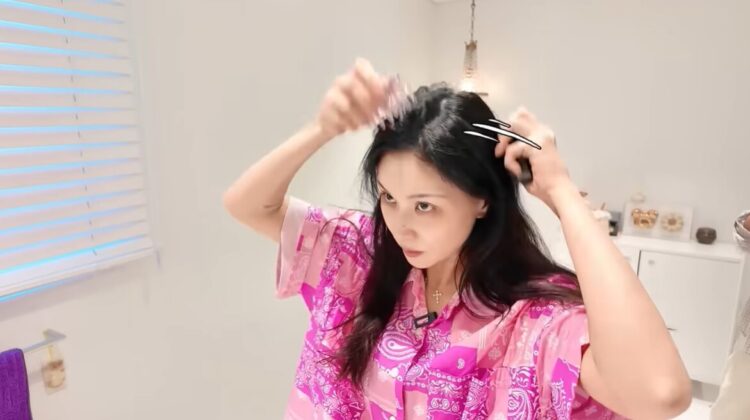
She also massaged her scalp with a comb-style gua sha. Repeating strokes from the front of her head toward the back, Ko said, “You need to loosen up the scalp well to get a lifting effect.”
Facial Gua Sha Can Reduce Puffiness and Ease Muscle Tension
As Ko noted, the face does contain many muscles. Facial muscles help raise the eyebrows, close the eyes, move the corners of the mouth, and create expressions. Using a roller gua sha won’t directly increase collagen or elastin in the skin, but massage can temporarily boost blood flow and lymphatic circulation while easing muscle tension. That may reduce facial puffiness and make contours look more defined. In particular, people who frequently clench their jaw or carry a lot of tension in their expression muscles may feel their face become lighter and less stiff after a massage.
When doing facial gua sha, it’s best to apply plenty of moisturizer or oil after cleansing, then roll with light pressure—gentle enough that the skin doesn’t drag or feel pulled. Keep the direction moving from the center of the face outward. For the jawline, roll from the chin toward the area under the ear; for the cheeks, roll from beside the nose toward the cheekbones and ears; and around the eyes, roll gently from the inner area outward. For the forehead, roll from above the eyebrows toward the hairline, and for the neck, lightly sweep from under the ear toward the collarbone. Avoid areas with inflamed acne, wounds, eczema, sunburned skin, or bruises.
Scalp Massage Can Make the Face Feel Less Tight and Look More Relaxed
Ko also loosened up her scalp with a comb-style gua sha. The scalp, forehead, temples, and the area around the neck are connected through skin and fascial tissue, so people with a stiff scalp or significant tension around the temporalis and frontalis muscles may find their face feels less tight and looks more relaxed after massage. While scalp massage cannot directly lift facial skin, it can ease tension around the scalp, forehead, and temples and temporarily increase blood flow, making the face feel lighter and look less puffy. For that reason, it can subjectively feel like the face has been lifted or elasticity has improved.
You can slowly sweep with a comb-style gua sha or your fingertips from the forehead hairline toward the crown, then from the crown toward the back of the head. Around the temples and ears, press lightly in a circular motion. Scratching with fingernails or rubbing hard enough to turn the scalp red can cause folliculitis, irritant dermatitis, or pain. Avoid it if you have seborrheic dermatitis, scalp wounds, inflammatory acne, or immediately after hair-loss treatment, and stop if your scalp becomes stinging or itchy, or if dandruff or oozing increases after massage.